Imroatul Nasiyah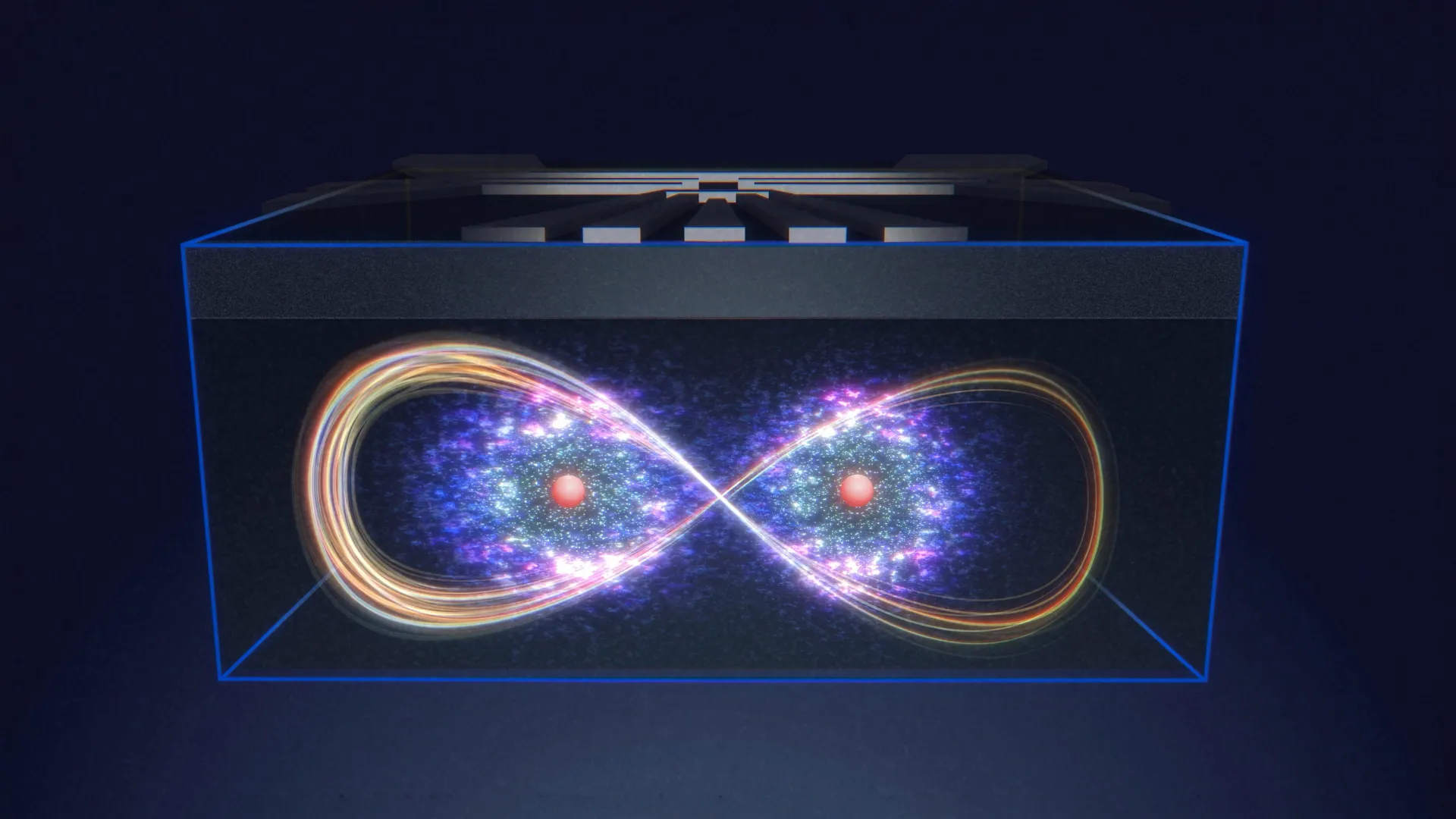
Dr. Holly Stemp, the lead author of the study, highlighted the transformative potential of this achievement, stating that it "unlocks the potential to build the future microchips needed for quantum computing using existing technology and manufacturing processes." The team’s success lies in their ability to facilitate communication between the "cleanest, most isolated quantum objects" at the very same scale at which conventional silicon electronic devices are currently fabricated. This addresses a fundamental dilemma in quantum computing: the delicate balance between shielding fragile quantum elements from disruptive external noise and interference, while simultaneously enabling them to interact effectively for computation. The diverse landscape of quantum computing hardware currently under development reflects this challenge, with various approaches excelling in either speed or noise resistance, but often struggling with the other.
The UNSW team has focused on a platform that, until this breakthrough, leaned more towards the latter category – robust shielding. They have ingeniously employed the nuclear spin of phosphorus atoms, precisely implanted into a silicon chip, as the medium for encoding quantum information. Scientia Professor Andrea Morello from UNSW’s School of Electrical Engineering & Telecommunications explained the inherent advantage of this approach: "The spin of an atomic nucleus is the cleanest, most isolated quantum object one can find in the solid state." He further elaborated on the group’s decade-and-a-half-long pioneering work, which has propelled this technology into contention in the quantum computing race. Previously, they had demonstrated the ability to preserve quantum information for over 30 seconds – an extraordinary duration in the quantum realm – and execute quantum logic operations with remarkably low error rates, less than 1%.
"We were the first in the world to achieve this in a silicon device," Professor Morello emphasized, "but it all came at a price: the same isolation that makes atomic nuclei so clean, makes it hard to connect them together in a large-scale quantum processor." Historically, enabling multiple atomic nuclei to interact necessitated their close proximity, often within the embrace of a single electron. This electron, in quantum mechanics, possesses the peculiar ability to "spread out" in space, thus bridging the gap between multiple nuclei. However, the reach of this electron’s influence is inherently limited. Furthermore, integrating additional nuclei into the same electron’s sphere of influence significantly complicates individual control over each nucleus.
To illustrate the revolutionary nature of their discovery, Dr. Stemp employed a compelling metaphor: "By way of metaphor one could say that, until now, nuclei were like people placed in a sound-proof room. They can talk to each other as long as they are all in the same room, and the conversations are really clear. But they can’t hear anything from the outside, and there’s only so many people who can fit inside the room. This mode of conversation doesn’t ‘scale’." The breakthrough, she explained, is akin to equipping these individuals with "telephones to communicate to other rooms. All the rooms are still nice and quiet on the inside, but now we can have conversations between many more people, even if they are far away."
These metaphorical "telephones" are, in reality, electrons. Mark van Blankenstein, another contributor to the paper, provided a more granular explanation of the sub-atomic mechanics. He described how, through their spatial extension, two electrons can establish a connection, or "touch," even at a considerable distance. Crucially, if each of these spatially linked electrons is directly coupled to an atomic nucleus, the nuclei can then communicate through this electron-mediated bridge.
The experiment involved nuclei separated by approximately 20 nanometers, a distance Dr. Stemp contextualized with a striking analogy: "one thousandth of the width of a human hair." She further elaborated, "That doesn’t sound like much, but consider this: if we scaled each nucleus to the size of a person, the distance between the nuclei would be about the same as that between Sydney and Boston!" This distance is precisely the scale at which contemporary silicon computer chips are manufactured for everyday devices like personal computers and mobile phones. "You have billions of silicon transistors in your pocket or in your bag right now, each one about 20 nanometers in size. This is our real technological breakthrough: getting our cleanest and most isolated quantum objects talking to each other at the same scale as existing electronic devices. This means we can adapt the manufacturing processes developed by the trillion-dollar semiconductor industry, to the construction of quantum computers based on the spins of atomic nuclei."
Despite the esoteric nature of the quantum phenomena involved, the researchers emphasize that their experimental setup remains fundamentally compatible with the established manufacturing paradigms of current computer chips. The crucial phosphorus atoms were meticulously introduced into the silicon substrate by the team of Professor David Jamieson at the University of Melbourne, utilizing an ultra-pure silicon wafer provided by Professor Kohei Itoh at Keio University in Japan.
By circumventing the previous necessity for atomic nuclei to be bound to the same electron, the UNSW team has effectively dismantled the most significant impediment to scaling up silicon-based quantum computers that rely on atomic nuclei. Professor Morello concluded optimistically, "Our method is remarkably robust and scalable. Here we just used two electrons, but in the future we can even add more electrons, and force them in an elongated shape, to spread out the nuclei even further." He underscored the inherent advantages of electrons in this context: "Electrons are easy to move around and to ‘massage’ into shape, which means the interactions can be switched on and off quickly and precisely. That’s exactly what is needed for a scalable quantum computer." This breakthrough promises a more efficient and scalable pathway towards realizing the full potential of quantum computing.