Imroatul Nasiyah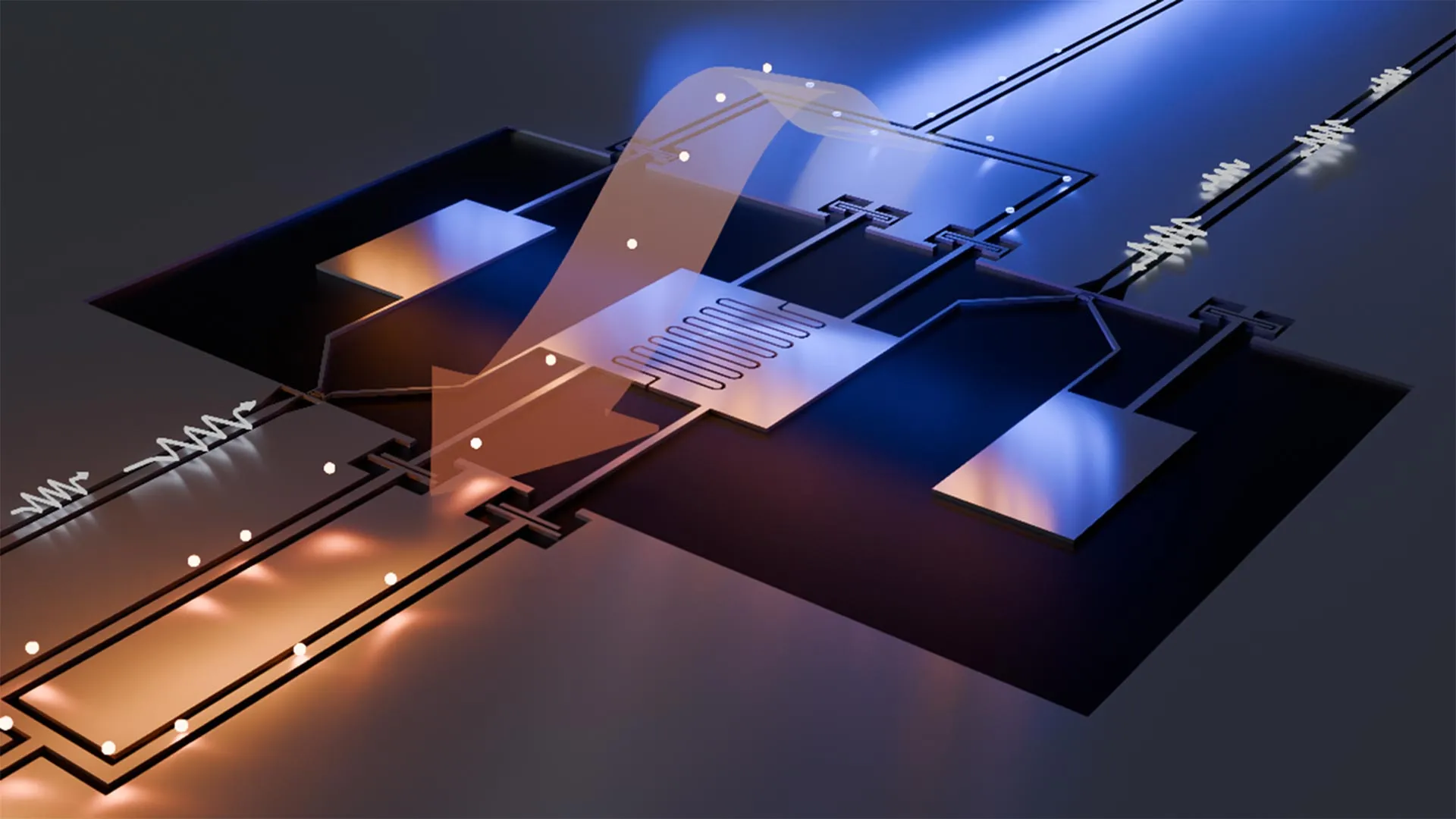
At the heart of the operational requirements for many quantum computers, particularly those built with superconducting circuits, lies an imperative for extreme cold. These systems must be meticulously cooled to temperatures hovering infinitesimally close to absolute zero, a frigid realm approximately -273 degrees Celsius (-459 degrees Fahrenheit). It is within this cryogenic environment that materials exhibit their superconducting properties, enabling electrons to traverse electrical pathways unimpeded by resistance. Only under these exceptionally austere conditions can stable quantum states, the fundamental building blocks of quantum information known as qubits, be reliably formed and sustained.
The inherent nature of these quantum states is one of extreme fragility. They are exquisitely sensitive to the slightest perturbations, with even minute fluctuations in temperature, subtle electromagnetic interference, or pervasive background noise capable of rapidly corrupting and erasing the stored quantum information. This inherent sensitivity presents a dual challenge: it complicates the operational procedures of quantum systems and exponentially amplifies the difficulty of scaling them to encompass larger, more complex architectures. As researchers endeavor to push the boundaries of quantum computing, striving to build systems capable of addressing practical, real-world problems, the issues of heat generation and noise become increasingly formidable adversaries. Larger and more intricate quantum architectures inherently introduce a greater number of pathways for unwanted energy to propagate and disrupt the fragile quantum states, posing a significant impediment to progress.
Simon Sundelin, a doctoral student specializing in quantum technology at Chalmers University of Technology and the lead author of the groundbreaking study, articulates this challenge with clarity: "Many quantum devices are ultimately limited by how energy is transported and dissipated. Understanding these pathways and being able to measure them allows us to design quantum devices in which heat flows are predictable, controllable and even useful." This sentiment underscores a shift in perspective, from viewing heat and noise as purely detrimental forces to recognizing their potential as manipulable elements within quantum systems.
In a seminal study recently published in the prestigious journal Nature Communications, the research team at Chalmers University of Technology has unveiled a fundamentally novel approach to quantum refrigeration. Rather than adhering to the conventional strategy of relentlessly striving to eliminate unwanted noise, their innovative system ingeniously leverages noise as the primary driving force behind its cooling mechanism. This represents a paradigm shift in quantum thermal management.
Simone Gasparinetti, an associate professor at Chalmers and the senior author of the study, elaborates on the conceptual underpinnings of this discovery: "Physicists have long speculated about a phenomenon called Brownian refrigeration; the idea that random thermal fluctuations could be harnessed to produce a cooling effect. Our work represents the closest realization of this concept to date." This connection to a long-held theoretical concept highlights the significant leap forward achieved by the Chalmers team.
At the very core of this innovative quantum refrigerator lies a meticulously engineered superconducting artificial molecule. This sophisticated quantum component, fabricated with exquisite precision in Chalmers’ state-of-the-art nanofabrication laboratory, exhibits behavior analogous to that of natural molecules. However, instead of being composed of atoms, this artificial construct is built from intricate, microscopic superconducting electrical circuits.
This artificial molecule is strategically integrated with multiple microwave channels. By introducing precisely controlled microwave noise, manifested as random signal fluctuations within a carefully defined narrow frequency range, the researchers gain an unprecedented level of control over the flow of heat and energy throughout the system. This meticulous manipulation allows for a remarkable degree of precision in guiding thermal transport.
Sundelin further elucidates the intricate workings of this novel device: "The two microwave channels serve as hot and cold reservoirs, but the key point is that they are only effectively connected when we inject controlled noise through a third port. This injected noise enables and drives heat transport between the reservoirs via the artificial molecule. We were able to measure extremely small heat currents, down to powers in the order of attowatts, or 10⁻¹⁸ watt. If such a small heat flow were used to warm a drop of water, it would take the age of the universe to see its temperature rise one degree Celsius." The ability to measure and control heat flows at such infinitesimal magnitudes underscores the profound sensitivity and precision of this new technology.
The implications of this advanced level of control are far-reaching, particularly for the development of scalable quantum technologies. The quantum refrigerator, by virtue of its design, is capable of operating in multiple modes. Through subtle adjustments to the reservoir temperatures and the precise tracking of minuscule heat flows, the device can be configured to function as a refrigerator, actively drawing heat away from a system. Alternatively, it can be utilized as a heat engine, converting thermal energy into useful work, or even as an amplifier for thermal transport, facilitating the controlled movement of heat.
This multifaceted controllability is of paramount importance in the context of larger, more complex quantum systems. In these advanced architectures, heat is inevitably generated locally during the fundamental operations of qubits, including their manipulation and measurement. The ability to manage this localized heat directly within the quantum circuits, at a scale far beyond the reach of conventional cooling systems, promises to significantly enhance the stability and overall performance of quantum processors.
Aamir Ali, a researcher in quantum technology at Chalmers and a co-author of the study, emphasizes the significance of this breakthrough: "We see this as an important step towards controlling heat directly inside quantum circuits, at a scale that conventional cooling systems can’t reach. Being able to remove or redirect heat at this tiny scale opens the door to more reliable and robust quantum technologies." This development addresses a critical bottleneck in the advancement of quantum computing, paving the way for more dependable and resilient quantum devices.
The foundational research underpinning this innovative quantum refrigerator is detailed in the scientific publication "Quantum refrigeration powered by noise in a superconducting circuit," featured in the esteemed journal Nature Communications. The authorship of this pivotal study includes Simon Sundelin, Mohammed Ali Aamir, Vyom Manish Kulkarni, Claudia Castillo-Moreno, and Simone Gasparinetti, all affiliated with the Department of Microtechnology and Nanoscience at Chalmers University of Technology. The fabrication of the quantum refrigerator was expertly executed at the Nanofabrication Laboratory, Myfab, also situated at Chalmers University of Technology. This ambitious research endeavor was generously supported by funding from the Swedish Research Council, the Knut and Alice Wallenberg Foundation through the Wallenberg Centre for Quantum Technology (WACQT), the European Research Council, and the European Union, underscoring the collaborative and well-supported nature of this scientific advancement.