Imroatul Nasiyah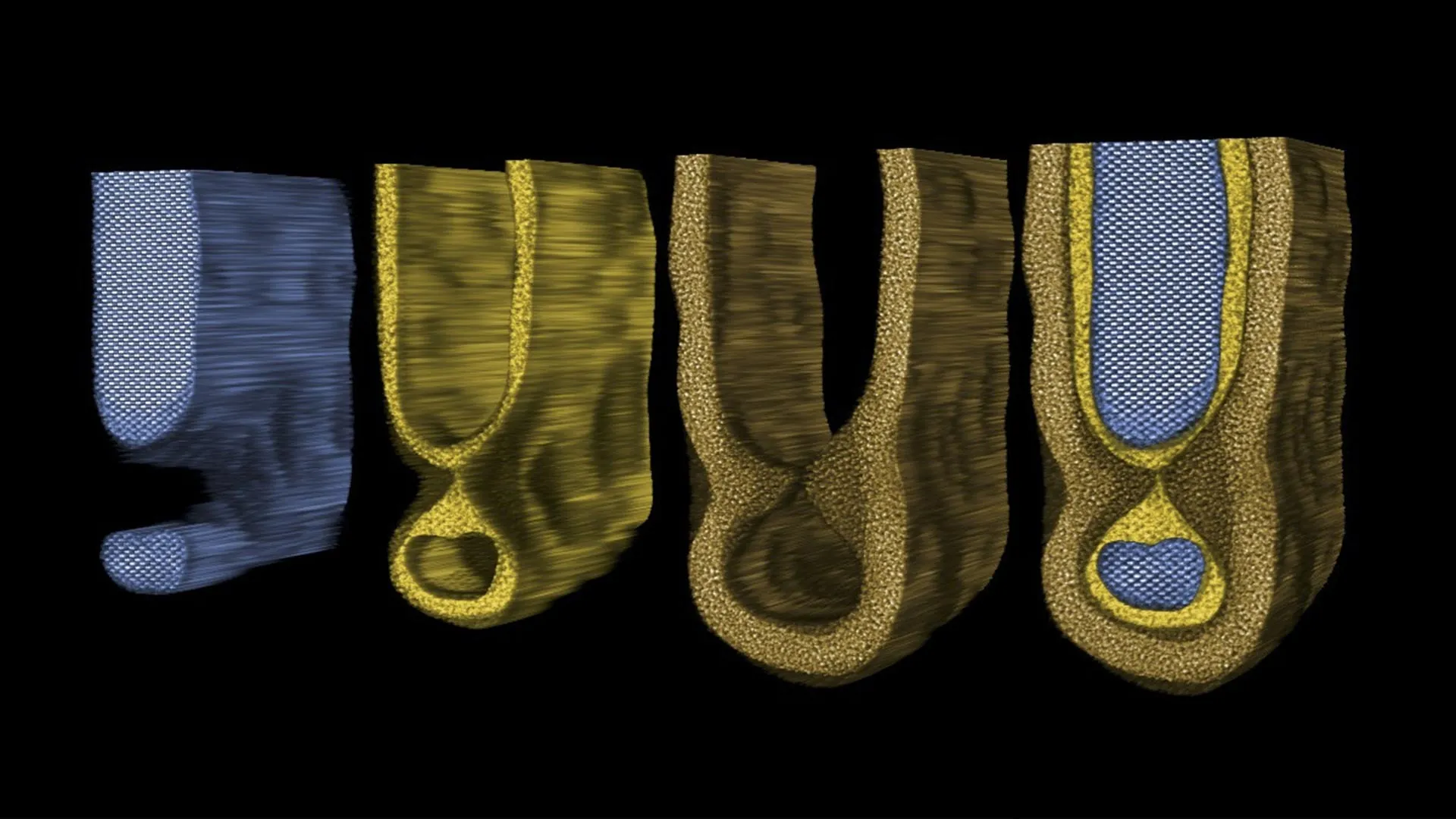
The groundbreaking findings were officially published on February 23rd in the prestigious scientific journal Nature Communications. The study’s lead author, doctoral student Shake Karapetyan, spearheaded the research. David Muller, the Samuel B. Eckert Professor of Engineering at the Cornell Duffield College of Engineering and the leader of this pivotal project, emphasized the transformative nature of their discovery. "Since there’s really no other way you can see the atomic structure of these defects, this is going to be a really important characterization tool for debugging and fault-finding in computer chips, especially at the development stage," Professor Muller stated. This new capability offers an unprecedented window into the intricate world of microchip manufacturing, promising to accelerate development cycles and enhance the reliability of the electronic devices that underpin our modern lives.
The semiconductor industry has grappled for decades with the detrimental effects of extremely small structural flaws. As the complexity of computer chips has escalated and their constituent components have shrunk to the astonishing scale of individual atoms, even the most minute irregularities can now exert a disproportionate influence on how these devices operate. At the very heart of every computer chip lies the transistor, a microscopic component that functions as an electronic switch, meticulously controlling the flow of electrical current. Each transistor incorporates a precisely engineered channel that opens and closes, thereby regulating the movement of electrons.
Professor Muller eloquently drew an analogy to illustrate the significance of these microscopic imperfections. "The transistor is like a little pipe for electrons instead of water," he explained. "You can imagine, if the walls of the pipe are very rough, it’s going to slow things down. And so measuring how rough the walls are and which walls are good and which walls are bad is now even more important." This vivid comparison underscores the direct correlation between the microscopic uniformity of the transistor’s internal structure and its operational efficiency. Any deviation from perfect smoothness at the atomic level can lead to increased resistance, reduced speed, and potentially outright malfunction.
Professor Muller’s career has been dedicated to exploring the physical limitations of semiconductor technology. His early work, from 1997 to 2003, was at Bell Labs, the very institution where transistors were initially invented. During this period, he delved into the fundamental question of how small these crucial devices could ultimately become. In the nascent days of transistors in the mid-20th century, their arrangement on chips was predominantly flat and expansive, spreading outwards much like suburban developments. However, as engineers began to exhaust available surface area, a paradigm shift occurred, leading to the ingenious development of stacking transistors vertically. This innovation transformed chip architecture into complex three-dimensional structures, reminiscent of towering apartment buildings.
The inherent challenge with these increasingly sophisticated 3D structures lies in their diminishing scale. "The problem is these 3D structures are smaller than the size of a virus. And these days, it’s a lot smaller. It’s more like a molecule-in-the-cell kind of scale," Professor Muller observed. This microscopic realm presents immense difficulties for traditional inspection and analysis methods. Today’s advanced chips can house billions of transistors, and as their dimensions continue to shrink, diagnosing performance issues has become an increasingly formidable task.
Shake Karapetyan elaborated on the extreme miniaturization involved: "These days, a transistor channel can be only about 15 to 18 atoms wide, which is super, super tiny, and they’re extremely intricate," she noted. "At this point, it matters where every atom is, and it’s really hard to characterize." This level of precision means that even subtle variations in atomic placement can have significant consequences for the overall functionality of the chip. The ability to see and understand these atomic-level details is therefore paramount for continued progress.
Professor Muller’s prior experience at Bell Labs proved instrumental in this latest advancement. During that time, he collaborated with Glen Wilk ’90, who is now a vice president of technology at ASM. Their research focused on finding alternatives to silicon dioxide, the prevalent gate material of the era, which suffered from excessive current leakage as devices became smaller. Their pioneering work contributed significantly to the adoption of hafnium oxide, a material that subsequently became the industry standard for computer processors and mobile devices starting in the mid-2000s.
Reflecting on the evolution of imaging technology, Professor Muller remarked on the impact of their earlier research. "The papers we published on how to use electron microscopes to characterize these materials, I can tell you, a lot of the semiconductor folks had read those very, very carefully," he stated. Muller, who also co-directs the Kavli Institute at Cornell for Nanoscale Science and the Cornell Center for Materials Research (CCMR), observed the clear continuity of interest when they re-engaged with this project. He vividly described the progress in microscopy: "Back then, it was like flying biplanes. And now you’ve got jets."
The "jet" he refers to is electron ptychography, a sophisticated computational imaging technique that leverages an electron microscope pixel array detector (EMPAD). This detector was co-developed by Muller’s research group. The EMPAD system meticulously records intricate scattering patterns generated as electrons traverse the complex structures of transistors. By meticulously analyzing the subtle shifts in these scattering patterns between different scan points, researchers can reconstruct remarkably detailed three-dimensional images. The precision of this system is so extraordinary that it has yielded the highest resolution images ever captured, enabling scientists to visualize individual atoms with unparalleled clarity, a feat officially recognized by Guinness World Records.
The collaboration between Professor Muller and Glen Wilk, spanning over 25 years since their initial work at Bell Labs, was rekindled with crucial support from TSMC and its Corporate Analytical Laboratories group. Their shared objective was to apply the advanced EMPAD technology to the analysis of contemporary semiconductor devices. "You can think of this imaging technique like solving a massive puzzle, both in terms of taking the experimental data and doing the computational reconstruction," Karapetyan explained, highlighting the complex interplay between experimental observation and computational analysis.
Following the meticulous collection and reconstruction of the imaging data, the research team focused on precisely mapping the positions of atoms within the transistor channels. This detailed analysis unveiled subtle irregularities at the interfaces of these channels, which Karapetyan aptly described as "mouse bites." These defects, it was found, originate during the meticulously optimized growth processes employed in the manufacturing of these intricate structures. The research team utilized sample devices fabricated at the renowned nanoelectronics research center Imec, which provided an ideal platform for rigorously testing and validating their novel imaging technique.
Karapetyan further elaborated on the manufacturing process and its impact on chip structures: "Fabrication of modern devices takes hundreds, if not thousands, of steps of chemical etching and deposition and heating, and then every single step does something to your structure," she noted. "Before you used to look at projective images to try and figure out what was really going on. Now you have a direct probe to actually see after every single step and have a better grasp of, oh, I put the temperature this high, and then this is what it looks like." This direct visual feedback loop represents a paradigm shift in chip manufacturing, allowing for immediate identification and correction of process-induced defects.
The implications of this newfound ability to directly observe atomic-level defects are far-reaching, poised to influence virtually every device reliant on advanced computer chips. This includes ubiquitous technologies such as smartphones and laptops, as well as the massive data centers that power much of our digital infrastructure. Furthermore, this breakthrough holds significant promise for the development of emerging technologies, most notably quantum computers. These revolutionary machines demand an exceptionally precise control over material structures, making the visualization of atomic defects critically important.
"I think there’s a lot more science we can do now, and a lot more engineering control, having this tool," Karapetyan concluded, expressing optimism about the future research and development enabled by this technology. The study’s co-authors include Steven Zeltmann, a staff scientist at the Platform for the Accelerated Realization, Analysis and Discovery of Interface Materials (PARADIM), and Ta-Kun Chen and Vincent Hou from TSMC. The research was generously funded by TSMC, with additional support for the microscopy facilities provided by CCMR and PARADIM, both of which receive funding from the National Science Foundation. This multidisciplinary and well-supported effort has culminated in a scientific achievement that promises to reshape the landscape of electronic device design and manufacturing for years to come.