Imroatul Nasiyah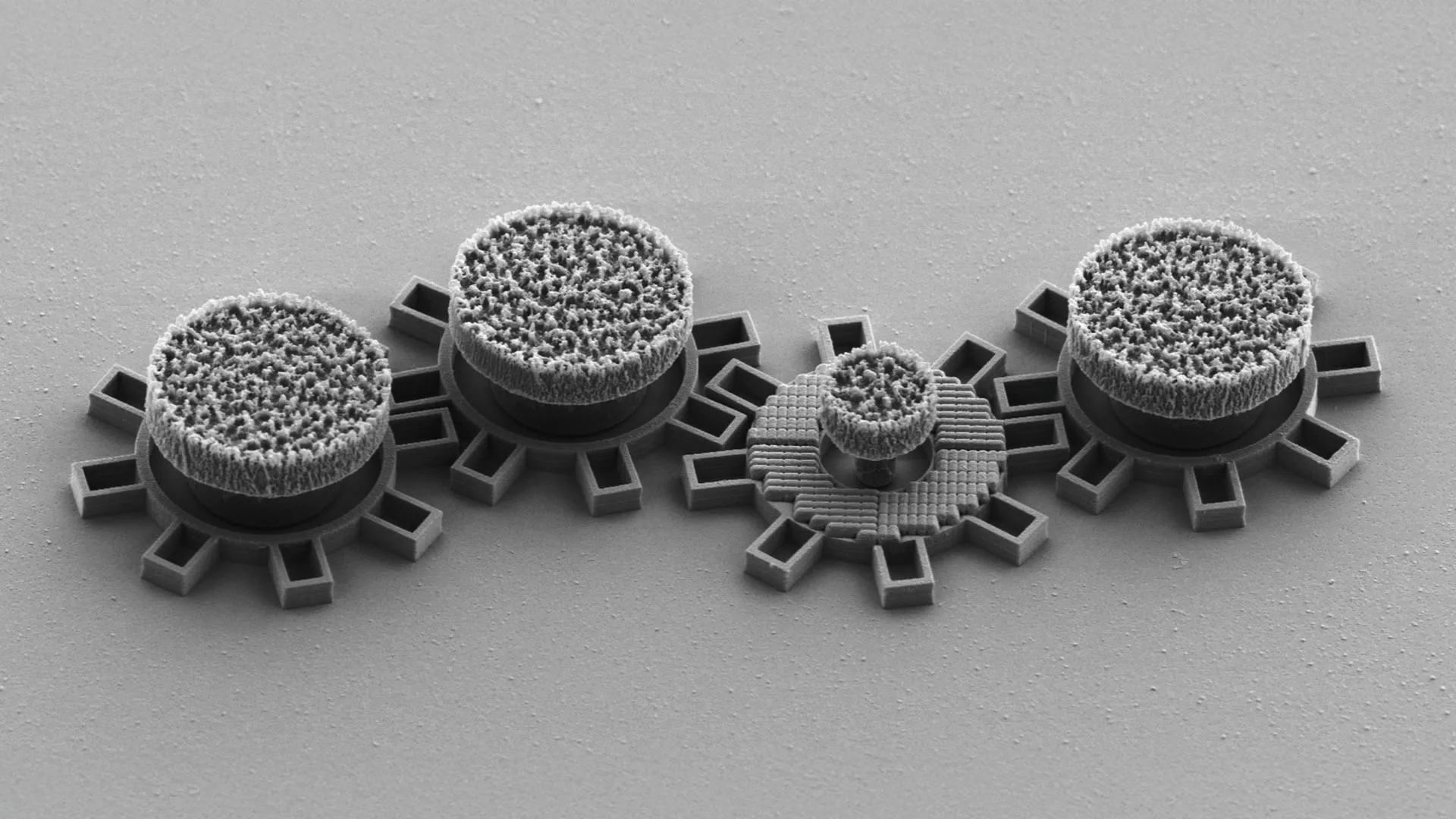
Researchers at the University of Gothenburg have achieved a groundbreaking feat by developing light-powered gears on a micrometer scale, a breakthrough that promises to usher in the era of the smallest on-chip motors ever created, capable of fitting within the confines of a human hair. This revolutionary advancement, detailed in a recent study, signifies a paradigm shift in micro-mechanics, moving beyond traditional mechanical limitations and harnessing the power of light for intricate nanoscale operations.
Gears, ubiquitous in our macroscopic world from the intricate workings of timepieces to the robust machinery of vehicles and the sophisticated mechanisms of robots and wind turbines, have long been a target for miniaturization. For over three decades, scientists have strived to construct progressively smaller gears to enable the development of micro-engines. However, progress had reached an impasse at approximately 0.1 millimeters, primarily due to the insurmountable challenge of fabricating the necessary drive trains to impart motion at such minute scales. The inherent friction, wear, and complexity of mechanical linkages at these dimensions proved to be significant hurdles.
The team from the University of Gothenburg, in collaboration with other institutions, has now shattered this long-standing barrier. Their innovative approach abandons conventional mechanical drive trains entirely. Instead, they have ingeniously devised a method to set gears in motion directly using laser light. This elegant solution bypasses the physical constraints that previously hampered miniaturization efforts, opening up a vast new frontier for micro-device design and functionality.
Gears Powered by Light: A Novel Mechanism
The core of this breakthrough lies in the researchers’ demonstration that microscopic machines can be propelled by optical metamaterials. These are not ordinary materials but rather meticulously engineered, small, patterned structures designed to interact with light in extraordinary ways, specifically to capture and control light at the nanoscale. Utilizing established lithography techniques, a process commonly employed in semiconductor manufacturing, the researchers have successfully fabricated gears directly onto a microchip using silicon. These gears are adorned with an optical metamaterial and possess a diameter ranging from a few tens of micrometers.
The magic happens when a laser beam is directed onto this metamaterial. The interaction between the laser light and the patterned metamaterial induces rotation in the gear wheel. The intensity of the laser light serves as a precise control mechanism for the speed of rotation, allowing for fine-tuning of the micromotor’s operation. Furthermore, the researchers have demonstrated an equally remarkable level of control over the direction of the gear wheel’s spin. By strategically altering the polarization of the light, they can seamlessly reverse the direction of rotation, offering a versatile and dynamic control over the micro-mechanical system. This level of precise, non-contact control at the microscale is unprecedented and represents a significant leap forward in the field of micro-robotics.
The ability to achieve controlled rotation of these microscopic gears is the critical step towards realizing true micromotors – tiny engines capable of performing work at the microscale. The implications of this development are profound, extending far beyond mere scientific curiosity.
A New Way of Thinking About Microscale Mechanics
"We have built a gear train in which a light-driven gear sets the entire chain in motion," explains Gan Wang, the study’s first author and a researcher in soft matter physics at the University of Gothenburg. "The gears can also convert rotation into linear motion, perform periodic movements and control microscopic mirrors to deflect light." This highlights the versatility of the developed system. The ability to translate rotational motion into linear motion opens up possibilities for micro-actuators, while the capacity for periodic movements suggests applications in micro-pumps or oscillatory devices. The control of microscopic mirrors to deflect light is particularly intriguing, hinting at applications in optical switching or micro-optical systems.
The true revolutionary aspect of this research lies in its integration potential. The ability to embed such sophisticated micro-machines directly onto a microchip and power them wirelessly using light unlocks a universe of entirely new possibilities. Unlike traditional micro-actuators that often require physical connections for power and control, laser light offers a clean, non-invasive, and highly controllable method of operation. This eliminates the need for bulky external couplings or complex wiring, which have historically been major impediments to scaling up micro-systems. The ease with which laser light can be directed and modulated makes the micromotor amenable to integration into increasingly complex and sophisticated microsystems.
"This is a fundamentally new way of thinking about mechanics on a microscale," emphasizes Gan Wang. "By replacing bulky couplings with light, we can finally overcome the size barrier that has long constrained the development of micro-devices." This paradigm shift represents a move away from brute mechanical force and towards elegant optical manipulation, a testament to the ingenuity of the research team.
Cell Size and the Dawn of Medical Micro-Robotics
With these remarkable advances, researchers are now beginning to envision a future populated by sophisticated micro- and nanomachines. These machines could be designed to precisely control light, delicately manipulate minute particles, or be seamlessly integrated into the burgeoning field of future lab-on-a-chip systems. The scale of these newly developed gears is particularly noteworthy. A single gear wheel can be as small as 16-20 micrometers in diameter, a size that is comparable to the dimensions of many human cells. This remarkable proximity to biological scales immediately suggests a wealth of potential applications in the field of medicine.
"Medicine is a field that is within reach," believes Gan Wang, highlighting the transformative impact this technology could have on healthcare. The potential applications are vast and incredibly exciting. "We can use the new micromotors as pumps inside the human body, for example to regulate various flows," he elaborates. Imagine microscopic pumps, powered by external light sources, precisely controlling the flow of fluids within the body, perhaps to deliver medication to targeted sites or to assist in the removal of excess fluids.
Furthermore, Gan Wang is actively exploring the functionality of these micromotors as valves. "I am also looking at how they function as valves that open and close," he states. This suggests the possibility of creating microscopic gates that can precisely control the passage of substances, a capability that could be invaluable in a variety of biomedical applications, from regulating drug release to managing cellular environments.
The implications extend beyond internal medical devices. These light-powered micromotors could also be instrumental in advanced diagnostic tools. For instance, they could be used to manipulate biological samples on a microfluidic chip, enabling more precise and efficient analysis of blood, tissue, or other biological fluids. The ability to create on-chip devices that can actively move and manipulate components at the cellular level could revolutionize how we diagnose diseases, develop new therapies, and conduct fundamental biological research.
The development of these micromotors also has implications for drug delivery systems. Instead of relying on passive diffusion or bulk fluid flow, future drug delivery vehicles could be equipped with these tiny, light-powered engines, allowing for targeted navigation within the body to reach specific cells or tissues. This level of precision could significantly enhance therapeutic efficacy while minimizing side effects.
Beyond medicine, the potential applications are broad. In materials science, these micromotors could be used to assemble complex nanoscale structures or to manipulate materials at the atomic or molecular level. In environmental science, they could be employed in micro-scale remediation efforts, such as capturing and removing pollutants from water. In advanced manufacturing, they could be integrated into micro-assembly lines for the creation of intricate micro-electronic components or novel materials.
The University of Gothenburg’s achievement represents a significant leap forward in our ability to engineer and control matter at the smallest scales. By harnessing the power of light, scientists have overcome long-standing limitations and paved the way for a new generation of micro-devices with unprecedented capabilities. The journey from a concept to a functional micromotor smaller than a human hair is a testament to human ingenuity and scientific perseverance, and the future applications of this technology promise to be nothing short of transformative. This breakthrough not only pushes the boundaries of what is currently possible but also ignites the imagination, inspiring further innovation and exploration in the exciting realm of micro- and nanotechnology.