Imroatul Nasiyah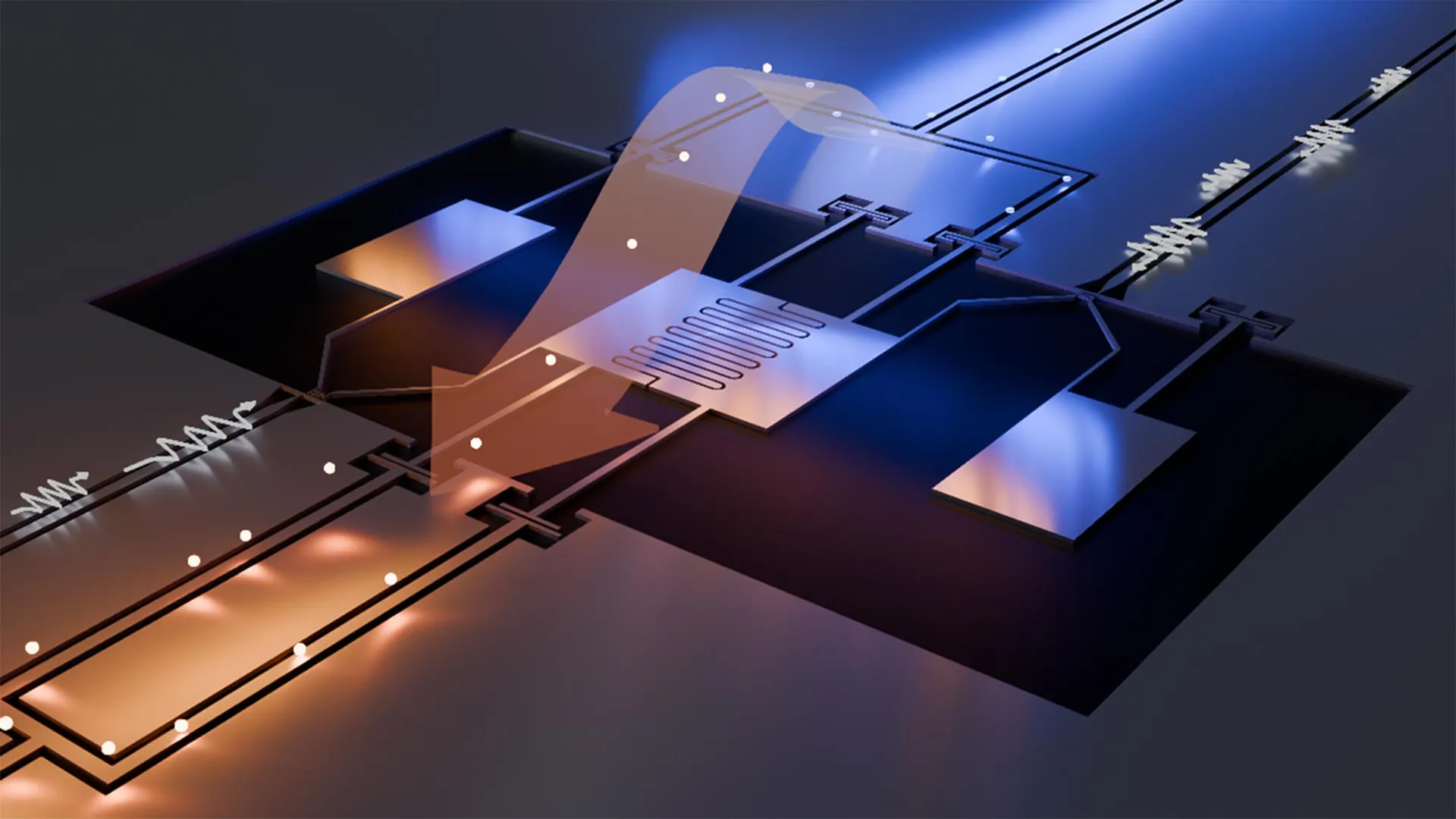
Quantum computers, heralded as the next frontier in technological advancement, possess the extraordinary potential to revolutionize fields ranging from drug discovery and artificial intelligence to logistics optimization and secure communications. However, their immense promise is currently tethered by a significant technical hurdle: the absolute necessity of maintaining an extremely frigid environment. These delicate quantum systems, particularly those built upon superconducting circuits, demand temperatures perilously close to absolute zero (-273 degrees Celsius). It is at these cryogenic extremes that materials exhibit superconductivity, enabling electrons to flow unimpeded, a prerequisite for the formation and stability of qubits, the fundamental building blocks of quantum information. The conundrum lies in the fact that conventional cooling systems, essential for achieving these frigid temperatures, invariably generate unwanted electromagnetic interference and background noise. This very noise, a byproduct of the cooling process itself, poses a direct threat to the fragile quantum states, acting as a disruptive force that can quickly erase precious stored information. The sensitivity of quantum systems to even minute thermal fluctuations or electromagnetic disturbances makes their operation and, more critically, their expansion into larger, more complex architectures, an immensely challenging endeavor. As researchers strive to scale up quantum computers to tackle real-world problems, the management of heat and noise becomes exponentially more difficult, with larger systems creating more avenues for disruptive energy to propagate and destabilize these delicate quantum states.
The critical role of energy transport and dissipation in the functionality of quantum devices has long been recognized. As Simon Sundelin, a doctoral student in quantum technology at Chalmers University of Technology and the lead author of a groundbreaking study, eloquently states, "Many quantum devices are ultimately limited by how energy is transported and dissipated. Understanding these pathways and being able to measure them allows us to design quantum devices in which heat flows are predictable, controllable and even useful." This insight has paved the way for a paradigm shift in quantum cooling technology, moving away from a strategy of pure elimination of noise to one that ingeniously leverages it.
In a seminal study published in the esteemed journal Nature Communications, a team of researchers at Chalmers University of Technology has unveiled a fundamentally novel quantum refrigerator, one that eschews the traditional approach of noise eradication. Instead, this innovative device ingeniously harnesses the ubiquitous presence of noise as the very engine driving its cooling mechanism. This revolutionary concept draws inspiration from a long-speculated phenomenon in physics known as "Brownian refrigeration." As Simone Gasparinetti, an associate professor at Chalmers and the senior author of the study, explains, "Physicists have long speculated about a phenomenon called Brownian refrigeration; the idea that random thermal fluctuations could be harnessed to produce a cooling effect. Our work represents the closest realisation of this concept to date."
At the heart of this novel quantum refrigerator lies an intricately engineered superconducting artificial molecule, meticulously fabricated within Chalmers’ state-of-the-art nanofabrication laboratory. This artificial construct, while bearing a functional resemblance to its natural molecular counterparts, is not composed of atoms but rather of microscopic superconducting electrical circuits. This artificial molecule is strategically connected to an array of microwave channels. The ingenious aspect of the design lies in the controlled injection of microwave noise – essentially, carefully curated random signal fluctuations within a specific frequency range – into a third port. This injected noise acts as a crucial catalyst, enabling and directing the flow of heat and energy through the system with an astonishing degree of precision.
The two primary microwave channels serve as the crucial "hot" and "cold" reservoirs, analogous to the components of a conventional refrigerator. However, their interaction, and thus the cooling effect, is contingent upon the introduction of controlled noise through the third port. This injected noise is the key enabler, initiating and driving the transport of heat between these reservoirs via the artificial molecule. The Chalmers team has demonstrated an unprecedented capability to measure extremely minute heat currents, achieving levels as low as attowatts (10-18 watts). To put this minuscule heat flow into perspective, Sundelin elaborates, "If such a small heat flow were used to warm a drop of water, it would take the age of the universe to see its temperature rise one degree Celsius." This remarkable precision in controlling and measuring heat flow opens up entirely new avenues for quantum system management.
The ramifications of this finely tuned control are far-reaching. By meticulously adjusting the temperatures of the reservoirs and meticulously tracking these incredibly small heat flows, the quantum refrigerator exhibits remarkable versatility. Depending on the specific operational conditions, it can perform a variety of functions: it can operate as a refrigerator, actively cooling a system; it can function as a heat engine, converting thermal energy into useful work; or it can amplify thermal transport, facilitating the movement of heat in a controlled manner. This multi-faceted capability is of paramount importance for the development of scalable quantum technologies.
In larger quantum systems, heat is an inevitable byproduct of qubit operation and measurement. The ability to manage this locally generated heat directly within the quantum circuits themselves, at a scale that eludes conventional cooling systems, promises to dramatically enhance stability and performance. "We see this as an important step towards controlling heat directly inside quantum circuits, at a scale that conventional cooling systems can’t reach," states Aamir Ali, a researcher in quantum technology at Chalmers and a co-author of the study. "Being able to remove or redirect heat at this tiny scale opens the door to more reliable and robust quantum technologies." This precise, on-chip thermal management is a critical enabler for building larger, more fault-tolerant quantum computers that can unlock their full potential.
The groundbreaking research, titled "Quantum refrigeration powered by noise in a superconducting circuit," was published in Nature Communications. The esteemed authors include Simon Sundelin, Mohammed Ali Aamir, Vyom Manish Kulkarni, Claudia Castillo-Moreno, and Simone Gasparinetti, all affiliated with the Department of Microtechnology and Nanoscience at Chalmers University of Technology. The sophisticated fabrication of the quantum refrigerator was made possible by the advanced facilities at the Nanofabrication Laboratory, Myfab, at Chalmers University of Technology. This pioneering work was generously supported by significant funding from the Swedish Research Council, the Knut and Alice Wallenberg Foundation through the Wallenberg Centre for Quantum Technology (WACQT), the European Research Council, and the European Union, underscoring the global recognition of its profound scientific and technological importance.