Imroatul Nasiyah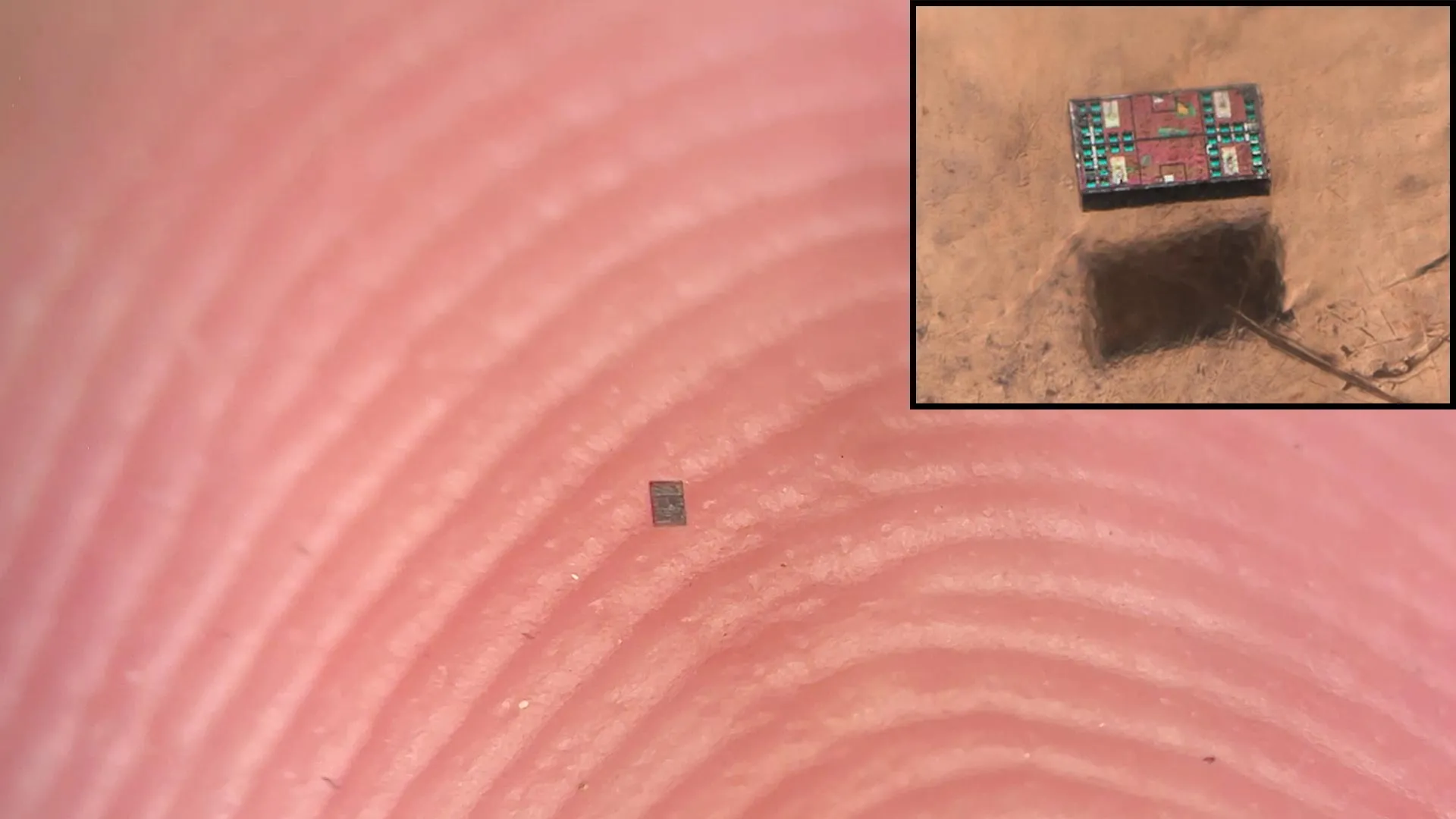
In a groundbreaking achievement poised to redefine the frontiers of robotics and medicine, researchers at the University of Pennsylvania and the University of Michigan have engineered the smallest fully programmable autonomous robots ever conceived, ushering in an era where machines as minuscule as a grain of salt can navigate, perceive, and intelligently respond to their environments. These revolutionary microscopic machines possess the remarkable ability to swim through liquids, sense their surroundings with sophisticated sensors, operate autonomously for extended periods—up to several months—and are astonishingly cost-effective, with each unit costing approximately one penny to produce. This breakthrough, detailed in prestigious publications like Science Robotics and the Proceedings of the National Academy of Sciences (PNAS), overcomes decades-old challenges in miniaturization and independence for robotic systems, opening up unprecedented possibilities for applications ranging from intricate medical diagnostics and treatments to the assembly of next-generation micro-devices.
Each of these astonishing robots is so diminutive that it is barely visible without magnification, measuring an astonishing 200 by 300 by 50 micrometers. This scale places them well below the size of a common grain of salt, making them comparable in size to many living microorganisms. Their ability to function at the same scale as these biological entities holds immense potential for the future of healthcare. Doctors could one day deploy these microscopic agents to meticulously monitor individual cells within the human body, offering unparalleled insights into cellular processes, disease progression, and treatment efficacy. Beyond medicine, engineers envision these robots assisting in the complex assembly of extremely tiny devices, crucial for advancements in fields such as quantum computing, microelectronics, and advanced manufacturing, where traditional tools are simply too large to operate.
The ingenuity of these robots lies in their complete self-sufficiency. They are powered entirely by light, a seemingly simple energy source that fuels their microscopic onboard computers. These sophisticated processors are what grant the robots their remarkable intelligence and autonomy. They are programmed to follow specific paths, meticulously navigating through liquid environments. Crucially, they possess the ability to detect localized temperature changes in their surroundings, a vital sensing capability that allows them to dynamically adjust their movement in response to these environmental cues. This capacity for sensing and adaptive response is a cornerstone of true robotic autonomy, enabling them to react to stimuli without external intervention.
"We’ve made autonomous robots 10,000 times smaller," states Marc Miskin, an Assistant Professor in Electrical and Systems Engineering at Penn Engineering and the senior author of the groundbreaking research. His assertion highlights the monumental leap in scale achieved by this project. "That opens up an entirely new scale for programmable robots." This significant reduction in size is not merely an incremental improvement; it represents a paradigm shift, unlocking a vast, previously inaccessible realm for the application of intelligent, programmable machines.
Why Shrinking Robots Has Been So Difficult
The journey to creating these minuscule autonomous robots was fraught with immense technical hurdles, particularly the long-standing challenge of achieving true independence at microscopic scales. While the electronics industry has consistently advanced its ability to shrink components over several decades, the field of robotics has lagged significantly behind. According to Professor Miskin, achieving functional independence for robots smaller than one millimeter has remained an "unsolved challenge" for an extended period. "Building robots that operate independently at sizes below one millimeter is incredibly difficult," he explains. "The field has essentially been stuck on this problem for 40 years."
The fundamental reason for this difficulty lies in the dramatic shift in physics that governs interactions at microscopic scales. At everyday, macroscopic levels, motion is primarily dictated by forces such as gravity and inertia, which are directly proportional to an object’s volume. However, as objects shrink to microscopic dimensions, surface-related forces, such as drag and viscosity, begin to dominate. These forces become overwhelmingly influential, fundamentally altering how movement occurs. Miskin vividly illustrates this phenomenon: "If you’re small enough, pushing on water is like pushing through tar." This increased resistance makes conventional methods of locomotion, which rely on bulk forces, utterly ineffective.
Consequently, conventional robotic designs, which often employ articulated limbs like arms and legs, prove impractical at these microscopic scales. "Very tiny legs and arms are easy to break," Miskin elaborates. "They’re also very hard to build." The delicate nature of such components makes them prone to failure, and the precision required for their fabrication is exceptionally difficult to achieve with current micro-manufacturing techniques.
To circumvent these inherent limitations, the research team embarked on developing a radically novel approach to robot locomotion. Instead of attempting to force macroscopic principles onto a microscopic scale, they devised a method that works in harmony with the unique physics of the microscopic world, rather than fighting against it.
How Microscopic Robots Swim
The locomotion strategy employed by these tiny robots is a departure from the methods used by larger organisms. Fish and other macroscopic swimmers propel themselves by pushing water backward, a mechanism rooted in Newton’s Third Law of Motion. The microscopic robots, however, adopt a fundamentally different, yet equally effective, strategy.
Rather than relying on bending or flexing parts, the robots generate a controlled electrical field. This field exerts a gentle force on charged particles, known as ions, present in the surrounding liquid. As these ions are pushed by the electrical field, they, in turn, drag nearby water molecules along with them. This synchronized movement of ions and water molecules creates a localized flow, effectively propelling the robot forward. "It’s as if the robot is in a moving river," explains Miskin, "but the robot is also causing the river to move." This ingenious method of fluid manipulation allows for controlled movement without the need for any physical appendages.
The ability to precisely manipulate this electrical field grants the robots remarkable control over their movement. By adjusting the field’s parameters, they can change direction, execute complex navigational paths, and even coordinate their movements in synchronized groups, reminiscent of schools of fish. These robots can achieve impressive speeds, reaching up to one body length per second, a significant feat for a machine of such minuscule proportions.
A significant advantage of this light-powered, electrokinetic swimming method is its inherent durability. Since it relies on electrodes with no moving parts, the robots are remarkably robust. According to Miskin, they can be transferred between different liquid samples repeatedly using a micropipette without sustaining damage, a crucial characteristic for practical applications. Once powered by light from an LED source, these tiny marvels can continue to swim and operate for months, demonstrating exceptional longevity.
Packing Intelligence into a Microscopic Body
Achieving true autonomy, however, extends beyond mere locomotion. A truly autonomous robot must possess the capacity to sense its environment, make informed decisions based on those perceptions, and power itself efficiently. Integrating all these essential components onto a chip that is a mere fraction of a millimeter across presented a formidable engineering challenge, one that was expertly tackled by David Blaauw’s team at the University of Michigan.
Blaauw’s lab, already renowned for holding the record for creating the world’s smallest computer, found a synergistic partner in Miskin’s propulsion system. The two researchers met at a Defense Advanced Research Projects Agency (DARPA) presentation five years prior and quickly recognized the complementary nature of their respective technologies. "We saw that Penn Engineering’s propulsion system and our tiny electronic computers were just made for each other," recalls Blaauw. Despite this initial synergy, translating this vision into a functional robot required an intensive five-year development period.
One of the most significant obstacles was power management. "The key challenge for the electronics," Blaauw states, "is that the solar panels are tiny and produce only 75 nanowatts of power. That is over 100,000 times less power than what a smart watch consumes." To overcome this severe power limitation, the team engineered specialized circuits designed to operate at extremely low voltages. This meticulous optimization dramatically reduced power consumption, by more than 1000 times, making the system feasible with the limited energy harvested from the miniature solar cells.
Space was another critical constraint. The solar panels, essential for power generation, occupy a significant portion of the robot’s limited surface area, leaving precious little room for the intricate computing hardware. The solution involved a fundamental reimagining of the robot’s software architecture. "We had to totally rethink the computer program instructions," Blaauw explains. "condensing what conventionally would require many instructions for propulsion control into a single, special instruction to shrink the program’s length to fit in the robot’s tiny memory space." This innovative approach to software design allowed for the necessary computational power to be packed into an incredibly compact footprint.
Robots That Sense and Communicate
The culmination of these integrated advancements has resulted in what the researchers believe to be the first sub-millimeter robot capable of genuine decision-making. To their knowledge, no prior attempt has succeeded in embedding a complete computer system, including a processor, memory, and sensors, into a robot of this minuscule size. This remarkable integration empowers the robots to not only perceive their surroundings but also to react and make choices independently, marking a significant milestone in micro-robotics.
The robots are equipped with sophisticated electronic temperature sensors that can detect minute temperature variations as small as one-third of a degree Celsius. This high level of sensitivity allows them to identify subtle thermal gradients, enabling them to navigate towards warmer regions or to relay temperature readings that can serve as valuable indicators of cellular activity. This capability opens up new avenues for non-invasive monitoring of individual cells, providing researchers with unprecedented access to cellular-level data.
Communicating these critical measurements presented another inventive challenge. "To report out their temperature measurements, we designed a special computer instruction that encodes a value, such as the measured temperature, in the wiggles of a little dance the robot performs," explains Blaauw. "We then look at this dance through a microscope with a camera and decode from the wiggles what the robots are saying to us. It’s very similar to how honey bees communicate with each other." This bio-inspired communication method, using encoded movements, allows the robots to transmit vital information back to researchers, effectively giving them a voice at the microscale.
Furthermore, the same light that powers these robots is ingeniously employed to program them. Each robot possesses a unique address, enabling researchers to upload distinct sets of instructions to individual units. "This opens up a host of possibilities," Blaauw adds, "with each robot potentially performing a different role in a larger, joint task." This programmability and individual addressing capability pave the way for coordinated swarms of microscopic robots, capable of executing complex, multi-faceted tasks.
A Platform for Future Microscopic Machines
The current generation of these microscopic robots represents not an endpoint, but a foundational platform for future innovations. The researchers have intentionally designed the system to be a flexible and adaptable framework. Future iterations of these robots are envisioned to incorporate more advanced programming, achieve higher speeds, integrate a wider array of sensors for enhanced environmental perception, and operate effectively in even more challenging or hostile environments. The combination of a robust propulsion mechanism with cost-effective and adaptable electronics ensures that this platform can evolve over time.
"This is really just the first chapter," emphasizes Miskin, underscoring the vast potential that lies ahead. "We’ve shown that you can put a brain, a sensor and a motor into something almost too small to see, and have it survive and work for months. Once you have that foundation, you can layer on all kinds of intelligence and functionality. It opens the door to a whole new future for robotics at the microscale." This transformative research not only pushes the boundaries of what is currently possible but also lays the groundwork for a future where microscopic robots play an integral role in scientific discovery, medical advancement, and technological innovation.
The groundbreaking research was a collaborative effort involving scientists from the University of Pennsylvania’s School of Engineering and Applied Science, the Penn School of Arts & Sciences, and the University of Michigan’s Department of Electrical Engineering and Computer Science. Funding for this pioneering work was generously provided by the National Science Foundation (NSF 2221576), the University of Pennsylvania Office of the President, the Air Force Office of Scientific Research (AFOSR FA9550-21-1-0313), the Army Research Office (ARO YIP W911NF-17-S-0002), the Packard Foundation, the Sloan Foundation, and the NSF National Nanotechnology Coordinated Infrastructure Program (NNCI-2025608), which supports the Singh Center for Nanotechnology. Fujitsu Semiconductors also contributed to the research. The extensive list of co-authors includes Maya M. Lassiter, Kyle Skelil, Lucas C. Hanson, Scott Shrager, William H. Reinhardt, Tarunyaa Sivakumar, and Mark Yim from the University of Pennsylvania, and Dennis Sylvester, Li Xu, and Jungho Lee from the University of Michigan.