Imroatul Nasiyah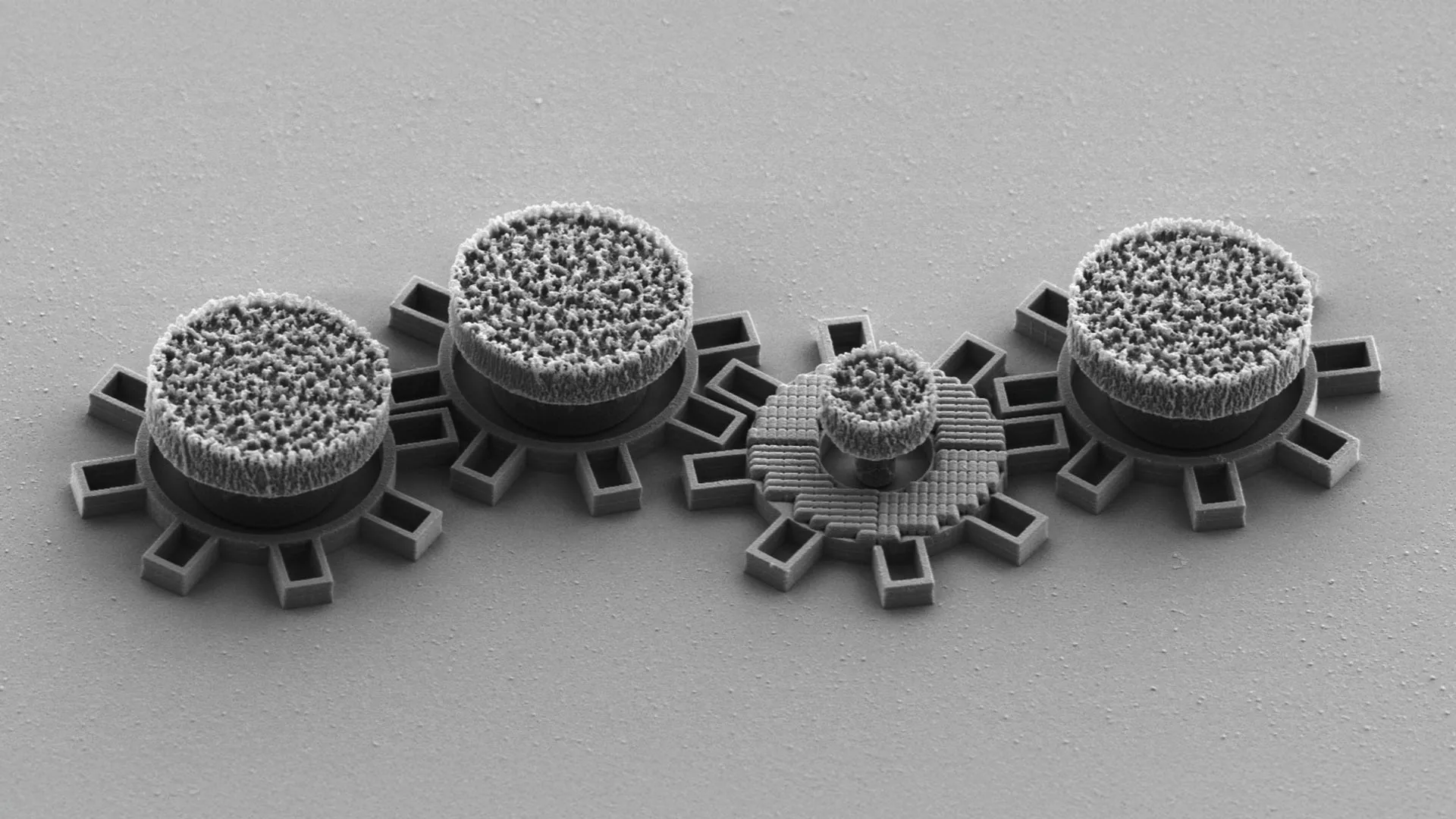
Researchers at the University of Gothenburg have achieved a groundbreaking feat in micro-engineering, successfully developing light-powered gears on a micrometer scale. This remarkable innovation shatters previous limitations and promises to usher in the era of the smallest on-chip motors ever conceived, with dimensions so minuscule they can fit within the diameter of a single strand of human hair. This breakthrough represents a paradigm shift in how we envision and construct microscopic mechanical systems, potentially unlocking a vast array of applications across diverse scientific and technological frontiers.
The ubiquity of gears in our macroscopic world, from the intricate mechanisms of timekeeping devices to the complex machinery of automobiles, robots, and wind turbines, underscores their fundamental importance in converting rotational motion into functional work. For over three decades, the scientific community has been captivated by the challenge of miniaturizing these essential components, aiming to create micro-engines capable of performing intricate tasks at the microscopic level. However, progress in this field had reached an impasse, with the smallest functional gears topping out at approximately 0.1 millimeters. The primary obstacle was the inability to fabricate the necessary drive trains—the interconnected components that transmit power and motion—at scales small enough to enable further miniaturization. This "drive train barrier" had effectively capped the advancement of micro-mechanical systems, limiting their potential for integration into increasingly compact and sophisticated devices.
The team of researchers from the University of Gothenburg, in collaboration with other institutions, has now triumphantly surmounted this long-standing hurdle. Their innovative approach sidesteps the complexities and limitations of traditional mechanical drive trains altogether. Instead, they have harnessed the power of laser light to directly impart motion to the gears, a radical departure from conventional methods. This elegant solution bypasses the need for physical linkages and complex gearing systems, paving the way for unprecedented levels of miniaturization and functionality.
The core of this revolutionary technology lies in the ingenious application of optical metamaterials. These are not merely microscopic gears; they are sophisticated structures engineered at the nanoscale to interact with light in highly controlled ways. The researchers have demonstrated that these microscopic machines can be effectively driven by these specialized metamaterials. The process involves manufacturing gears with integrated optical metamaterials using advanced lithography techniques, directly onto a silicon microchip. These gears, boasting diameters ranging from a few tens of micrometers, are intricately patterned with the metamaterial. When subjected to laser illumination, the metamaterial within the gear absorbs and manipulates the light, inducing rotation. The intensity of the laser beam serves as a precise control mechanism for the speed of rotation, allowing for fine-tuning of the motor’s operation. Furthermore, the direction of the gear’s spin can be manipulated by altering the polarization of the incident light, offering a high degree of directional control. This level of precision and responsiveness, powered solely by light, is a testament to the advanced understanding of light-matter interactions achieved by the researchers.
The successful demonstration of light-powered rotating gears brings the realization of true micromotors tantalizingly close. These aren’t just gears; they are components of sophisticated microsystems, poised to redefine the landscape of micro-robotics and nanotechnology. The study’s lead author, Gan Wang, a researcher specializing in soft matter physics at the University of Gothenburg, elaborates on the significance of their work. "We have built a gear train in which a light-driven gear sets the entire chain in motion," he explains. "The gears can also convert rotation into linear motion, perform periodic movements and control microscopic mirrors to deflect light." This multifaceted functionality, achieved with a single, light-activated component, highlights the immense potential of this technology to perform a variety of tasks at the microscale. The ability to convert rotational motion into linear motion, for instance, is crucial for applications requiring precise positioning or actuation. The capacity for periodic movements opens doors for oscillatory mechanisms, while the control of microscopic mirrors suggests applications in optical switching and manipulation.
The true transformative power of this breakthrough lies in the ability to integrate these light-driven machines directly onto a microchip. This seamless integration, coupled with the inherent ease of controlling laser light, unlocks entirely new avenues for scaling up to complex microsystems. Unlike traditional micro-mechanical systems that often require physical connections for power and control, laser light offers a contactless and highly controllable means of actuation. This eliminates the bulk and complexity associated with conventional couplings and connectors, which have been a major impediment to miniaturization. "This is a fundamentally new way of thinking about mechanics on a microscale," emphasizes Gan Wang. "By replacing bulky couplings with light, we can finally overcome the size barrier." This conceptual shift from mechanical to optical actuation is the linchpin of their success, enabling the creation of devices far smaller and more intricate than previously imaginable.
The implications of these advances extend to the realm of cell-sized machines. The developed gear wheels can be as small as 16-20 micrometers in diameter, a size comparable to that of many human cells. This uncanny similarity in scale opens up exciting possibilities for medical applications. Gan Wang expresses optimism about the potential impact on medicine, stating, "We can use the new micromotors as pumps inside the human body, for example to regulate various flows. I am also looking at how they function as valves that open and close." Imagine microscopic pumps, powered by external light sources, circulating fluids within the body for targeted drug delivery or to assist failing organs. Consider the prospect of micro-valves, precisely controlled by light, regulating the flow of biological substances within microfluidic devices for diagnostics or therapeutic interventions. These are no longer science fiction concepts but tangible possibilities brought closer by this research.
Beyond immediate medical applications, the potential for these light-powered micromotors is vast and multifaceted. They could revolutionize lab-on-a-chip systems, enabling highly sophisticated diagnostic and analytical tools that can process biological samples with unprecedented precision and speed. The ability to manipulate tiny particles with light-driven actuators could find applications in advanced manufacturing, sorting microscopic components, or assembling complex nanostructures. The control of light itself is another exciting frontier; these micromotors could be employed to steer and shape light beams on a microscopic scale, leading to advancements in optical computing and communication. The inherent scalability and adaptability of this light-driven approach suggest that the principles demonstrated here could be extended to create even smaller nanomachines, pushing the boundaries of what is possible at the nanoscale. The synergy between microelectronics, optics, and mechanics, facilitated by this breakthrough, promises to drive innovation across numerous scientific disciplines. The transition from gears that were once limited by physical constraints to those that dance to the tune of light represents a profound leap forward, heralding a new era of microscopic ingenuity. The University of Gothenburg’s achievement is not just a scientific curiosity; it is a foundational development that will likely shape the future of technology and our understanding of the microscopic world.