Imroatul Nasiyah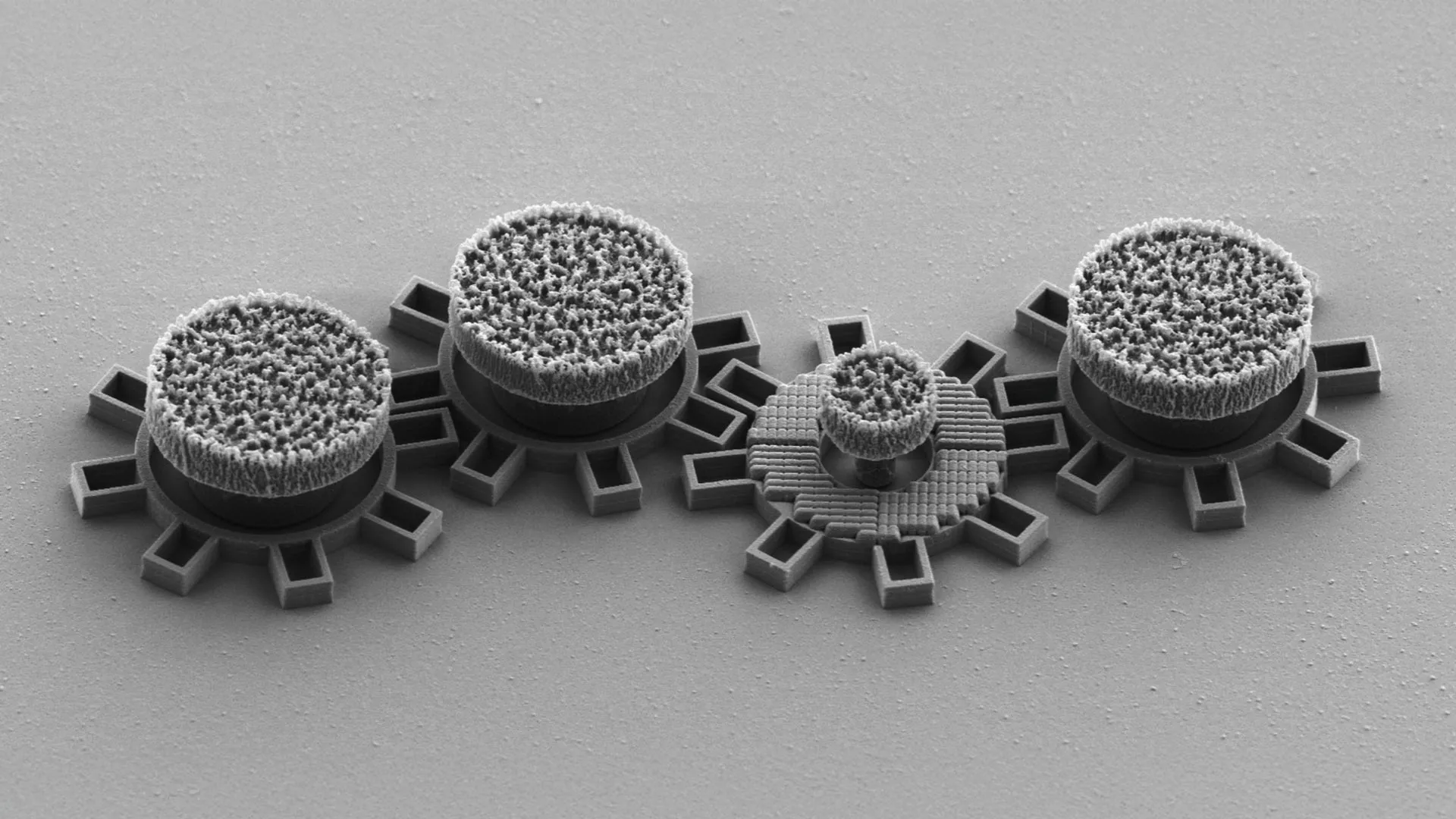
Gears, ubiquitous in the machinery that underpins modern civilization – from the intricate mechanisms of timekeeping devices and the powerful engines of automobiles to the complex articulations of robots and the colossal blades of wind turbines – have long been a target for miniaturization. For over three decades, scientists have strived to shrink these fundamental components to construct micro-engines, machines operating at a scale where traditional engineering principles become exceedingly difficult to apply. However, progress had plateaued at a size of approximately 0.1 millimeters. The fundamental limitation stemmed from the inability to construct the necessary drive trains – the interconnected systems of gears and shafts that transmit rotational motion – at such diminutive dimensions. The mechanical friction, manufacturing tolerances, and the sheer complexity of assembling these minuscule parts proved to be insurmountable obstacles, effectively capping the achievable size of functional micro-gears.
The team from the University of Gothenburg, collaborating with other esteemed institutions, has now shattered this size barrier. Their ingenious solution lies in a radical departure from conventional mechanical drive trains. Instead of relying on physical linkages and power transmission through contact, they have harnessed the power of laser light to directly set the gears in motion. This innovative approach bypasses the inherent limitations of traditional micro-mechanical assembly, offering a fundamentally new paradigm for driving microscopic machinery.
The core of their innovation lies in the development of gears powered by light. In their recently published study, the researchers demonstrate that microscopic machines can be effectively driven by optical metamaterials. These metamaterials are not conventional materials but rather intricately patterned structures engineered at the nanoscale. Their unique design allows them to precisely capture and control light. By employing established lithography techniques, a process commonly used in microelectronics manufacturing, the researchers have successfully fabricated gears incorporating these optical metamaterials directly onto a microchip. These gears, fashioned from silicon, possess a diameter ranging from a few tens of micrometers, a scale that is remarkably small. The magic happens when a laser beam is directed onto the metamaterial integrated within the gear. The interaction between the light and the metamaterial generates forces that cause the gear wheel to spin. The intensity of the laser light serves as a precise control mechanism for the speed of rotation. Furthermore, by strategically altering the polarization of the incident light, the researchers can even control the direction of the gear wheel’s spin, offering a remarkable degree of maneuverability. This direct, non-contact method of actuation is what brings the realization of true micromotors within their grasp.
This breakthrough represents a profound shift in thinking about mechanics at the microscale. "We have built a gear train in which a light-driven gear sets the entire chain in motion," explains Gan Wang, the study’s first author and a researcher in soft matter physics at the University of Gothenburg. "The gears can also convert rotation into linear motion, perform periodic movements and control microscopic mirrors to deflect light." This statement highlights the versatility and potential of their invention. The ability to integrate such sophisticated mechanical functions directly onto a chip and actuate them with light unlocks a vast spectrum of entirely new possibilities. Unlike traditional micro-motors that require physical connections for power and control, laser light offers a contactless and highly controllable method of operation. This ease of control and lack of physical tethering allows for the seamless scaling up of these micromotors into complex microsystems, where numerous individual components can be orchestrated to perform intricate tasks. "This is a fundamentally new way of thinking about mechanics on a microscale," Wang elaborates. "By replacing bulky couplings with light, we can finally overcome the size barrier." This statement encapsulates the essence of their achievement – a conceptual leap that liberates micro-engineering from the constraints of conventional physical interactions.
The implications of these advances are far-reaching, enabling researchers to envision micro- and nanomachines capable of performing a multitude of sophisticated functions. These could include the precise control of light beams, the manipulation of individual microscopic particles with unprecedented accuracy, or their seamless integration into future "lab-on-a-chip" systems, which are designed to perform complex biological or chemical analyses on a single microfluidic chip. The size of these gear wheels, a mere 16-20 micrometers in diameter, is particularly significant. This dimension is comparable to the size of many human cells, placing the field of medicine within immediate reach of this technology. Gan Wang expresses strong optimism in this regard. "We can use the new micromotors as pumps inside the human body, for example to regulate various flows," he suggests. "I am also looking at how they function as valves that open and close." The potential applications in targeted drug delivery, minimally invasive surgery, and internal diagnostic tools are immense. Imagine microscopic pumps precisely regulating the flow of medication within a patient’s bloodstream or nanoscopic valves controlling the release of therapeutic agents at specific sites within the body.
Beyond the immediate medical applications, the ability to integrate these light-powered micromotors onto chips opens up exciting avenues in other scientific and technological domains. In the realm of computing, these miniature motors could be employed to create novel forms of data storage or to enable the precise manipulation of components within microprocessors, potentially leading to faster and more efficient computing architectures. In materials science, they could be used for the self-assembly of nanoscale structures or for the precise manipulation of materials at the atomic or molecular level. The environmental sector could also benefit from this technology, with potential applications in micro-scale sensors for pollution detection or in micro-robots designed for environmental remediation.
The manufacturing process itself, utilizing established lithography techniques, is a critical factor in the scalability and cost-effectiveness of this technology. This means that the production of these advanced micromotors is not confined to highly specialized research laboratories but can potentially be integrated into existing microfabrication facilities, accelerating their transition from laboratory curiosities to practical applications. The ability to precisely control both the speed and direction of rotation using light further enhances their utility, allowing for complex choreographed movements and sophisticated interactions with their micro-environment. This level of control is crucial for tasks requiring fine manipulation, such as sorting microscopic particles or guiding microscopic probes.
The research team’s success in overcoming the long-standing size limitations in micro-gear fabrication is a testament to their innovative thinking and persistent pursuit of solutions. By reimagining the fundamental principles of mechanical actuation at the microscale, they have not only achieved a remarkable engineering feat but have also laid the groundwork for a new generation of microscopic machines that were previously confined to the realm of science fiction. The path from these initial demonstrations to widespread application may still involve significant research and development, but the fundamental barrier has been broken. The ability to create functional, controllable, and incredibly small motors powered by light represents a significant leap forward, promising to reshape our understanding and utilization of technology at the smallest scales. The implications for scientific discovery, medical advancement, and technological innovation are profound and will undoubtedly unfold in the coming years.