anjir abdul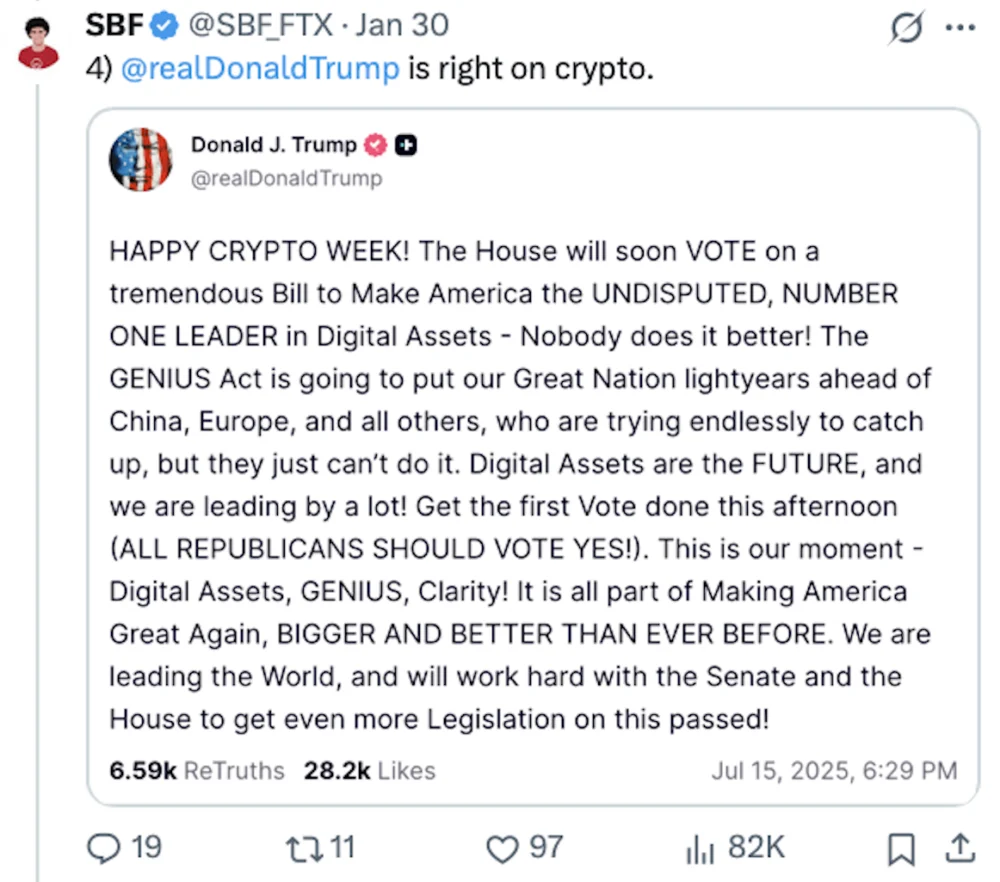
Bankman-Fried’s calculated public relations offensive began in earnest with a February 2025 interview with the New York Sun, followed by a high-profile March appearance with influential political commentator Tucker Carlson. These platforms provided him with opportunities to articulate a new political alignment, starkly contrasting with his past substantial donations to Democratic campaigns and causes. The timing of his recent, more aggressive endorsements, however, is particularly notable. "Julian Assange is right on crypto. @realdonaldtrump is right on crypto," Bankman-Fried declared in an X post on Friday, a direct endorsement that resonated across political and crypto spheres. This statement arrived just days after Ellison, a key figure in the FTX collapse, walked free after serving 440 days in prison, her sentence significantly reduced due to her comprehensive cooperation with federal prosecutors investigating the multi-billion dollar fraud.
Beyond the burgeoning digital asset landscape, Bankman-Fried extended his commendations to Trump on broader geopolitical matters. He notably lauded the recent arrest of Venezuelan President Nicolás Maduro, an action he described as "smart, gutsy, and pro-democracy." This particular praise suggests an attempt by Bankman-Fried to align himself with Trump’s assertive foreign policy stance, potentially seeking to portray himself as a supporter of strong, decisive leadership on the global stage. Such a move could be interpreted as a strategic attempt to appeal to a more conservative base, moving away from the progressive image he cultivated during his tenure at FTX. The "gutsy" characterization, in particular, hints at an appreciation for unconventional, high-stakes political maneuvers, a trait often associated with Trump’s presidency.
Concurrently with his newfound admiration for Trump, Bankman-Fried has launched a series of blistering attacks on the previous administration, despite having once been a significant financial backer of Democratic causes and candidates. "All the world leaders I met were fed up with Biden," he asserted, adding a pointed critique that the Biden administration "bungled crypto." He further elaborated on this sentiment, stating that the administration "didn’t have to" mismanage the crypto sector, as there was "plenty in the party had reasonable thoughts." However, he lamented, "But he chose [Gary] Gensler for SEC chair." This criticism of Gensler is particularly potent within the crypto community, where the former SEC chair became a polarizing figure. Gensler, known for his "regulation before enforcement" approach, was widely perceived by many in the industry as hostile to crypto innovation, favoring a strict, often punitive regulatory stance that some argued stifled growth and pushed companies offshore. His departure from the SEC in January 2025, ahead of Trump’s inauguration, marked a significant shift for the digital asset space.
The appointment of Paul Atkins as Gensler’s successor, sworn in by Trump in April 2025, further underscores the industry’s hopes for a more favorable regulatory environment. Atkins, a former SEC commissioner himself, is broadly regarded within the crypto community as significantly more crypto-friendly. His philosophy is expected to lean towards fostering innovation rather than solely focusing on enforcement, a stark contrast to his predecessor. This change in leadership at the SEC, orchestrated under a potential Trump administration, forms a crucial backdrop to Bankman-Fried’s strategic alignment. He appears to be betting on Trump’s purported openness to the crypto industry, a stance that has been increasingly articulated by the former president as he seeks to court a wider range of voters, including those within the tech and digital asset sectors.
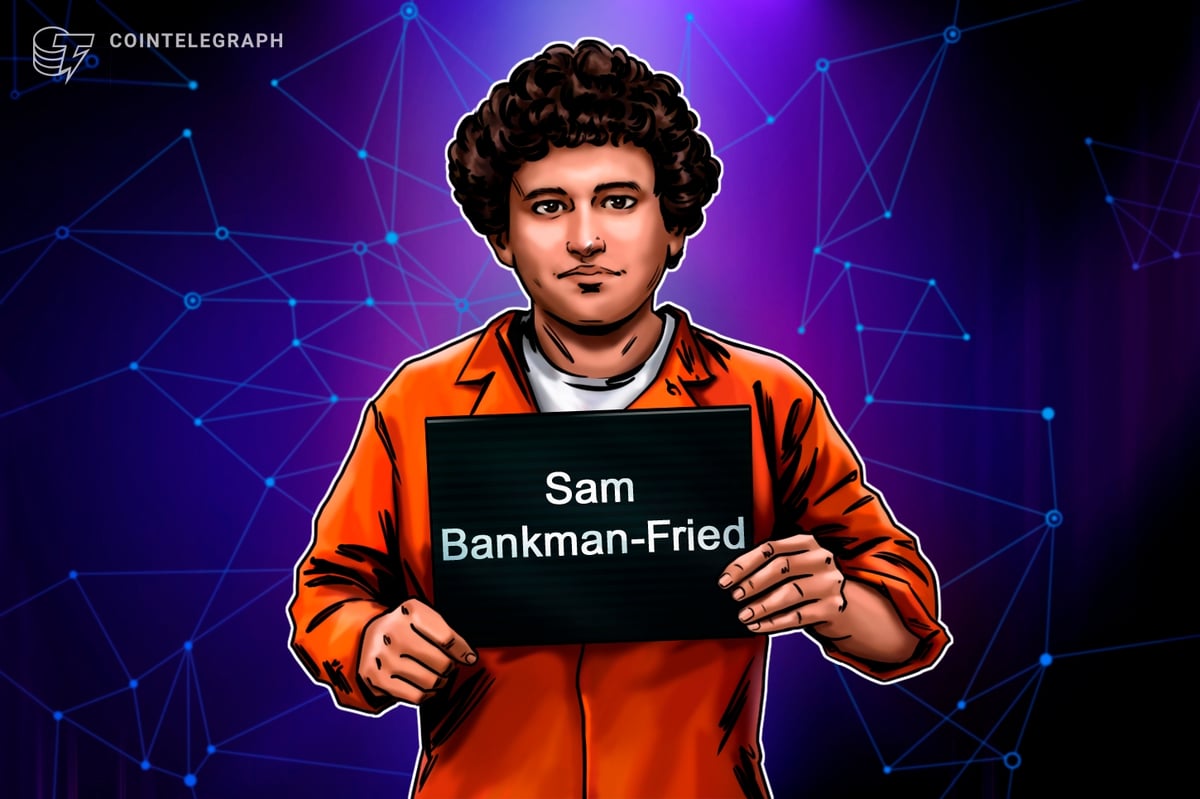
The primary driver behind Bankman-Fried’s overt political maneuvering is widely believed to be the pursuit of a presidential pardon. Following the dramatic collapse of FTX in November 2022, Bankman-Fried was extradited from the Bahamas to the United States to face a litany of charges, including wire fraud, conspiracy to commit wire fraud, money laundering, and conspiracy to commit money laundering. A jury ultimately convicted the former CEO on all seven felony counts in November 2023, delivering a resounding verdict that highlighted the extent of his financial malfeasance. In March 2024, a judge subsequently sentenced him to a substantial 25 years in prison, a term that reflected the severity and scale of the crimes committed.
The concept of a presidential pardon, rooted in Article II, Section 2 of the U.S. Constitution, grants the President the power to grant reprieves and pardons for offenses against the United States, except in cases of impeachment. This power is absolute, meaning the President can issue pardons for any federal crime, at any time, for any reason, without judicial review. Historically, presidents have used this power for various reasons, from correcting perceived injustices to rewarding political allies or easing societal tensions. While controversial, pardons have been granted to individuals convicted of financial crimes, though Bankman-Fried’s case, given its high profile, massive financial losses, and public outcry, would represent a particularly audacious exercise of presidential clemency.
The political calculus for Trump in considering a pardon for Bankman-Fried would be complex. On one hand, Bankman-Fried’s previous political donations, though primarily to Democrats, also included contributions to Republicans, albeit smaller ones. More significantly, a pardon could be framed by Trump as an act of defiance against what he often describes as a "weaponized" justice system, appealing to a segment of his base that views legal proceedings against prominent figures with skepticism. Furthermore, by aligning with a pro-crypto stance, Trump might aim to consolidate support from the burgeoning digital asset community, many of whom feel unfairly targeted by regulators. On the other hand, the public backlash against pardoning a figure so widely associated with fraud and betrayal would be immense. The victims of FTX’s collapse, who lost billions, would likely view such an act as a profound injustice, potentially alienating a broader swath of the electorate.
In November 2025, Bankman-Fried formally appealed his conviction and sentence, a legal process that is currently awaiting results in the US Court of Appeals for the Second Circuit. The appeal argues on various grounds, including legal errors during the trial and the severity of the sentence. While an appeal offers a potential avenue for relief, the success rate for overturning convictions of this magnitude is historically low. This makes the prospect of a presidential pardon, however slim, a more immediate and potentially impactful path for Bankman-Fried.
The market for such political speculation is active, particularly on decentralized prediction platforms. Traders on crypto predictions platform Polymarket currently assign a mere 17% chance that Donald Trump will pardon Sam Bankman-Fried before 2027. This relatively low probability reflects the perceived difficulty and political risk associated with such a move. The odds are influenced by numerous factors, including the public perception of Bankman-Fried, the severity of his crimes, the political climate leading up to and following the 2024 election, and Trump’s own strategic priorities. A 17% chance, while not negligible, suggests that the market views a pardon as an unlikely, though not entirely impossible, outcome, highlighting the uphill battle Bankman-Fried faces in his quest for clemency.
Caroline Ellison’s release, occurring after she served a significantly shorter sentence due to her cooperation, adds another layer of complexity to Bankman-Fried’s situation. Ellison, who pleaded guilty to seven criminal charges, including wire fraud and conspiracy to commit money laundering, provided extensive testimony against Bankman-Fried, detailing how they misappropriated billions of dollars in FTX customer funds. Her cooperation was instrumental in securing Bankman-Fried’s conviction, and her early release underscores the justice system’s incentive for plea bargains and assistance in prosecution. From Bankman-Fried’s perspective, Ellison’s freedom could be viewed as a further injustice, potentially fueling his determination to seek his own path to release, whether through appeal or pardon.
The entire saga, from the spectacular collapse of FTX and Alameda Research to Bankman-Fried’s conviction and subsequent political maneuvering, serves as a stark reminder of the volatile intersection of finance, technology, and politics. Bankman-Fried’s latest gambit, attempting to leverage a shift in political allegiances for personal clemency, is a testament to the extraordinary lengths to which he appears willing to go to mitigate his dire legal circumstances. Whether this strategic pivot will yield the desired outcome remains highly speculative, but it certainly ensures that Sam Bankman-Fried, even from behind bars, continues to command attention on the global stage.