anjir abdul
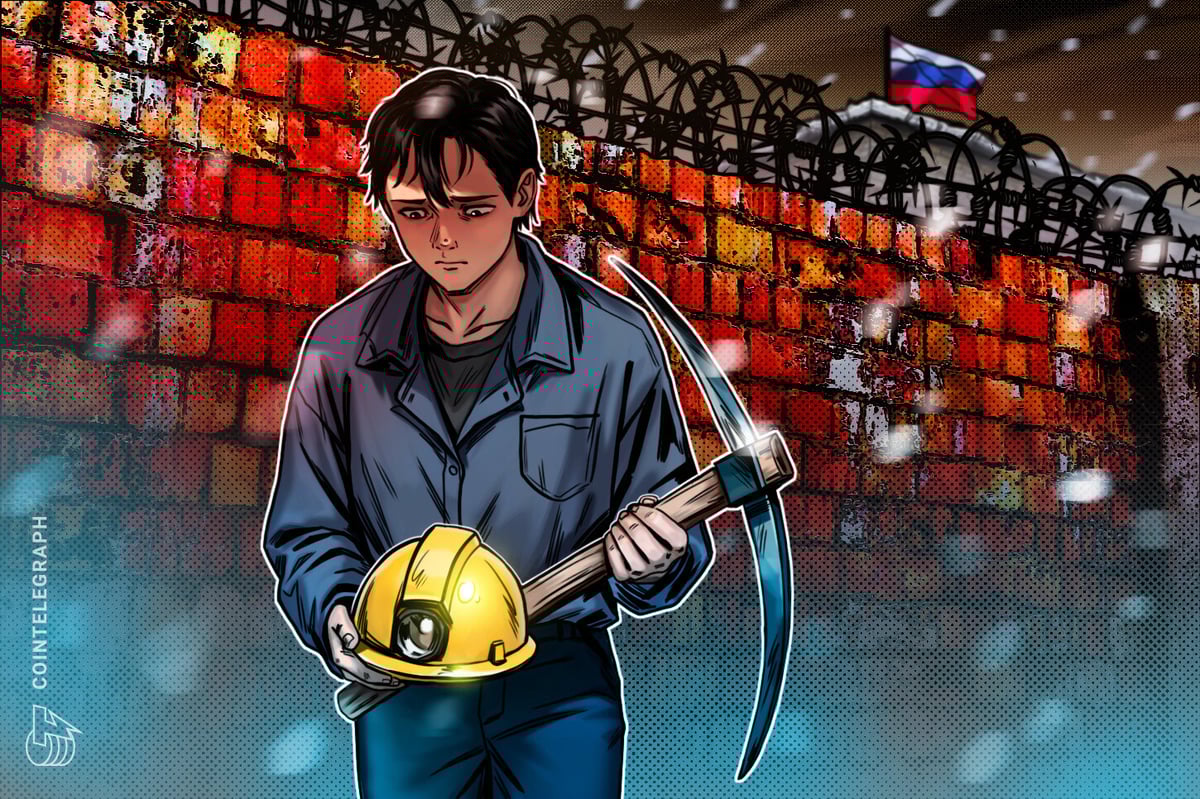
Russia has dramatically escalated its crackdown on unregistered cryptocurrency mining, proposing a stringent new draft bill that introduces severe penalties, including substantial fines, forced labor, and multi-year prison sentences for individuals and organized groups engaging in illicit digital asset extraction. This legislative push comes amidst mounting concerns from the Ministry of Finance regarding the widespread prevalence of illegal mining activities and the government’s persistent struggle to bring this burgeoning industry "out of the shadows" and into a regulated, taxable framework.
The proposed amendments to the Criminal Code, published by Russia’s Ministry of Justice, signal a pivotal shift in the nation’s approach to cryptocurrency. For individuals caught engaging in illegal cryptocurrency mining without proper registration, the draft bill outlines penalties reaching up to 1.5 million rubles (approximately $19,000 USD at current exchange rates) and up to two years of forced labor. This initial tier of punishment targets individual miners operating outside the legal framework, irrespective of the scale of their operations, underscoring the government’s intent to enforce compliance across the board.
The legislation escalates significantly when "outsized profits" are involved. For crypto mining activities that generate substantial financial gains while remaining unregistered, the maximum sentence could extend to five years in prison. In addition to potential incarceration, offenders could face up to 480 hours of forced labor and a hefty fine of up to 2.5 million rubles (approximately $32,000 USD). This provision clearly aims to deter larger-scale, professional mining operations that have deliberately evaded registration and taxation, viewing their activities as a direct challenge to state control and revenue collection.
The most severe penalties are reserved for "organized groups" engaged in illegal cryptocurrency mining that have realized "outsized profits." Such entities could face fines of up to 2.5 million rubles, coupled with either five years of forced labor or imprisonment. This particular clause highlights the government’s concern over potentially sophisticated, coordinated efforts to bypass regulations, possibly linking such groups to broader economic illicit activities or even energy theft. By targeting organized crime, Russia seeks to dismantle the infrastructure supporting large-scale, unregulated mining and exert greater control over the country’s energy resources and financial flows.
These proposed penalties are a stark reminder of the government’s unwavering resolve to regulate the digital asset space. The move is not isolated but rather the latest in a series of legislative actions aimed at establishing a comprehensive regulatory framework for cryptocurrencies. Russia has long been recognized as a significant hub for crypto mining, primarily due to its abundant and often cheap energy resources, particularly in regions with cold climates like Siberia, which naturally reduce cooling costs for mining hardware. However, this advantage has also led to widespread unregistered operations, straining local power grids and depriving the state of potential tax revenue.
The genesis of this intensified crackdown can be traced back to the repeated concerns voiced by Russia’s finance minister and other high-ranking officials regarding the proliferation of illegal mining. Deputy Minister of Finance Ivan Chebeskov articulated this challenge, stating in June that "only about 30% of cryptocurrency miners have registered and legalized their mining operations." He emphasized the government’s "general approach" to "bring this industry out of the shadows as much as possible," acknowledging that this process was far from complete. The vast discrepancy between the estimated number of miners and those legally registered underscored the urgency for more stringent measures.
Previous legislative efforts laid the groundwork for the current bill. In August 2024, President Vladimir Putin signed a set of laws providing a foundational regulatory framework for cryptocurrency mining, which became effective on November 1, 2024. These laws mandated compulsory registration and specific taxation forms for all entities involved in mining, including infrastructure providers. A key provision also prohibited foreign entities from engaging in mining within Russia and granted the government the authority to restrict mining activities in certain regions, often citing energy concerns. While these laws were a significant step, they faced criticism for "not fully legalizing" crypto mining, implying that while mining operations were to be regulated, the broader legal status of cryptocurrencies themselves remained somewhat ambiguous or restrictive, particularly concerning their use as a payment method.
Further clarifying the landscape, a decree published on November 1, 2024, specified that miners with a monthly electricity consumption under 6,000 kWh are considered "physical persons" and can mine without registration with the Federal Tax Register. However, they are still required to pay personal income tax on the mined cryptocurrency. This distinction aimed to differentiate between hobbyist miners and larger, more professional operations, but the low registration rate indicated that even this relatively lenient threshold for small-scale miners was not being widely adhered to.
The scale of the registration challenge was further illuminated by Minister of Finance Anton Siluanov, who reported at the end of October that there were only 1,364 registered cryptocurrency miners in Russia. Given Russia’s vast landmass, energy capacity, and historical appeal to miners, this number is strikingly low and indicative of a significant portion of the industry operating clandestinely. The government’s frustration with this pervasive non-compliance is a clear driver behind the severe nature of the new draft bill.
The economic motivations behind this legislative push are multi-faceted. Firstly, the Russian government aims to capture a share of the substantial revenue generated by the crypto mining industry. By forcing miners to register and pay taxes, the state can boost its coffers, a particularly pertinent goal given ongoing international sanctions and economic pressures. Secondly, controlling mining activities allows the government to better manage energy consumption. Unregistered mining operations can place an enormous strain on local power grids, leading to blackouts and energy price hikes for regular citizens and businesses. Regulating mining provides a mechanism to allocate energy resources more efficiently and prevent energy theft. Thirdly, the move is part of a broader effort to prevent the use of cryptocurrencies for illicit activities, such as money laundering, terrorism financing, or evading international sanctions. While the original article referenced EU sanctions targeting Russian crypto platforms, this internal crackdown on unregistered mining could also be seen as an attempt to prevent the domestic crypto infrastructure from being used for sanction evasion by Russian entities.
The implications of this draft bill for the Russian crypto ecosystem are profound. For existing unregistered miners, the prospect of forced labor and prison sentences creates an immediate and pressing need to either comply with regulations or cease operations. This could lead to a significant exodus of mining operations from Russia, as miners seek more permissive jurisdictions or choose to go further underground, increasing the difficulty of enforcement. For registered miners, while they are already compliant, the heightened scrutiny and severe penalties for non-compliance by others may still create a more challenging operating environment, possibly increasing regulatory burdens or the cost of compliance.
Enforcement of these new laws will undoubtedly present significant challenges. The decentralized nature of cryptocurrency mining makes it inherently difficult to track and monitor, especially for smaller-scale operations. Authorities will need sophisticated tools and methods to identify unregistered miners, particularly those operating in remote areas or those taking extensive measures to conceal their activities. The potential for a thriving black market for crypto mining, driven by individuals and groups seeking to avoid the harsh penalties, is a real concern.
Looking ahead, Russia’s aggressive stance on unregistered crypto mining reflects a global trend where governments are increasingly seeking to exert control over digital assets. While some nations have embraced cryptocurrency with more open regulatory frameworks, others, like Russia, are prioritizing national security, economic control, and revenue generation. The long-term strategy appears to be one of establishing a tightly controlled, state-supervised digital economy, where private, unregulated crypto activities are systematically dismantled. This approach may align with Russia’s broader interest in developing a Central Bank Digital Currency (CBDC), which would offer the state complete oversight and control over digital transactions.
In conclusion, Russia’s proposed draft bill represents a significant escalation in its efforts to regulate and control the cryptocurrency mining industry. By introducing severe penalties, including prison and forced labor, the government is sending an unequivocal message that unregistered mining will no longer be tolerated. This move, driven by concerns over illegal activity, revenue capture, and energy management, aims to bring the industry fully into the legal fold. However, it also poses substantial challenges for enforcement and carries the risk of pushing more mining activities underground, further complicating the government’s goal of transparency and control in the evolving digital asset landscape.