Faris Adani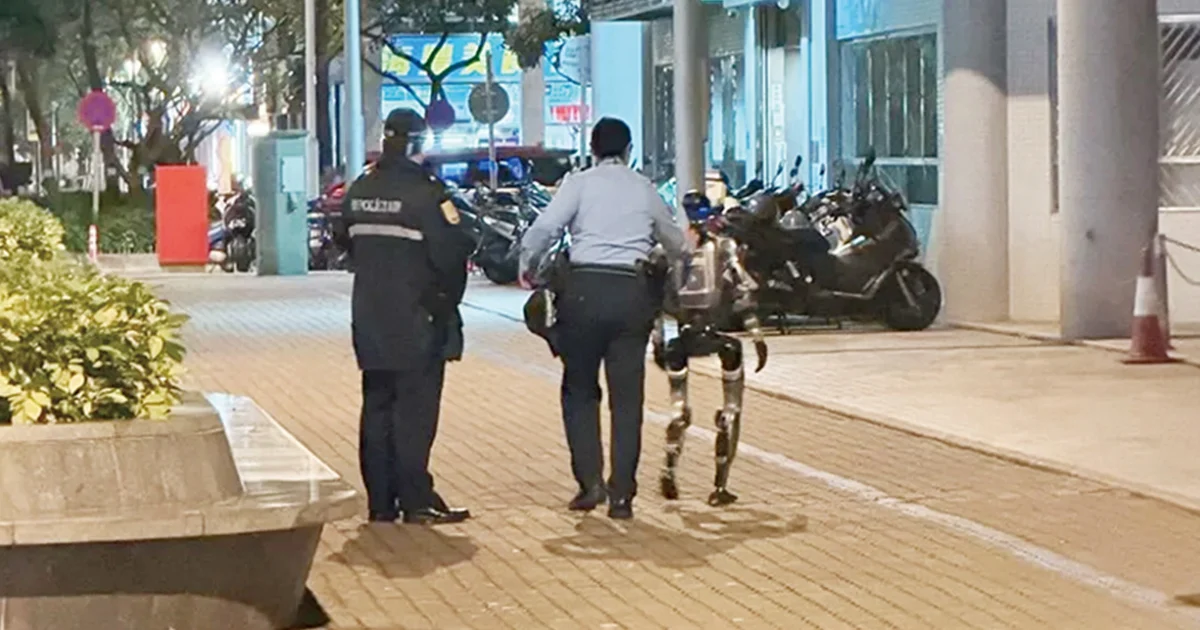
The bustling, neon-drenched streets of Macau, a city renowned for its vibrant fusion of East and West, often serve as a canvas for the cutting edge of technology, yet it was against this backdrop of modernity that an unprecedented incident unfolded last Thursday evening, leading to an elderly woman’s hospitalization and the surreal sight of a humanoid robot being escorted away by uniformed police officers, a peculiar spectacle that quickly captivated public attention and ignited a broader conversation about the intricate and sometimes startling integration of advanced robotics into everyday urban life. This extraordinary event, widely reported by esteemed outlets such as the Macau Post, the South China Morning Post, and public broadcaster TDM, transpired near a residential complex in the Patane district, painting a vivid picture of the emerging challenges inherent in a world where the lines between human and machine interaction are increasingly blurred.
The evening of the incident, around 9:00 PM, a time when the city’s energy typically begins to wane into a more leisurely pace, saw a 70-year-old woman, her gaze fixed on the glowing screen of her mobile phone, navigating the familiar pathways near her home. Immersed in her digital world, she was momentarily oblivious to her immediate physical surroundings. It was then, in a sequence of events that would soon become the subject of widespread amusement and thoughtful discussion, that she became acutely aware of a presence directly behind her – a silent, metallic entity, its sensors likely processing her movements with cold, algorithmic precision. This uninvited follower was later identified as a Unitree G1 model, a humanoid robot typically lauded for its agility and advanced capabilities, but on this particular night, it was merely an unexpected, and ultimately terrifying, shadow.
The sudden realization of the robot’s proximity, looming silently in her wake, triggered a visceral reaction in the elderly woman. Her initial shock quickly gave way to a torrent of fear and indignation. As onlookers began to gather, drawn by the commotion, the woman’s voice cut through the evening air, her words a potent mix of fright and bewilderment. "You’re making my heart race!" she reportedly exclaimed, her physiological response a testament to the profound psychological impact of the encounter. "You’ve got plenty to do, so what’s the point of messing around with this? Are you freaking crazy?" Her outburst, captured in a video that subsequently went viral across social media platforms, underscored a fundamental human instinct to attribute intent, even malevolent intent, to an unfamiliar, autonomous presence, especially one that silently stalks from behind. In what many interpreted as either an algorithmic attempt at de-escalation or perhaps a programmed gesture of "apology," the robot raised both its arms, a movement that, while possibly intended to convey harmlessness, likely did little to soothe the agitated woman’s nerves. The scene, a confluence of human emotion and robotic indifference, highlighted the vast chasm between human empathy and machine logic.
The Unitree G1, a product of cutting-edge robotic engineering, is a relatively compact humanoid robot designed for a variety of tasks, often showcased for its impressive balance, locomotion, and capacity for human-like interaction. Its metallic frame, visible joints, and sometimes glowing sensor arrays contribute to its distinct, futuristic aesthetic. These robots are increasingly utilized in China for public demonstrations, educational purposes, and even social media stunts, precisely because of their ability to mimic human form and movement, making them visually engaging. However, this very characteristic, intended to foster connection and familiarity, proved to be its undoing in the dimly lit Macau street. For a 70-year-old woman, unaccustomed to such advanced technology operating freely in her personal space, the G1’s silent, unblinking presence was not a marvel of innovation but a source of profound unease, particularly given its alleged proximity and the late hour. The promotional activities for which it was deployed, likely intended to spark curiosity and wonder, instead inadvertently triggered alarm and distress, underscoring the critical importance of context and public readiness in the deployment of such sophisticated machines.
The situation escalated to the point where law enforcement was called to the scene. The arrival of two police officers added another layer of surrealism to the unfolding drama. How does one "handle" a robot suspected of causing distress? There are no established protocols for the "arrest" of an autonomous machine, no Miranda rights to read to an algorithm. Yet, in a display that struck many as both absurdly comical and strangely humanizing, the officers proceeded to "escort" the mechanical troublemaker away. The now-famous footage depicted a "perp walk" unlike any other, with one officer even placing a hand on the robot’s metallic shoulder, a gesture typically reserved for human suspects, inadvertently anthropomorphizing the machine and injecting a touch of levity into the otherwise tense situation. This visual juxtaposition — the solemnity of law enforcement against the backdrop of a gleaming robot being led away — became an instant classic, a moment where the future collided with the present in the most unexpected and humorous way.
Police investigations quickly revealed that the robot belonged to an education center in Macau, which was using it for "promotional activities" in the area. The robot was ultimately returned to its operator, a 50-year-old man, who received a stern reminder from the authorities about the imperative of exercising greater caution when deploying such advanced technology in public spaces. Towin Mak, a representative from the education center, offered an explanation to TDM, suggesting that the incident was a mere "simple accident." According to Mak, the robot was in the process of leaving the area when the elderly woman paused in the middle of the walkway to check her phone. Unable to navigate around her without potentially bumping into her, the robot simply stopped and waited, its lights perhaps glowing, its silent presence becoming unsettlingly apparent in the quiet of the night. This explanation, while technically plausible, failed to fully address the psychological impact of such an encounter on an unsuspecting individual, particularly one of advanced age.
Despite the lack of physical contact or injuries, the woman’s distress was palpable and immediate. Following the police intervention, she reported feeling unwell and requested medical assistance. She was subsequently transported to a local hospital for examination and treatment. Mercifully, after a thorough check-up, she was discharged, with authorities confirming no physical harm. In a gesture that spoke volumes about her resilience and perhaps a desire to move past the unusual ordeal, she declined to file a formal complaint. Her decision, however, did not diminish the gravity of the psychological impact, which served as a stark reminder that the integration of robots into human environments extends beyond mere physical safety to encompass emotional and psychological well-being.
The story, disseminated rapidly across Chinese-speaking social media platforms, elicited a diverse range of reactions. Many netizens found immense amusement in the narrative, particularly the sight of police officers "arresting" a robot. The comedic potential of the situation was undeniable, leading to countless jokes and memes. However, beneath the surface of humor, a more serious debate quickly emerged, touching upon critical ethical and safety considerations surrounding the operation of robots in public spaces alongside humans. Discussions ranged from the need for clear regulations and guidelines for autonomous machines to the psychological effects of unexpected robot encounters. Concerns were raised about potential collision risks, the role of AI in decision-making when interacting with humans, and even privacy implications if these robots are equipped with cameras or other sensors. The Unitree G1 model, already a popular choice for viral social media content in China due to its engaging capabilities, now inadvertently became the poster child for the unforeseen challenges of human-robot coexistence.
This incident in Macau, while perhaps initially appearing as a comical anecdote, serves as a poignant microcosm of the broader challenges and opportunities presented by the rapid advancement of robotics and artificial intelligence. As our urban landscapes become increasingly populated by autonomous machines, from delivery robots to security drones and humanoid assistants, societies must grapple with fundamental questions: How do we design these robots to be truly ‘user-friendly’ and non-threatening to all demographics? What are the responsibilities of operators in ensuring public safety and comfort? What legal frameworks are needed to govern their deployment and address unforeseen incidents? The "perp walk" of the Unitree G1 was more than just a funny moment; it was a vivid, if slightly absurd, demonstration of the ongoing, often complex, negotiation between humanity and its burgeoning technological creations. This incident underscores the urgent need for comprehensive guidelines, robust public education, and empathetic design principles to ensure that the future of human-robot interaction is one of seamless integration and mutual respect, rather than one punctuated by unexpected frights and police escorts.