Faris Adani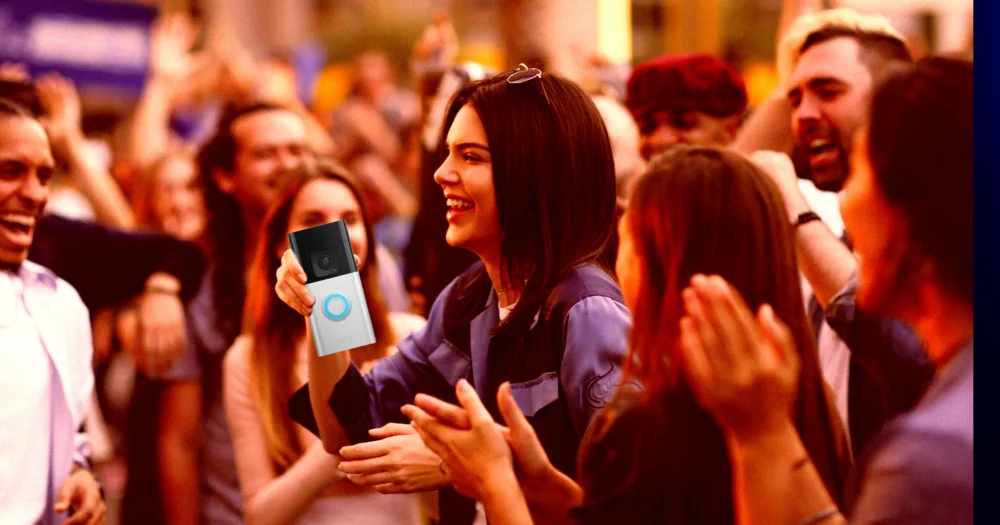
Ring’s “Orwellian” Ad Was the Worst Super Bowl Disaster Since Kendall Jenner Handed the Cops a Pepsi. The recent Super Bowl broadcast witnessed Amazon’s home security subsidiary, Ring, stumble into a marketing catastrophe of epic proportions, drawing immediate comparisons to Pepsi’s infamous 2017 commercial featuring Kendall Jenner, and ultimately leading to the abrupt cancellation of a contentious partnership with a surveillance technology firm.
The year 2017 saw Pepsi embroiled in a global public relations nightmare following a commercial that aired during the Super Bowl. In a scene that quickly became emblematic of corporate tone-deafness, supermodel Kendall Jenner was depicted leaving a photoshoot to join a diverse group of protesters. In a moment intended to symbolize unity and peace, she famously approached a stoic police officer amidst the demonstration and offered him a can of Pepsi. This act, meant to bridge the divide between protesters and law enforcement, landed with a thud heard around the world. At a time when the Black Lives Matter movement was gaining significant traction, and protests against racial discrimination and police brutality were a frequent and often tense occurrence across the United States, Pepsi’s ad was overwhelmingly condemned. Critics widely lambasted it for trivializing the gravity of these social justice issues, reducing complex struggles to a simple act of sharing a soda. The backlash was swift, severe, and widespread, forcing Pepsi to not only pull the ad within 24 hours but also issue a public apology, which itself faced further scrutiny for its perceived inadequacy. The incident served as a stark reminder of the delicate balance brands must maintain when attempting to engage with sensitive social and political themes.
Fast forward to the latest Super Bowl, and Ring, a company known for its smart doorbells and home security cameras, managed to carve out its own unenviable spot in the annals of marketing blunders. The company aired an expensive advertisement showcasing a new feature called “Search Party.” The ad’s premise was seemingly innocuous: it demonstrated how Ring devices could be leveraged across an entire neighborhood to locate lost pets. On the surface, this appeared to be a heartwarming application of technology, tapping into the universal affection for furry companions. However, the execution and the underlying implications of the ad catastrophically missed their mark, igniting a firestorm of criticism and inadvertently exposing the public’s deep-seated anxieties about pervasive surveillance.
Instead of eliciting feelings of community spirit and technological helpfulness, the ad inadvertently conjured images of an “Orwellian” surveillance state. The concept of Ring accessing devices across an entire neighborhood, even for a benign purpose like finding a lost dog, triggered immediate alarm bells for many viewers. The advertisement, intended to highlight a convenient new feature, instead fueled fears that Ring cameras were actively contributing to a vast, interconnected surveillance network, far exceeding the scope of merely tracking errant pets. The public reaction was visceral and immediate. Furious customers began expressing their discontent in various ways, ranging from disconnecting their Ring cameras to, in some reported instances, physically destroying them. The sentiment was clear: consumers refused to be unwitting participants in what they perceived as a dystopian web of internet-connected spy cameras, where their private spaces could be accessed and aggregated, regardless of the stated purpose.
Jay Stanley, a senior policy analyst at the American Civil Liberties Union (ACLU), succinctly captured the public’s unease. As he told *USA Today*, “I think (the commercial) surprised a lot of Americans by revealing just how powerful surveillance networks backed by AI have become. That power may be applied to puppies today, but where else might it be applied? Searches for people wearing t-shirts with certain political messages on them?” Stanley’s comments resonated deeply, articulating the core fear that a technology initially marketed for safety and convenience could easily be repurposed for more intrusive, privacy-eroding applications. The leap from lost pets to tracking individuals based on their attire or political affiliations, while perhaps an extreme hypothetical for some, felt chillingly plausible to a public increasingly wary of digital surveillance and data exploitation.
The timing of Ring’s ad could not have been worse, amplifying existing societal anxieties. Across the United States, Immigration and Customs Enforcement (ICE) agents continued to conduct operations, leading to widespread panic and fear within immigrant communities. The idea of a widespread surveillance network, capable of identifying and tracking individuals, took on a much more sinister connotation in this socio-political climate. The confluence of Ring’s poorly conceived advertisement and ongoing concerns about federal enforcement agencies accessing private data created a perfect storm of public outrage and distrust.
Amidst the growing clamor, there were signs that Ring, and its parent company Amazon, were indeed paying attention. Just four days after the Super Bowl ad aired, Amazon made a significant announcement: it was canceling its widely criticized partnership with Flock Safety. Flock Safety, an AI surveillance company, had drawn considerable scrutiny for its business model, which involved making footage from its connected devices, such as automated license plate readers and security cameras, available to local and federal police departments, including enforcement agencies like ICE. This partnership had been a source of contention for privacy advocates and civil liberties organizations long before the Super Bowl ad, raising serious questions about data sharing, privacy rights, and the potential for surveillance creep.
Ring’s official statement regarding the cancellation read: “Following a comprehensive review, we determined the planned Flock Safety integration would require significantly more time and resources than anticipated. As a result, we have made the joint decision to cancel the planned integration. The integration never launched, so no Ring customer videos were ever sent to Flock Safety.” While Ring asserted that no customer videos had ever been shared with Flock Safety, the timing of the cancellation – immediately following a major public relations disaster – raised questions about the true motivations behind the decision. For many, it appeared to be a damage control measure rather than a genuine reassessment of ethical implications.
The announcement left many questions unanswered, particularly concerning the broader claims about Flock Safety’s role in handing over private surveillance footage to federal immigration agents. Regardless of the specifics, the optics of the situation were undeniably poor for Ring, which was clearly scrambling to salvage its reputation in the wake of its disastrous Super Bowl ad. The incident underscored the fragile trust consumers place in technology companies, especially when those companies operate in the sensitive realm of home security and personal privacy.
Public sentiment, as evidenced by online reactions, remained largely skeptical and distrustful. One Reddit user, responding to the news of the Flock Safety cancellation, encapsulated the prevailing mood: “Cool, still never buying a Ring, especially after all this.” This sentiment highlights the long-lasting impact of such marketing missteps and the difficulty companies face in rebuilding trust once it has been eroded. The Super Bowl ad, intended to showcase innovation and community, instead became a potent symbol of corporate overreach and a chilling reminder of the ever-expanding reach of surveillance technology. The incident serves as a critical lesson for companies operating in the smart home and security sectors: the line between convenience and intrusive surveillance is exceptionally fine, and misjudging public perception can lead to severe and lasting consequences for brand reputation and consumer loyalty. The echoes of both Pepsi’s 2017 blunder and Ring’s recent gaffe will undoubtedly continue to reverberate through the advertising and technology industries for years to come.