Faris Adani
Researchers Upload Fly’s Brain to Matrix, Let It Control Virtual Body
Sign up to see the future, today. Can’t-miss innovations from the bleeding edge of science and tech. For decades, the ambition of artificial intelligence has been to construct computational systems that mimic the human mind’s profound abilities: perception, learning, and reasoning. This pursuit, often termed AI, aims to build synthetic intelligence from the ground up. However, a parallel, equally tantalizing frontier known as whole-brain emulation (WBE) offers a different, arguably more direct, path: to digitally copy a biological brain, neuron by neuron, synapse by synapse, and then run it in simulation. This latter approach has long been a theoretical marvel, but a groundbreaking announcement from a company called Eon Systems suggests that this audacious vision is now taking its first, albeit tiny, steps into reality.
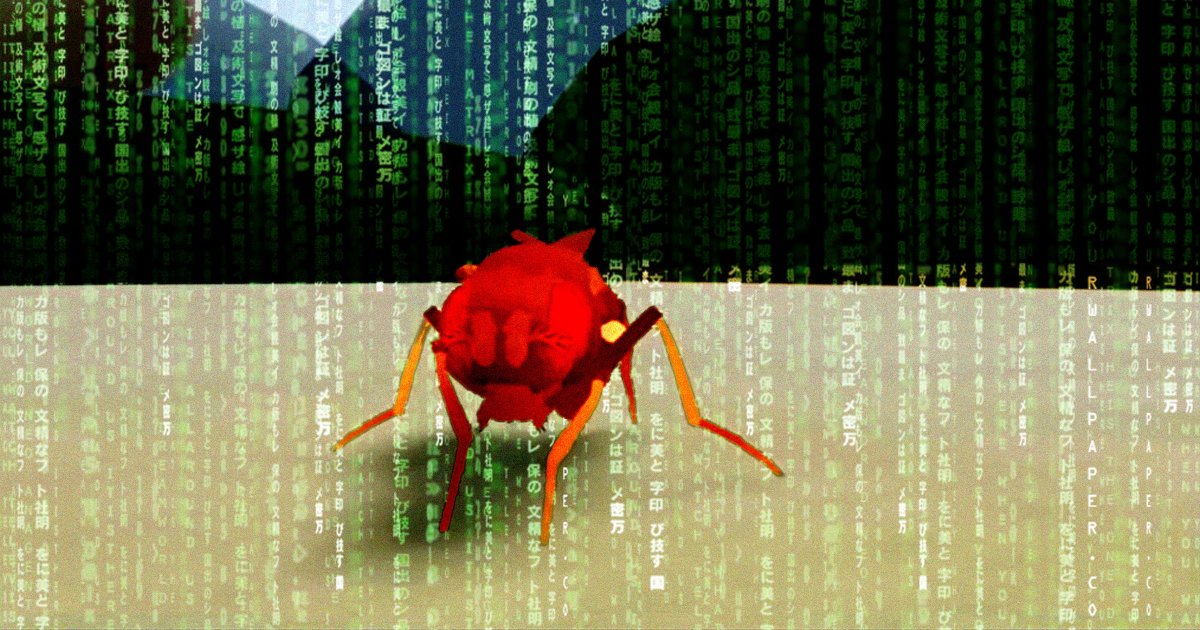
Eon Systems claims to have achieved a monumental feat by simulating the entire brain of an adult fruit fly, a complex network comprising approximately 125,000 neurons and 50 million synaptic connections. What makes this achievement particularly compelling is not just the simulation itself, but what happens next: this digitally resurrected brain is then allowed to interact and control a virtual body within a “Matrix-like” simulated environment. This isn’t just a static model; it’s a dynamic, embodied consciousness, however rudimentary, responding to its digital world.
The profound implications of this experiment were brought to light through a video shared by Alex Weissner-Gross, cofounder of Eon Systems. The footage, circulated widely, depicts a crudely animated insect within its simulated sandbox. What’s striking is the authenticity of its actions: the virtual fly stretches its legs, rubs its front feet together in a manner characteristic of real fruit flies, and even uses its labellum – its feeding appendage – to drink from a small, virtual bowl. These aren’t pre-programmed animations; according to Eon Systems, these are emergent behaviors driven directly by the emulated brain’s internal dynamics.
The Vision of Whole-Brain Emulation
Weissner-Gross elaborated on the significance of this milestone in a Substack post, articulating the long-held dream: “For decades, whole-brain emulation has been the tantalizing counterpart to artificial intelligence. Copy a biological brain, neuron by neuron and synapse by synapse, and run it.” This statement underscores the philosophical and scientific divergence from traditional AI. While AI often seeks to replicate *intelligence* through algorithms inspired by biological processes, WBE aims to replicate the *biological substrate* itself, believing that intelligence will emerge naturally from an accurate copy of the brain’s intricate wiring and dynamics. The fruit fly experiment, simple as it may seem on the surface, represents what the company hails as the “world’s first embodiment of a whole-brain emulation that produces multiple behaviors.”

The First Multi-Behavior Brain Upload (Video Demonstration)
The Scientific Underpinnings: From Connectome to Behavior
This remarkable experiment is not an isolated development but builds upon years of meticulous research. At its core is the work by Eon senior scientist Philip Shiu and his colleagues, whose findings were published in the prestigious journal Nature in 2024. This earlier research detailed the creation of a complete computational model of the entire fruit fly brain, designed to meticulously “study circuit properties of feeding and grooming behaviors.” The precision of their model was paramount, and it relied heavily on the pre-existing FlyWire connectome – a monumental, Princeton-led collaborative effort to map the complete wiring diagram of a fruit fly brain at synaptic resolution. This connectome serves as the digital blueprint, detailing every neuron and every connection within the tiny insect’s brain.
The rigorous validation of their computational model demonstrated its predictive power, accurately forecasting the motor behavior of the simulated fly with an astonishing 95 percent accuracy. For instance, their paper highlighted how the activation of specific sugar-sensing or water-sensing gustatory neurons within the computational model precisely predicted the neural responses crucial for initiating feeding behaviors. This level of accuracy provided a robust foundation, demonstrating that the simulated brain circuits truly mirrored their biological counterparts in their functional responses to sensory inputs.
Closing the Sensorimotor Loop: Embodiment in Action
With a functionally accurate brain model in hand, the next critical step for Eon Systems was to give this disembodied digital mind “somewhere to go,” as Weissner-Gross aptly put it. This involved integrating the brain emulation with a physical body, albeit a virtual one. The team leveraged an advanced embodied simulation framework known as NeuroMechFly v2. Developed by neuroengineers at the Swiss Federal Technology Institute of Lausanne (EPFL), NeuroMechFly v2 provides a sophisticated physics-simulated fly body, allowing for realistic interactions within its virtual environment. By integrating Eon’s connectome-based brain emulation with this highly detailed physics engine, the team achieved a critical breakthrough.
Weissner-Gross underscored the revolutionary outcome: “The result: multiple distinct behaviors driven by the emulated brain’s own circuit dynamics.” This marks a pivotal moment because it signifies the successful “closing of the loop” – a seamless flow from perception to action. Sensory input from the virtual environment flows into the emulated brain, neural activity propagates through its complete, biologically accurate connectome, motor commands are generated and flow out, and the physically simulated body executes these commands, thereby interacting with its environment. This complete, self-contained system represents a profound advancement in whole-brain emulation, moving beyond mere neural activity simulation to actual embodied agency.
A Distinct Approach: Beyond Reinforcement Learning
Eon Systems is keen to distinguish its work from other significant advancements in the field, particularly those employing reinforcement learning (RL). Weissner-Gross highlighted a 2025 paper by DeepMind researchers, who also successfully modeled aspects of a fruit fly’s neural pathways to control a simulated body. However, the critical difference lies in the underlying mechanism: DeepMind’s approach utilized “reinforcement learning, not connectome-derived neural dynamics.” This means DeepMind’s simulated fly learned to move through trial and error, optimizing its actions based on rewards, much like an AI agent learning to play a game. Eon Systems, conversely, is demonstrating behaviors that emerge directly from the *biological wiring diagram* of the fruit fly brain, a direct replication of its inherent control mechanisms, rather than a learned policy.
The Ambitious Road Ahead: From Fly to Human Scale
With this foundational success, Eon Systems harbors immensely ambitious long-term goals. The immediate next step is to complete a “digital emulation of a mouse brain,” a challenge that significantly dwarfs the fruit fly project. A mouse brain boasts over 500 times the number of neurons compared to a fruit fly’s, presenting an exponential increase in computational complexity and data handling. Beyond the mouse, the ultimate aspiration is nothing less than “human-scale emulation.”
The prospect of a virtual human brain taking its first digital steps is, as the article notes, a somewhat terrifying thought. It evokes images of early reinforcement learning experiments where simple stick figures learned to walk, evolving from awkward crawls to adept running styles. The thought further extends to profound philosophical questions: could humanity itself be a more sophisticated version of Eon Systems’ fruit fly, crawling around in an unimaginably vast sandbox? This paradox, suggesting our reality might be a simulation, has intrigued physicists for decades, and experiments like Eon’s lend a tangible, albeit unsettling, dimension to such abstract ideas.
However, the journey to a human-scale emulation, if indeed it is even a possibility, is fraught with immense technical hurdles. The sheer scale of analyzing sensory inputs, simulating neural activity across billions of neurons, and sending precise motor commands to the myriad parts of a complex human body represents a challenge orders of magnitude greater than even a mouse brain. The data acquisition, computational power, and algorithmic sophistication required would be unprecedented.
“The Machine is Becoming the Ghost”
Despite these daunting challenges, Weissner-Gross remains remarkably unperturbed. He views the problem as one of scale, not of fundamental principle. “If a fly brain can now close the sensorimotor loop in simulation, the question for the mouse becomes one of scale, not of kind,” he asserts. This perspective suggests a belief that the core methodology is sound, and future advancements will primarily involve overcoming computational and data-handling limitations, rather than discovering entirely new emulation paradigms.
In a powerful concluding statement, Weissner-Gross urged observers to “Watch the video closely. What you are seeing is not an animation. It is not a reinforcement learning policy mimicking biology. It is a copy of a biological brain, wired neuron-to-neuron from electron microscopy data, running in simulation, making a body move.” This declaration encapsulates the profound claim: a truly biological brain, meticulously replicated and endowed with agency, has crossed the digital divide. His final, evocative words leave a lasting impression: “The ghost is no longer in the machine. The machine is becoming the ghost.” This phrase suggests a reversal of the traditional philosophical dilemma – instead of a consciousness residing mysteriously within a physical body, the digital machine itself is now capable of manifesting a form of consciousness, or at least, the fundamental biological mechanisms that give rise to it. It implies a future where synthetic life, indistinguishable in its fundamental operations from biological life, could emerge from computational substrates, forever altering our understanding of mind, body, and existence itself.
More on brain simulation: Scientists Preparing to Simulate Human Brain on Supercomputer