Imroatul Nasiyah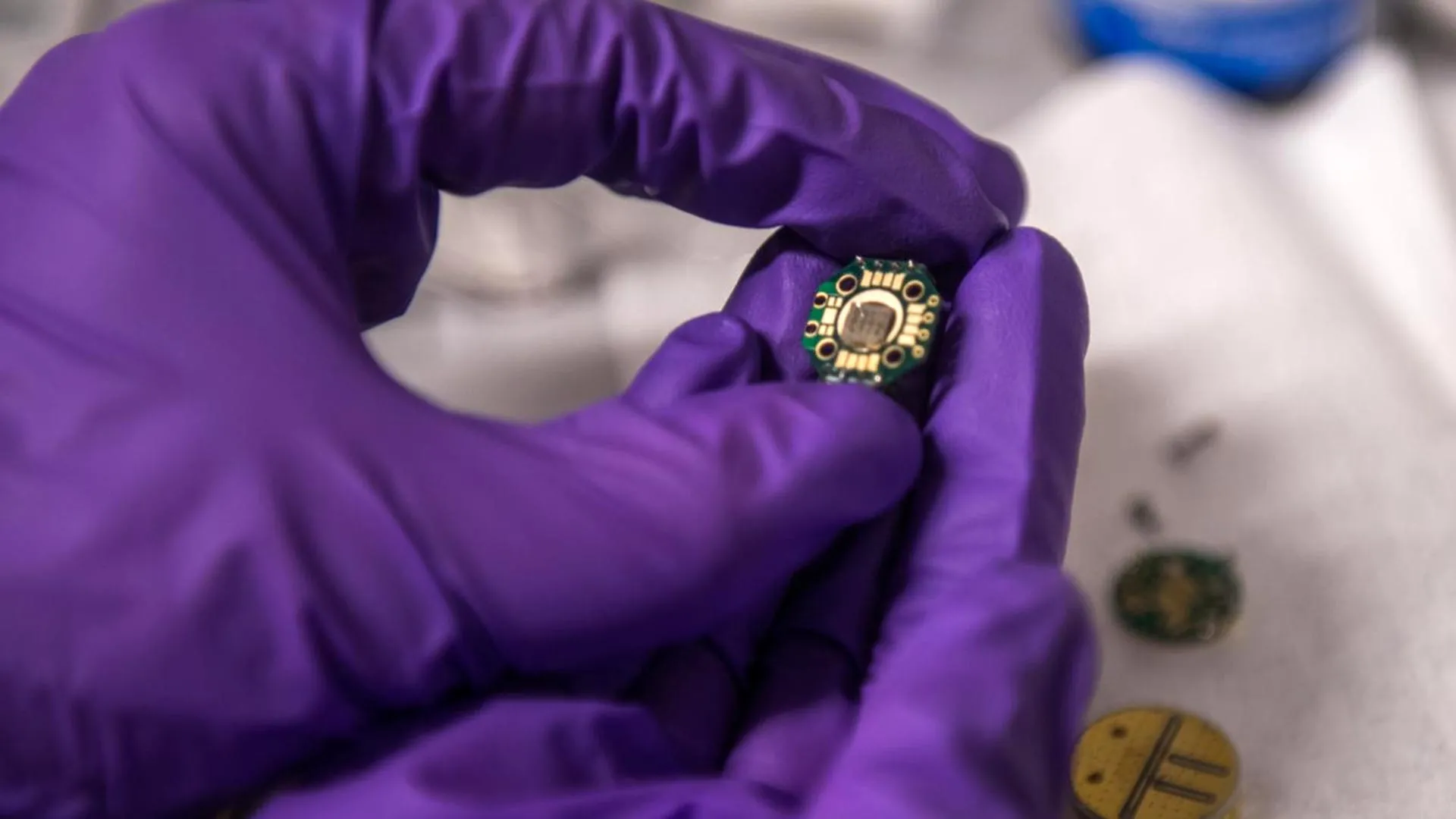
Quantum technology, once confined to the ethereal realm of theoretical physics and meticulously controlled laboratory experiments, is now boldly striding into the arena of practical application. A seminal paper, recently unveiled in the prestigious journal Science, asserts that the field has achieved a pivotal juncture, one that profoundly echoes the nascent stages of classical computing prior to the transformative advent of the transistor. This watershed moment signifies the transition from foundational scientific exploration to the tangible development of sophisticated quantum systems poised to redefine computation, communication, and sensing.
The groundbreaking research behind this declaration originates from a consortium of leading academic institutions, including the University of Chicago, Stanford University, the Massachusetts Institute of Technology (MIT), the University of Innsbruck in Austria, and Delft University of Technology in the Netherlands. Their comprehensive analysis delves into the current landscape of quantum information hardware, meticulously dissecting both the immense opportunities and the formidable obstacles that lie ahead in the ambitious quest to construct scalable quantum computers, robust quantum communication networks, and ultra-sensitive quantum sensing systems.
"This transformative moment in quantum technology is reminiscent of the transistor’s earliest days," stated lead author David Awschalom, a distinguished figure in molecular engineering and physics at the University of Chicago, and a pivotal leader within the Chicago Quantum Exchange and the Chicago Quantum Institute. His sentiment encapsulates the profound significance of the current phase. "The foundational physics concepts are established, functional systems exist, and now we must nurture the partnerships and coordinated efforts necessary to achieve the technology’s full, utility-scale potential. How will we meet the challenges of scaling and modular quantum architectures?" This rhetorical question underscores the critical imperative for collaborative innovation and strategic development as the field navigates its path to widespread impact.
From the Laboratory Bench to Early Real-World Applications: A Decade of Accelerated Progress
The past ten years have witnessed an astonishing acceleration in the maturation of quantum technologies. What began as abstract proof-of-concept experiments has evolved into sophisticated systems now capable of underpinning early-stage applications in crucial domains such as secure communication, advanced sensing for scientific discovery and industrial processes, and the burgeoning field of quantum computing. The researchers attribute this remarkable surge in progress to a synergistic and deeply integrated approach, characterized by close collaboration among academic institutions, government agencies, and forward-thinking industry partners. This tripartite model of innovation mirrors the very ecosystem that fueled the explosive growth and refinement of microelectronics throughout the twentieth century, suggesting a familiar trajectory for quantum technologies.
A Comparative Analysis of Today’s Quantum Hardware Platforms: Mapping the Frontier
To provide a clear and objective assessment of the field’s current standing, the study undertakes a detailed review and comparison of six major quantum hardware platforms: superconducting qubits, trapped ions, spin defects, semiconductor quantum dots, neutral atoms, and optical photonic qubits. In a novel and forward-thinking approach, the researchers leveraged the analytical capabilities of advanced large language AI models, including prominent examples like ChatGPT and Gemini, to estimate the Technology Readiness Levels (TRLs) for each platform across the critical application areas of quantum computing, quantum simulation, quantum networking, and quantum sensing.
The TRL scale, a widely recognized metric in technological development, quantifies the maturity of a technology on a spectrum from 1 to 9. A TRL of 1 signifies that only basic principles have been observed in a laboratory environment, while a TRL of 9 indicates that the technology has been thoroughly proven and demonstrated in an operational environment. It is crucial to understand that a higher TRL does not automatically equate to imminent widespread adoption. Instead, it signifies a more complete demonstration of system functionality, indicating greater robustness and integration of components, even if the overall performance is still limited.
The comprehensive analysis presented in the paper offers an invaluable snapshot of the quantum technology landscape as it stands today. While certain advanced prototypes have already achieved the status of full operational systems and are even accessible to the public through cloud platforms, their overall performance capabilities remain constrained. Many of the most anticipated and high-impact applications, such as intricate quantum chemistry simulations required for drug discovery and materials science, will necessitate millions of physical qubits. Furthermore, these applications demand error rates significantly lower than what current technological capabilities can reliably support, highlighting the substantial engineering and scientific hurdles that still lie ahead.
The Crucial Context of Technology Readiness: Lessons from the Past
Coauthor William D. Oliver, a distinguished professor of electrical engineering and computer science and physics at MIT, and director of its Center for Quantum Engineering, emphasized the potential for misinterpretation when evaluating readiness without the benefit of historical perspective. "While semiconductor chips in the 1970s were TLR-9 for that time, they could do very little compared with today’s advanced integrated circuits," he explained. This analogy powerfully illustrates that a high TRL in an early stage of development does not represent the ultimate destination or the conclusion of fundamental scientific inquiry. Rather, it signifies a significant, albeit relatively modest, system-level demonstration has been achieved – one that still requires substantial improvement and scaling to unlock its full, transformative potential. The journey from a TRL-9 in the 1970s to the sophisticated microprocessors of today underscores the long-term vision and sustained effort required for technological maturation.
Navigating the Scaling Challenges: Echoes of Computing History and Future Imperatives
The study’s detailed examination reveals distinct strengths among the various quantum hardware platforms. For quantum computing applications, superconducting qubits emerged as the leading platform. In the realm of quantum simulation, neutral atoms demonstrated the highest readiness. Photonic qubits took the lead for quantum networking, and spin defects showed the most promise for quantum sensing.
However, the researchers also identify a constellation of significant hurdles that must be systematically addressed to enable the effective scaling of quantum systems. Paramount among these are advancements in materials science and fabrication techniques. The ability to produce consistent, high-quality quantum devices that can be manufactured reliably and at scale is an indispensable prerequisite for progress. Another major engineering challenge lies in the intricate realm of wiring and signal delivery. Most current quantum platforms still rely on individual control lines for each qubit, a strategy that becomes prohibitively complex and impractical as systems approach the scale of millions of qubits. This predicament bears a striking resemblance to the "tyranny of numbers" that plagued computer engineers in the 1960s, where the sheer volume of interconnections threatened to derail progress. Beyond wiring, critical challenges also encompass power management, precise temperature control, automated calibration processes, and sophisticated system-level coordination – all of which will grow exponentially in complexity as quantum systems become more integrated and powerful.
The paper compellingly draws parallels to the protracted development timeline of classical electronics, a historical precedent that offers invaluable insights. Many of the truly transformative breakthroughs that underpin modern computing, including sophisticated lithography techniques and the development of novel transistor materials, took years, and in some cases, even decades, to transition from fundamental research laboratories into robust industrial production. The authors posit that quantum technology is highly likely to follow a similarly evolutionary path, characterized by sustained effort and incremental advancements. Consequently, they strongly advocate for a deliberate and strategic approach to development, emphasizing the critical need for top-down system design, the fostering of open scientific collaboration to prevent premature fragmentation, and the cultivation of realistic expectations regarding timelines.
"Patience has been a key element in many landmark developments," the authors conclude, "and points to the importance of tempering timeline expectations in quantum technologies." This concluding sentiment serves as a vital reminder that while the current moment represents a significant leap forward, the full realization of quantum technology’s immense promise will be a marathon, not a sprint, demanding sustained investment, collaborative spirit, and a deep understanding of the historical arc of technological innovation. The transistor moment for quantum technology is here, heralding a new era of scientific discovery and technological revolution, but one that will unfold with the careful deliberation and persistent effort that has characterized humanity’s greatest scientific endeavors.