Imroatul Nasiyah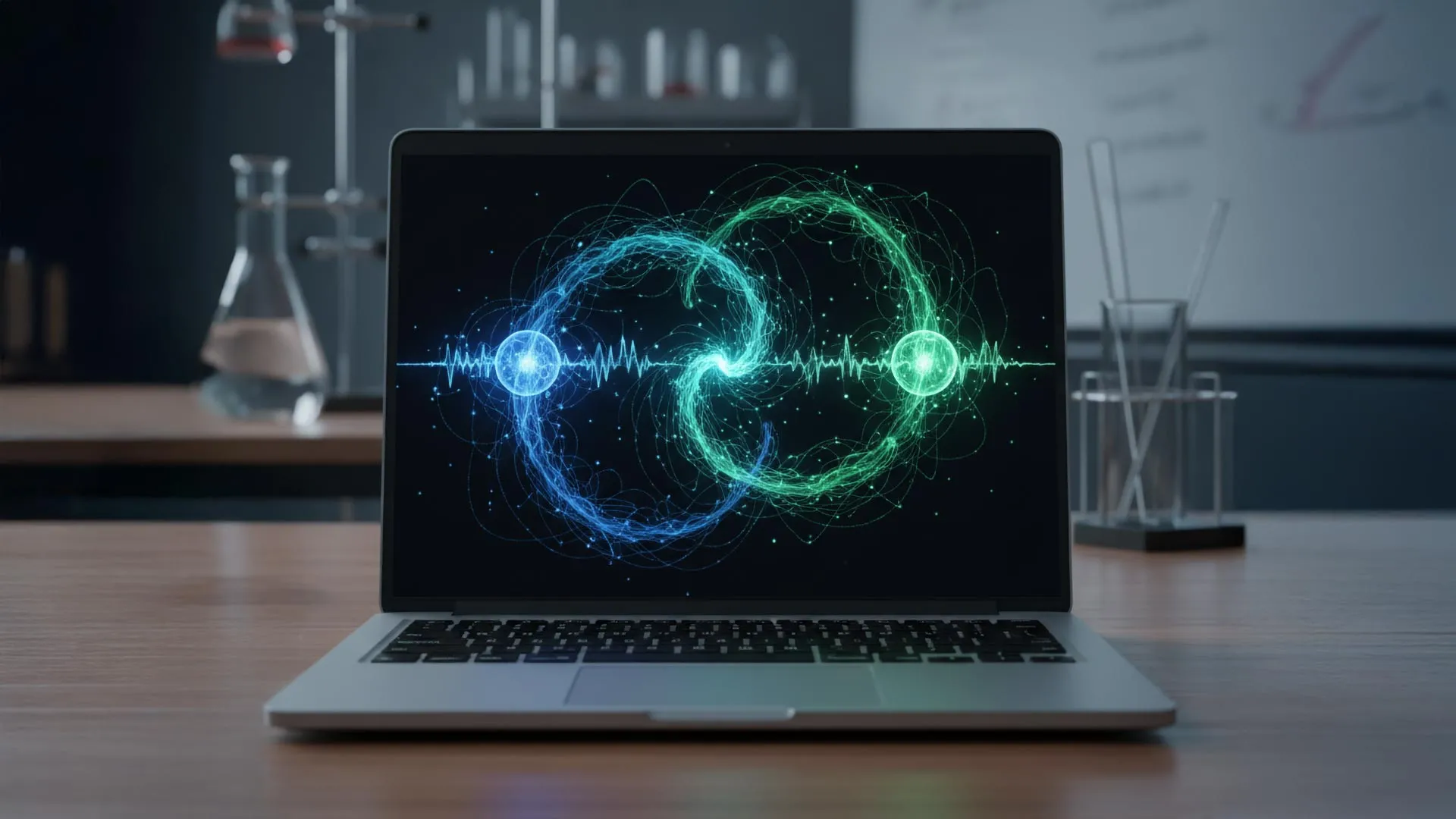
For decades, the intricate dance of quantum mechanics, where subatomic particles can exist in a superposition of states and interact in an astronomical number of ways simultaneously, has presented a formidable challenge to physicists. Understanding these mind-bending systems and their myriad configurations typically necessitates the immense processing power of supercomputers or the sophisticated algorithms of artificial intelligence. However, a groundbreaking development by scientists at the University at Buffalo is poised to change this landscape dramatically. They have successfully adapted and enhanced a cost-effective computational technique, the truncated Wigner approximation (TWA), enabling it to tackle quantum systems that were once considered the exclusive domain of high-performance computing. This advancement, detailed in a study published in the prestigious journal PRX Quantum, not only broadens the scope of solvable quantum problems but also offers a practical, user-friendly framework that can yield meaningful results within hours on standard laptop computers.
"Our approach offers a significantly lower computational cost and a much simpler formulation of the dynamical equations," explained Jamir Marino, PhD, the study’s corresponding author and an assistant professor of physics at the UB College of Arts and Sciences. "We believe this method could, in the near future, become the primary tool for exploring these kinds of quantum dynamics on consumer-grade computers." Marino, who joined UB recently, initiated this transformative research during his tenure at Johannes Gutenberg University Mainz in Germany. His collaborators on this project include two of his former students from Germany, Hossein Hosseinabadi and Oksana Chelpanova, with Chelpanova now a postdoctoral researcher in Marino’s lab at UB. The significance of this research has been recognized through substantial support from the National Science Foundation, the German Research Foundation, and the European Union, underscoring its potential impact on the global scientific community.
The fundamental limitation of quantum mechanics lies in the exponential growth of computational resources required to simulate complex systems. For many quantum systems, an exact solution is computationally prohibitive, as the number of possible states escalates dramatically with the addition of each particle or degree of freedom. This complexity has historically driven physicists to seek approximations that capture the essential quantum behavior without becoming computationally intractable. This is where the concept of semiclassical physics emerges as a crucial tool. Semiclassical approaches strike a balance, retaining enough quantum characteristics to ensure accuracy while simplifying or neglecting less influential details that would otherwise overburden calculations.
The truncated Wigner approximation (TWA) is a well-established semiclassical method that has been in use since the 1970s. It offers a simplified representation of quantum phenomena by treating quantum states as distributions of classical variables. However, the traditional TWA has been largely confined to the realm of isolated and idealized quantum systems – scenarios where energy exchange with the environment is negligible. These idealized systems, while useful for theoretical exploration, often fall short of representing the dynamic and interconnected nature of quantum phenomena in real-world applications.
Marino’s team has achieved a significant breakthrough by extending the applicability of TWA to more realistic and complex scenarios. Their expanded TWA can now effectively model "messier" systems, those that are constantly influenced by external forces and exhibit energy dissipation. In physics, dissipative spin dynamics refers to the process by which a quantum system loses energy to its surroundings, a common occurrence in many experimental setups and natural phenomena. This extension is crucial because many of the most interesting and practically relevant quantum systems are inherently dissipative.
"Plenty of groups have tried to do this before us. It’s known that certain complicated quantum systems could be solved efficiently with a semiclassical approach," Marino remarked, highlighting the long-standing quest for such a solution. "However, the real challenge has been to make it accessible and easy to do." This accessibility has been a major hurdle in the wider adoption of semiclassical methods for complex quantum dynamics. Previously, researchers utilizing TWA often had to embark on the arduous task of re-deriving the complex mathematical formulations from scratch for each new problem they encountered. This steep learning curve and the sheer mathematical complexity acted as significant barriers, limiting the technique’s widespread application.
The University at Buffalo team has ingeniously transformed this daunting mathematical landscape into a manageable and intuitive process. Their innovation lies in creating a straightforward "conversion table" that effectively translates a quantum problem, with all its inherent complexities, into a set of solvable classical equations. This elegantly simplifies the process, allowing physicists to readily apply the method without needing to master the intricate mathematical underpinnings from the ground up.
"Physicists can essentially learn this method in one day, and by about the third day, they are running some of the most complex problems we present in the study," stated Chelpanova, emphasizing the remarkable ease of use of their new framework. This rapid learning curve means that researchers can quickly integrate this powerful tool into their workflows, accelerating the pace of discovery in quantum physics. The ability to rapidly analyze complex quantum dynamics on readily available hardware opens up new avenues for experimentation and theoretical exploration.
The implications of this research extend to the more efficient allocation of computational resources. Supercomputing clusters and advanced AI models, with their immense power and associated costs, can now be reserved for the most intractable quantum problems – those that genuinely defy semiclassical approximations. These are systems that possess not just trillions of possible states, but a number of states exceeding the total number of atoms in the observable universe. For such phenomena, a full-fledged quantum mechanical treatment remains indispensable.
"A lot of what appears complicated isn’t actually complicated," Marino observed, articulating a key insight from their work. "Physicists can use supercomputing resources on the systems that need a full-fledged quantum approach and solve the rest quickly with our approach." This pragmatic approach to resource management ensures that the most powerful computational tools are applied where they are most needed, while a broader range of quantum research can be conducted using more accessible technology. The democratization of quantum simulation capabilities promises to foster a more inclusive and dynamic research environment, enabling a wider array of scientists to contribute to our understanding of the quantum world. This development marks a significant stride towards unraveling the mysteries of quantum mechanics, making the once-distant quantum realm more accessible than ever before.