Imroatul Nasiyah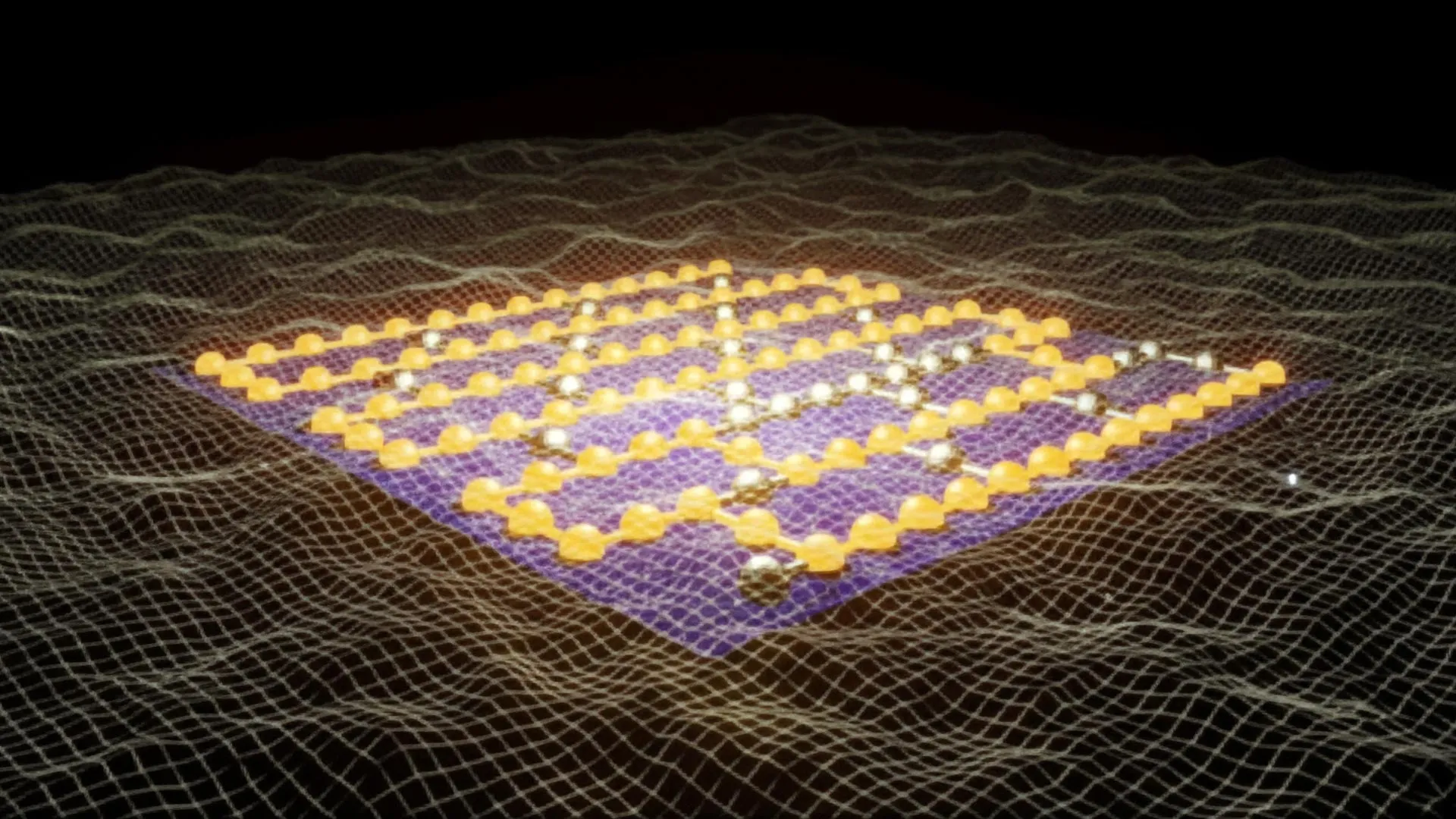
A significant hurdle in harnessing this potential has been the development of reliable methods for preparing the precise quantum states that a simulation requires. This is akin to setting up an experiment with the exact initial conditions needed to observe a specific phenomenon. In this pioneering work, researchers have overcome this challenge, achieving a significant first: the creation of scalable quantum circuits designed to accurately prepare the initial state of a particle collision, mirroring the high-energy events witnessed in particle accelerators. Their focus on these simulations centers on the powerful strong interactions, a key component of the Standard Model governing the behavior of quarks and gluons within atomic nuclei.
The research team embarked on their journey by first meticulously designing the necessary quantum circuits for smaller, more manageable systems, leveraging the power of classical computers to validate their designs. Once these foundational circuit blueprints were established, they ingeniously applied the inherent scalability of these designs to construct much larger and more complex simulations, directly executing them on a quantum computer. The fruits of their labor were realized on IBM’s quantum hardware, where they successfully simulated critical features of nuclear physics, employing over 100 qubits – a significant number for such complex simulations.
The development of these scalable quantum algorithms represents a paradigm shift, unlocking the doors to simulations that were previously considered unattainable. This innovative approach holds the potential to model a wide array of challenging physical systems. These include the fleeting vacuum state that exists just before a particle collision, systems characterized by extraordinarily high densities, and even the complex behavior of beams of hadrons – composite particles made of quarks and held together by the strong force. The researchers are optimistic that future quantum simulations built upon these newly developed circuits will surpass the capabilities of even the most advanced classical computing architectures, ushering in an era of discovery.
The implications of such powerful simulations are far-reaching and could illuminate some of the most profound unanswered questions in physics. Imagine gaining deeper insights into the mysterious imbalance between matter and antimatter that pervades the universe, or understanding the intricate processes by which heavy elements are forged within the fiery hearts of supernovae. Furthermore, these simulations could shed light on the enigmatic behavior of matter when subjected to ultra-high densities, conditions that exist in the cores of neutron stars and the aftermath of violent cosmic events. The versatility of these quantum techniques extends beyond nuclear physics, with potential applications in modeling other notoriously difficult systems, such as exotic materials exhibiting peculiar quantum properties that defy conventional understanding.
Nuclear physicists, utilizing the advanced capabilities of IBM’s quantum computers, have now executed the largest digital quantum simulation ever accomplished. This remarkable success can be attributed, in part, to their keen ability to identify underlying patterns within physical systems, including crucial symmetries and differences in length scales. These insights proved instrumental in designing circuits that were not only scalable but also capable of preparing quantum states exhibiting localized correlations – a critical feature for accurately representing complex physical phenomena. They rigorously demonstrated the efficacy of their algorithm by successfully preparing the vacuum state and simulating hadrons within a simplified, one-dimensional framework of quantum electrodynamics, a fundamental theory describing the interaction of light and matter.
The team’s validation process was thorough and systematic. They began by meticulously testing their fundamental circuit components on smaller systems using classical computing tools, ensuring that the resulting quantum states could be progressively refined and improved. This careful groundwork laid the foundation for their ambitious expansion, enabling them to scale up the circuits to encompass over 100 qubits. These larger circuits were then deployed and executed on IBM’s cutting-edge quantum devices. The wealth of data generated from these simulations allowed the scientists to extract key properties of the vacuum state with an impressive percent-level accuracy, a testament to the precision of their quantum approach.
Beyond characterizing the vacuum, the researchers also ingeniously employed their circuits to generate pulses of hadrons. They then meticulously simulated the evolution of these pulses over time, tracking their propagation and interactions. These significant advancements paint a compelling picture of a future where quantum computers will be capable of performing complete dynamical simulations of matter under extreme conditions – scenarios that are fundamentally out of reach for classical machines. This capability promises to revolutionize our understanding of the universe, from the smallest subatomic particles to the grandest cosmic structures.
This groundbreaking research was made possible through substantial support from various leading institutions. The Department of Energy (DOE) Office of Science, specifically its Office of Nuclear Physics, provided crucial funding. The InQubator for Quantum Simulation (IQuS), through its Quantum Horizons: QIS Research and Innovation for Nuclear Science Initiative, and the Quantum Science Center (QSC), a DOE and University of Washington National Quantum Information Science Research Center, also played pivotal roles in supporting this endeavor. Additional vital computing resources were generously provided by the Oak Ridge Leadership Computing Facility, a DOE Office of Science User Facility, and the Hyak supercomputer system at the University of Washington. The research team also expressed their gratitude for the invaluable use of IBM Quantum services, which were instrumental in the execution of this project. This collaborative effort underscores the growing interdisciplinary nature of quantum science and its potential to address some of humanity’s most pressing scientific challenges.