Imroatul Nasiyah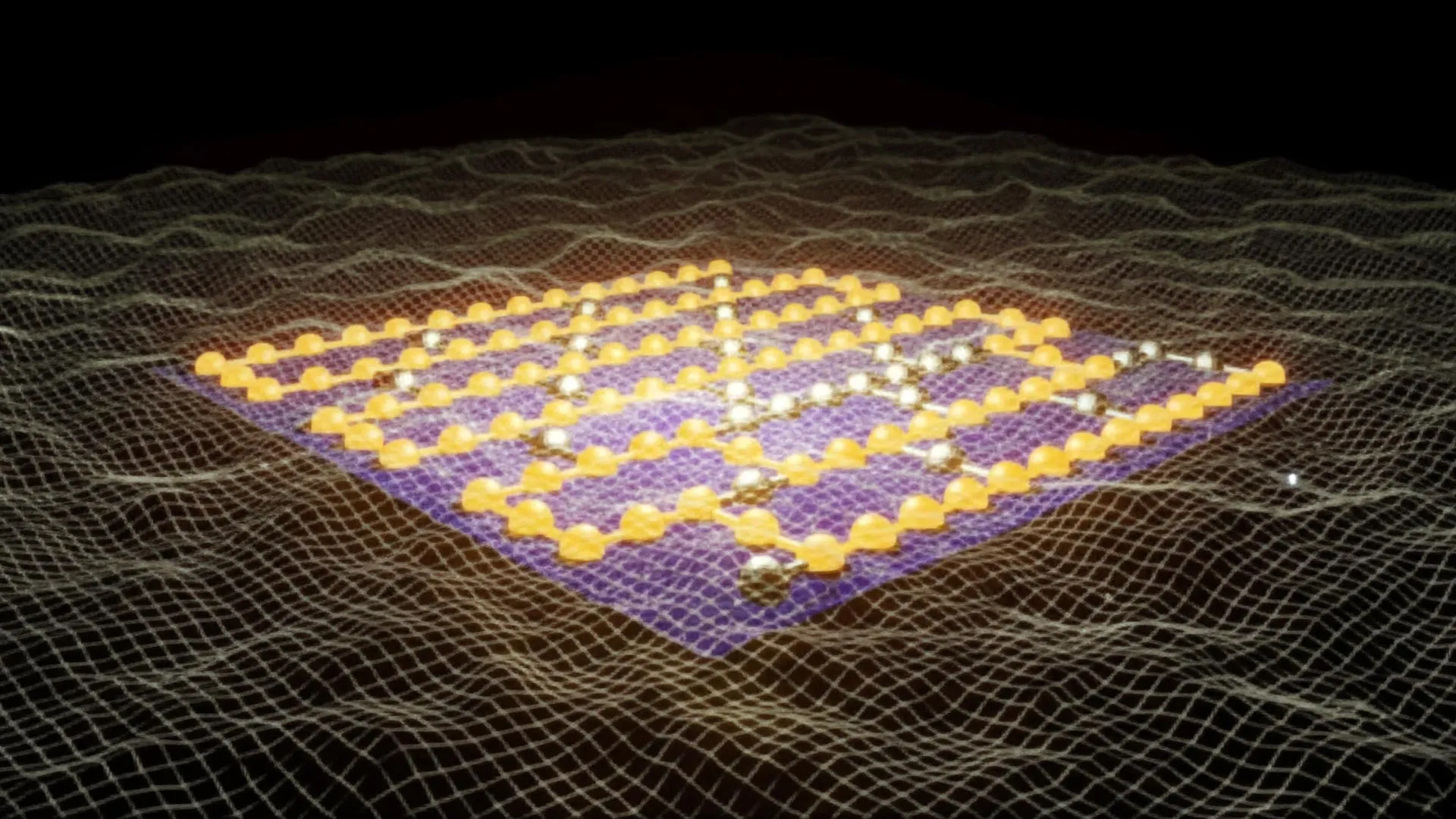
Quantum computing offers a fundamentally different approach, a promising alternative capable of representing and simulating these intricate systems with unprecedented efficiency. The inherent nature of quantum mechanics, with its principles of superposition and entanglement, allows quantum computers to explore a vast number of possibilities simultaneously, a feat impossible for classical machines. However, a significant hurdle has consistently challenged the widespread adoption of quantum simulations: the difficulty in devising reliable and scalable methods to prepare the precise initial quantum state required for a simulation. This preparatory step is akin to setting the stage for a complex play, and getting it wrong can render the entire performance moot.
In a groundbreaking development, researchers have achieved a significant first: they have successfully created scalable quantum circuits specifically designed to prepare the starting state of a particle collision. This simulated collision is analogous to those meticulously orchestrated and studied in state-of-the-art particle accelerators. The team’s pioneering work focuses on the strong interactions, a fundamental force described by the Standard Model, which governs the behavior of quarks and gluons within atomic nuclei.
The research journey began with a meticulous process of designing and validating the required quantum circuits. Initially, for smaller, more manageable systems, these designs were determined and optimized using powerful classical computers. This crucial step allowed the researchers to identify and understand the fundamental building blocks and logical operations needed for their quantum simulations. Once these initial designs were refined and proven effective on a smaller scale, the team leveraged the inherent scalability of their circuit architecture. This allowed them to directly translate these designs into much larger and more complex simulations, executed on actual quantum hardware. Utilizing the advanced quantum computing resources provided by IBM, the researchers successfully simulated key features of nuclear physics, employing systems that spanned over 100 qubits – a significant leap in the scale of quantum simulations.
This achievement heralds a new era of "Scalable Quantum Methods for High-Density Physics." The developed scalable quantum algorithms are not merely an incremental improvement; they are a paradigm shift, opening the door to simulations that were previously confined to the realm of theoretical speculation, utterly out of reach for classical computing. The innovative approach employed by the researchers is remarkably versatile and can be readily adapted to model a wide range of challenging physical systems. This includes the intricate vacuum state that exists just before a particle collision, physical systems characterized by extremely high densities – conditions found in the cores of neutron stars, for instance – and even the complex dynamics of beams of hadrons, subatomic particles composed of quarks. The researchers are optimistic and anticipate that future quantum simulations built upon these advanced circuits will not only match but significantly surpass the capabilities of even the most powerful classical machines currently available.
The implications of such advanced simulations are profound and far-reaching. They hold the potential to shed crucial light on some of the most persistent and profound open questions in physics. For example, these simulations could help unravel the mystery of the observed imbalance between matter and antimatter in the universe, a fundamental puzzle that challenges our current cosmological models. They might also provide insights into the processes responsible for the creation of heavy elements within the explosive environments of supernovae, the violent deaths of massive stars. Furthermore, the behavior of matter at ultra-high densities, a regime that is incredibly difficult to probe experimentally, could be explored in unprecedented detail. The versatility of these techniques extends beyond nuclear physics, with the same underlying principles and circuit designs potentially applicable to modeling other notoriously difficult systems. This includes the study of exotic materials exhibiting unusual quantum properties, materials that could revolutionize fields ranging from electronics to energy storage.
In a testament to the rapid advancements in quantum computing, nuclear physicists leveraged IBM’s quantum computers to perform what is recognized as the largest digital quantum simulation ever completed to date. This remarkable success was, in part, attributable to the team’s astute ability to identify recurring patterns and fundamental symmetries within physical systems. By recognizing differences in length scales and exploiting these inherent properties, they were able to design highly efficient and scalable quantum circuits. These circuits are specifically engineered to prepare quantum states that exhibit localized correlations, a critical feature for accurately representing complex physical interactions. To demonstrate the efficacy of their innovative algorithm, the researchers successfully prepared the vacuum state and various hadron configurations within a simplified, one-dimensional model of quantum electrodynamics (QED), a fundamental theory describing the interaction of light and matter.
This groundbreaking research signifies a pivotal "Advancing from Small Models to Large-Scale Quantum Systems." The team meticulously validated their quantum circuit components by first subjecting them to rigorous testing on smaller systems using traditional classical computing tools. This initial phase was crucial for confirming that the resulting quantum states could be systematically improved and refined, ensuring their accuracy and reliability. Subsequently, they confidently expanded the complexity of these circuits to accommodate systems involving more than 100 qubits, a significant scaling up of their computational power. These larger circuits were then executed on IBM’s cutting-edge quantum devices. The wealth of data generated from these complex simulations was then meticulously analyzed by the scientists, who were able to extract crucial properties of the quantum vacuum with an impressive percent-level accuracy.
Furthermore, the researchers ingeniously employed their developed circuits to generate precisely controlled pulses of hadrons. They then proceeded to simulate the dynamic evolution of these hadron pulses over time, meticulously tracking their propagation. These sophisticated simulations provided invaluable insights into the behavior of matter under extreme conditions. These collective advances collectively point towards a transformative future where quantum computers will be empowered to conduct full, dynamic simulations of matter under conditions that are, and will likely remain, well beyond the computational grasp of even the most powerful classical machines.
The significance of this pioneering research has been recognized and supported by several leading institutions. Funding for this project was provided by the Department of Energy (DOE) Office of Science, specifically through the Office of Nuclear Physics. Additional crucial support came from the InQubator for Quantum Simulation (IQuS), a vital initiative under the Quantum Horizons: QIS Research and Innovation for Nuclear Science program. The Quantum Science Center (QSC), a distinguished DOE and University of Washington National Quantum Information Science Research Center, also contributed significantly to this endeavor. Beyond the direct research funding, essential computing resources were made available through the Oak Ridge Leadership Computing Facility, a premier DOE Office of Science User Facility, and the Hyak supercomputer system at the University of Washington. The research team also gratefully acknowledges the invaluable use of IBM Quantum services, which played a pivotal role in the execution of this ambitious project.