Imroatul Nasiyah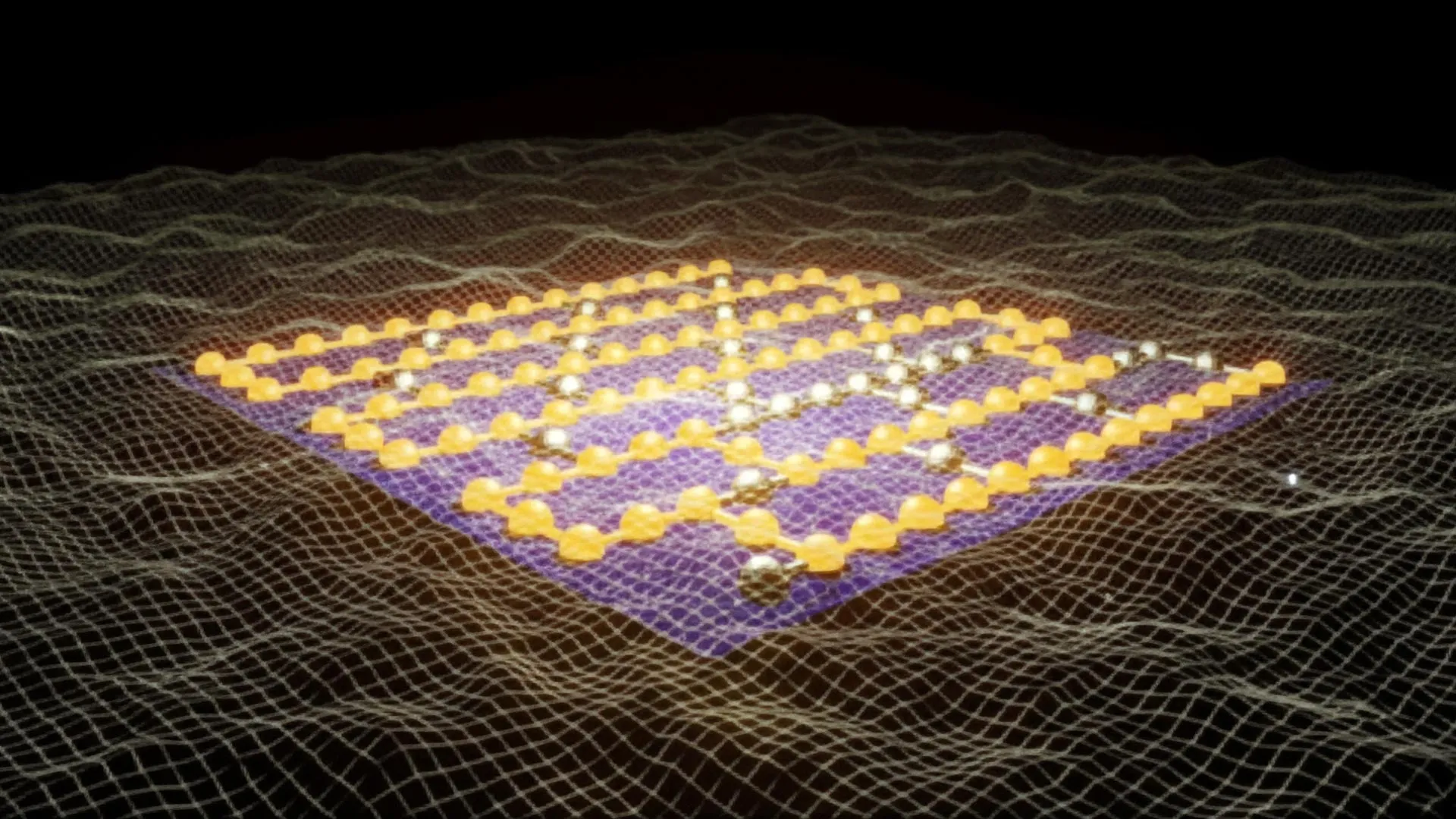
A significant hurdle in this quantum realm has been the development of reliable methods to initialize the precise quantum state required for a simulation. Breaking through this barrier, a team of researchers has accomplished a groundbreaking feat: the creation of scalable quantum circuits capable of preparing the foundational state of particle collisions, mirroring the energetic events witnessed in particle accelerators. Their pioneering work specifically targets the complex strong interactions governed by the Standard Model, a fundamental force that binds atomic nuclei.
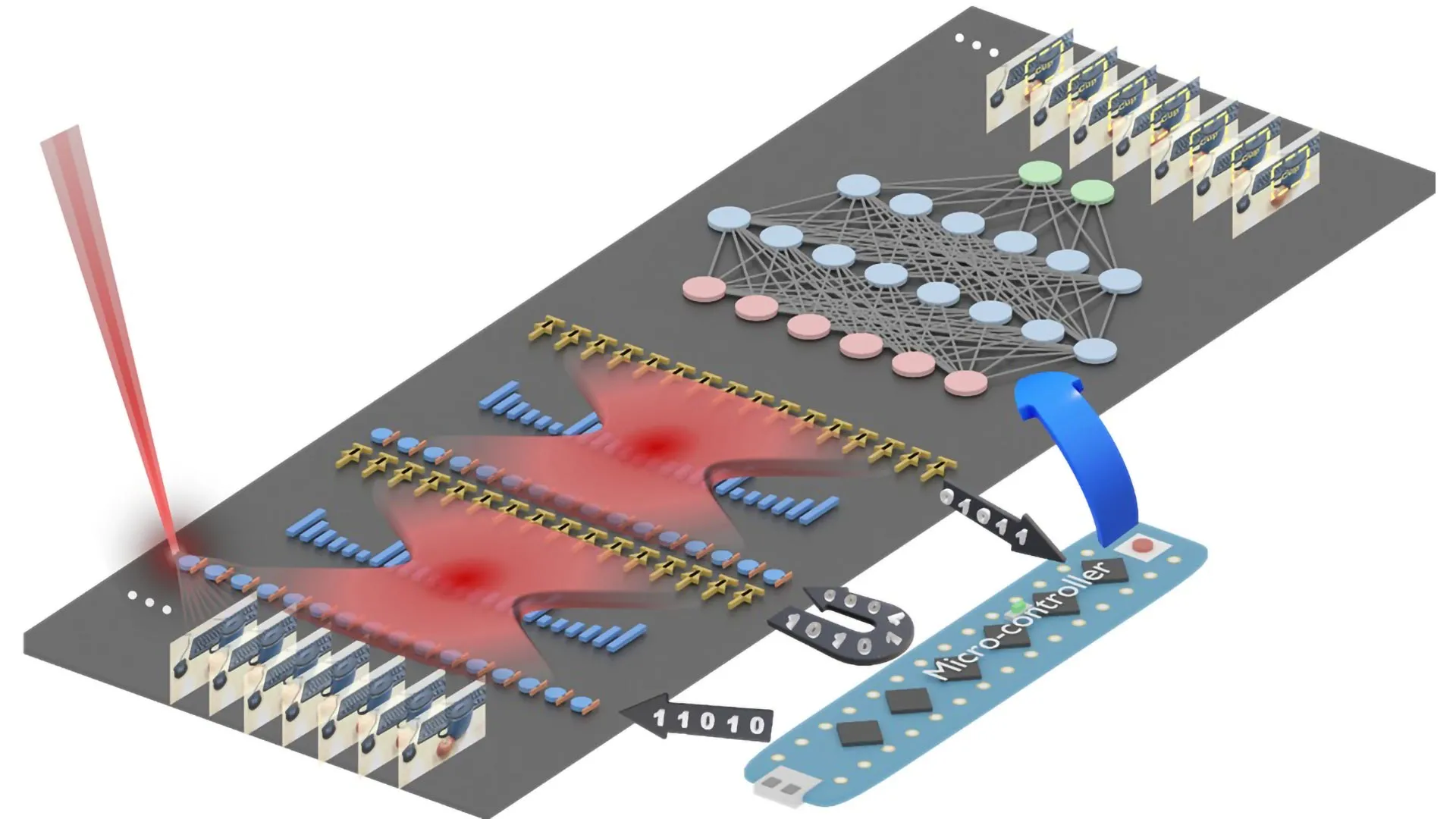
The research journey began with the meticulous design of circuits for smaller, manageable systems, a task initially tackled using classical computers. Once these foundational circuit blueprints were established, the team ingeniously applied their inherent scalability to construct vastly larger and more sophisticated simulations directly on a quantum computer. Leveraging the advanced capabilities of IBM’s quantum hardware, they successfully simulated key characteristics of nuclear physics, operating on a system exceeding 100 qubits, a significant leap in quantum simulation scale.
Scalable Quantum Methods Unlock the Secrets of High-Density Physics
These newly developed scalable quantum algorithms represent a paradigm shift, opening doors to simulations that were previously confined to the realm of theoretical impossibility. This innovative approach is poised to revolutionize our understanding of phenomena such as the vacuum state preceding a particle collision, the behavior of matter under conditions of extreme density, and the dynamics of hadron beams. The researchers express strong confidence that future quantum simulations built upon these robust circuits will definitively surpass the computational limitations of their classical counterparts.
The implications of these advanced simulations are profound and far-reaching, promising to illuminate some of the most pressing unanswered questions in physics. These include the enduring mystery of the matter-antimatter imbalance observed in the universe, the intricate processes involved in the creation of heavy elements within the fiery hearts of supernovae, and the enigmatic behavior of matter compressed to ultra-high densities. Furthermore, the same groundbreaking techniques are anticipated to provide valuable insights into the modeling of other exceptionally challenging systems, such as exotic materials exhibiting unusual and captivating quantum properties.
In a significant demonstration of this potential, nuclear physicists have successfully employed IBM’s quantum computers to execute the largest digital quantum simulation ever undertaken. Their remarkable achievement was partly attributable to their astute identification of underlying patterns within physical systems. These patterns, including crucial symmetries and distinct differences in length scales, provided the essential insights needed to design highly scalable circuits. These circuits are specifically engineered to prepare quantum states characterized by localized correlations, a critical element for accurate simulation. To validate the effectiveness of their novel algorithm, the team successfully prepared the vacuum state and simulated the behavior of hadrons within a simplified one-dimensional model of quantum electrodynamics, a fundamental theory describing the interaction of light and matter.
Advancing from Small-Scale Models to Transformative Large-Scale Quantum Systems
The rigorous validation of their quantum circuit components was a crucial first step. The team meticulously tested these components on smaller, more tractable systems using established classical computing tools. This thorough validation process confirmed that the resulting quantum states could be systematically refined and improved, building confidence in their approach. With this assurance, they confidently expanded the complexity of their circuits to accommodate the demands of more than 100 qubits, subsequently executing these advanced simulations on IBM’s cutting-edge quantum devices. The wealth of data meticulously gathered from these large-scale quantum simulations enabled the scientists to extract key properties of the vacuum state with impressive percent-level accuracy, a testament to the precision of their methods.
Beyond characterizing the vacuum, the researchers ingeniously employed their circuits to generate precise pulses of hadrons. They then meticulously simulated the evolution of these hadron pulses over time, enabling them to track their propagation with unprecedented detail. These remarkable advances collectively signal a transformative future where quantum computers will be capable of performing full, dynamic simulations of matter under extreme conditions – regimes of physics that lie far beyond the current computational horizon of even the most powerful classical machines.
This pioneering research was made possible through substantial support from several key organizations. The Department of Energy (DOE) Office of Science, through its Office of Nuclear Physics, provided crucial funding. The InQubator for Quantum Simulation (IQuS), an initiative under the Quantum Horizons: QIS Research and Innovation for Nuclear Science umbrella, also contributed significantly. The Quantum Science Center (QSC), a distinguished DOE and University of Washington National Quantum Information Science Research Center, played a vital role in fostering this advancement. Additional high-performance computing resources were generously provided by the Oak Ridge Leadership Computing Facility, a premier DOE Office of Science User Facility, and by the advanced Hyak supercomputer system located at the University of Washington. The research team also expressed their sincere gratitude for the invaluable use of IBM Quantum services, which were instrumental in the successful execution of this ambitious project.