Imroatul Nasiyah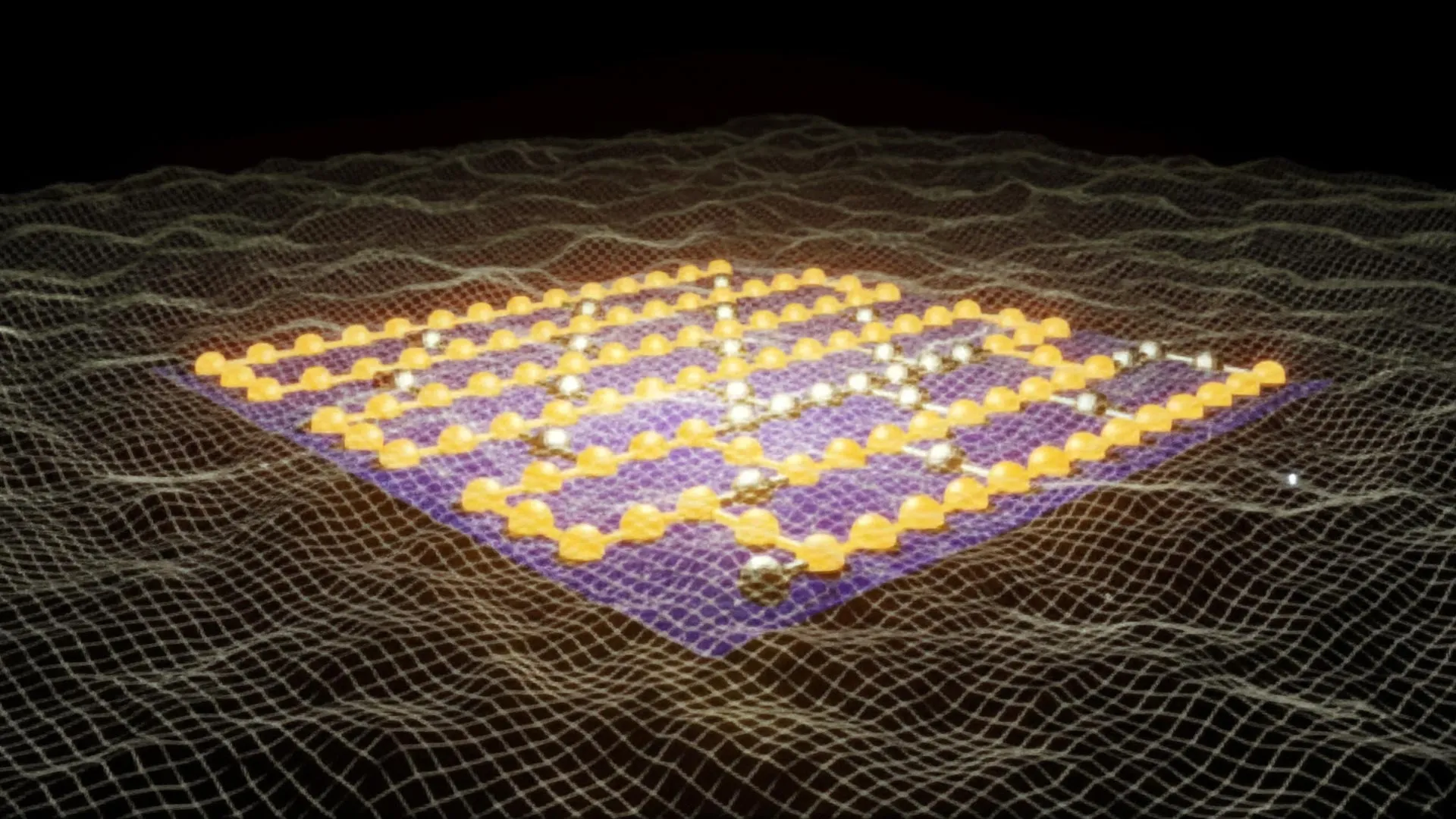
This is precisely where the transformative potential of quantum computing emerges as a beacon of hope. In principle, quantum computers possess an inherent advantage, capable of representing and simulating these extraordinarily complex systems with an efficiency that eludes their classical counterparts. Yet, a significant hurdle has persistently stood in the path of progress: the development of reliable methodologies for meticulously setting up the initial quantum state, a prerequisite for any quantum simulation. In a groundbreaking achievement, researchers have now surmounted this challenge, demonstrating a scalable quantum circuit design that can precisely prepare the starting state of a particle collision, mirroring the high-energy interactions observed in sophisticated particle accelerators. This pivotal work zeroes in on the fundamental strong interactions, a key component of the Standard Model, and offers a tangible pathway to simulating previously intractable physics.
The genesis of this breakthrough involved a systematic approach. The research team initially focused on meticulously determining the required quantum circuits for smaller, more manageable systems using the established power of classical computers. This initial phase was crucial for identifying underlying patterns and optimizing circuit designs. Once these foundational circuits were established, the team ingeniously leveraged their inherent scalable structure, ingeniously adapting them to construct significantly larger and more intricate simulations directly on quantum hardware. Harnessing the capabilities of IBM’s advanced quantum processors, they successfully simulated key features of nuclear physics, demonstrating their prowess on systems involving more than 100 qubits – a significant milestone in the field.
The implications of these scalable quantum algorithms are profound, effectively unlocking the doors to simulations that were once firmly beyond our reach. This innovative approach is poised to revolutionize our ability to model a wide array of complex physical systems. Imagine, for instance, the ability to accurately model the fleeting vacuum state that exists just before a particle collision, or to unravel the mysteries of physical systems subjected to extreme densities, far exceeding anything encountered in everyday experience. Furthermore, the techniques developed can be applied to simulate beams of hadrons, those composite particles made of quarks and gluons, offering new insights into their behavior. The researchers are optimistic that future quantum simulations built upon these circuits will not only match but decisively surpass the computational achievements of classical computing, ushering in a new era of scientific discovery.
These advanced simulations hold the promise of illuminating some of the most persistent and fundamental open questions in physics. Consider the enduring enigma of the matter-antimatter imbalance that pervades the universe – why is there so much more matter than antimatter? Quantum simulations could provide crucial clues to understanding this cosmic asymmetry. Similarly, the dramatic processes occurring within supernovae, the cataclysmic explosions of stars, which are responsible for the creation of many heavy elements, could be modeled with unprecedented fidelity. The behavior of matter at ultra-high densities, such as within neutron stars, a realm of physics that pushes the limits of our understanding, could also be brought into sharper focus. The versatility of these techniques extends even further, offering potential solutions for modeling other challenging systems, including the fascinating world of exotic materials possessing unusual and captivating quantum properties that defy conventional explanation.
In a landmark achievement, nuclear physicists have leveraged the power of IBM’s quantum computers to execute the largest digital quantum simulation ever accomplished. This success is partly attributable to their insightful identification of recurring patterns within physical systems, including crucial symmetries and significant differences in length scales. These observations were instrumental in guiding the design of their scalable circuits, enabling the preparation of quantum states characterized by localized correlations – a critical feature for accurate simulation. The effectiveness of their novel algorithm was rigorously demonstrated by its ability to precisely prepare the vacuum state and simulate hadrons within a simplified one-dimensional model of quantum electrodynamics, a foundational theory in particle physics.
The research team’s meticulous validation process was a cornerstone of their success. They began by thoroughly testing their circuit components on smaller systems using established classical computing tools. This critical step allowed them to confirm that the resulting quantum states could be systematically improved and refined, ensuring the accuracy and reliability of their designs. Armed with this confidence, they then scaled up their circuits to manage the complexities of more than 100 qubits, subsequently executing these sophisticated simulations on IBM’s state-of-the-art quantum devices. The data meticulously extracted from these simulations provided scientists with remarkable insights into the properties of the vacuum, achieving accuracy at the percent level – a testament to the power and precision of their quantum approach.
Beyond characterizing static properties, the team also ingeniously employed their circuits to generate controlled pulses of hadrons. They then meticulously simulated the dynamic evolution of these pulses over time, enabling them to track their propagation with unprecedented detail. These significant advancements represent a pivotal step towards a future where quantum computers will routinely perform full dynamical simulations of matter under extreme conditions, tackling scientific challenges that have long remained resolutely beyond the grasp of classical machines. This research was generously supported by the Department of Energy (DOE) Office of Science, Office of Nuclear Physics, through the InQubator for Quantum Simulation (IQuS) and its Quantum Horizons: QIS Research and Innovation for Nuclear Science Initiative. Further crucial support was provided by the Quantum Science Center (QSC), a distinguished DOE and University of Washington National Quantum Information Science Research Center. Essential additional computing resources were generously provided by the Oak Ridge Leadership Computing Facility, a DOE Office of Science User Facility, and by the Hyak supercomputer system at the University of Washington. The dedicated team also extends their sincere gratitude for the invaluable use of IBM Quantum services, which played an integral role in the successful realization of this pioneering project.