Imroatul Nasiyah
UNSW Sydney’s pioneering nano-tech startup, Diraq, has achieved a groundbreaking milestone, demonstrating that its quantum chips are far more than just laboratory prototypes. In a significant validation of their technology, Diraq’s quantum processors have proven their capability to maintain the critical 99% accuracy required for viable quantum computing, even when manufactured through standard, real-world production processes. This crucial development signifies a pivotal step towards making the transformative power of quantum computing accessible and commercially feasible.
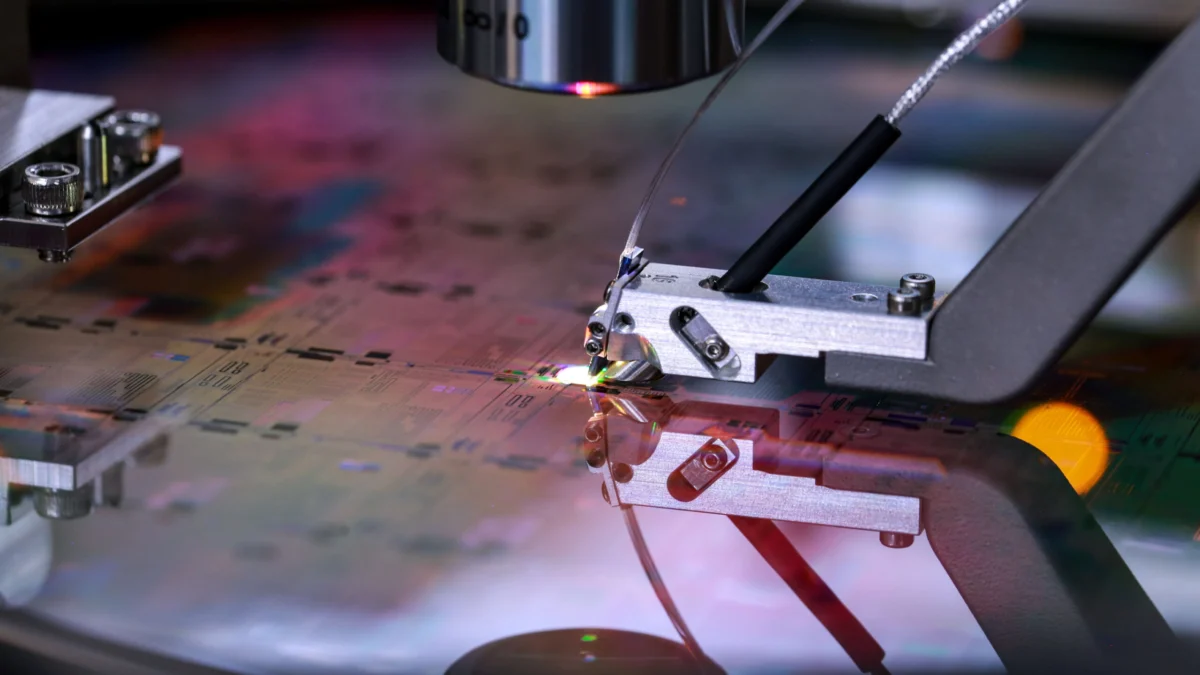
The triumph was realized through a strategic collaboration between Diraq and the esteemed European nanoelectronics institute, Interuniversity Microelectronics Centre (imec). Together, they successfully showcased that the chips’ reliability and performance, achieved under the controlled experimental conditions of UNSW’s research labs, remain consistent when produced on a commercial semiconductor chip fabrication line. This seamless transition from academic discovery to industrial production addresses a long-standing challenge in the quantum computing field.
Professor Andrew Dzurak, a distinguished figure in UNSW Engineering and the founder and CEO of Diraq, highlighted the significance of this achievement. "Up until now, it hadn’t been proven that the processors’ lab-based fidelity – meaning accuracy in the quantum computing world – could be translated to a manufacturing setting," he explained. "Now, it’s clear that Diraq’s chips are fully compatible with manufacturing processes that have been around for decades." This statement underscores the potential to leverage established semiconductor industry infrastructure for the mass production of quantum components.
Their findings, meticulously detailed in a paper published on September 24th in the prestigious journal Nature, reveal that Diraq-designed devices, fabricated by imec, consistently achieved over 99% fidelity in operations involving two quantum bits, or ‘qubits’. This level of accuracy is not merely an impressive technical feat; it represents a crucial advancement towards Diraq’s goal of achieving "utility scale" in quantum computing. Utility scale is defined as the point at which a quantum computer’s commercial value demonstrably surpasses its operational costs, a key metric established by the United States’ Defense Advanced Research Projects Agency (DARPA) through its Quantum Benchmarking Initiative. This initiative aims to assess the progress of Diraq and 17 other leading companies in reaching this critical threshold.
The implications of reaching utility scale are profound. Quantum computers are anticipated to possess the unprecedented ability to tackle complex problems that are currently intractable for even the most powerful high-performance computers available today. However, unlocking this potential hinges on the capacity to store and manipulate quantum information within millions of qubits, a necessity driven by the inherent fragility of quantum states and the errors they are prone to.
"Achieving utility scale in quantum computing hinges on finding a commercially viable way to produce high-fidelity quantum bits at scale," Prof. Dzurak elaborated. "Diraq’s collaboration with imec makes it clear that silicon-based quantum computers can be built by leveraging the mature semiconductor industry, which opens a cost-effective pathway to chips containing millions of qubits while still maximizing fidelity." This strategic alignment with the existing semiconductor ecosystem is a significant differentiator, promising a more accessible and scalable route to advanced quantum hardware.
Silicon has rapidly emerged as a leading material in the global quest for quantum computing solutions. Its unique properties allow for the integration of millions of qubits onto a single chip, a capability that synergistically aligns with the trillion-dollar microchip industry. By utilizing established fabrication methods that have successfully placed billions of transistors onto modern computer chips, silicon-based quantum computing offers a compelling advantage in terms of scalability and cost-effectiveness.
Previously, Diraq had already demonstrated that qubits fabricated within an academic laboratory setting could achieve high fidelity during two-qubit logic gate operations – the fundamental building blocks of future quantum computers. However, a persistent question mark remained: could this high fidelity be reliably reproduced when qubits were manufactured in a commercial semiconductor foundry environment, subject to the rigors of industrial production?
"Our new findings demonstrate that Diraq’s silicon qubits can be fabricated using processes that are widely used in semiconductor foundries, meeting the threshold for fault tolerance in a way that is cost-effective and industry-compatible," Prof. Dzurak affirmed, emphasizing the practical implications of their research. This breakthrough directly addresses the need for robust and scalable quantum hardware.
This is not the first success for the Diraq and imec partnership. In prior work, they had already established that qubits manufactured using Complementary Metal-Oxide-Semiconductor (CMOS) processes – the very same technology that underpins the production of everyday computer chips – could perform single-qubit operations with an impressive 99.9% accuracy. However, the more complex two-qubit operations, which are absolutely critical for achieving the computational power required for utility scale, had not yet been conclusively demonstrated in a manufacturing context.
The latest achievement, therefore, represents a monumental leap forward. "This latest achievement clears the way for the development of a fully fault-tolerant, functional quantum computer that is more cost effective than any other qubit platform," Prof. Dzurak concluded with optimism. This statement signals a potential paradigm shift in quantum computing development, suggesting that silicon-based approaches, bolstered by industrial manufacturing capabilities, may offer a more pragmatic and economically viable path to realizing the full potential of quantum computation. The successful integration of high-fidelity quantum operations into standard semiconductor fabrication processes marks a critical juncture, bringing the promise of powerful, real-world quantum computers closer to reality.