Imroatul Nasiyah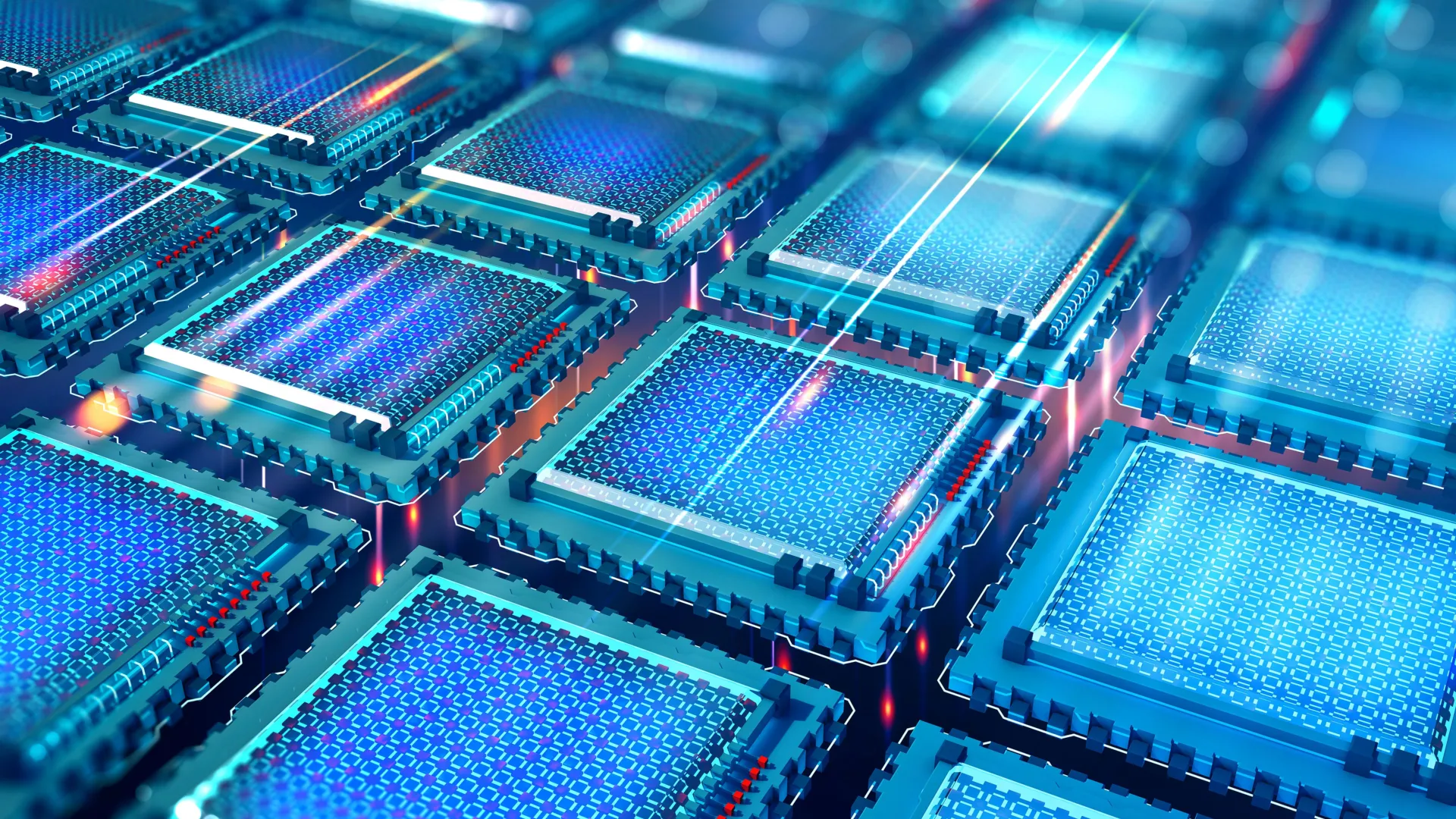
UNSW Sydney nano-tech startup Diraq has demonstrated that its quantum chips are no longer confined to the pristine environment of a laboratory; they are now proven to hold up under real-world production conditions, consistently maintaining the 99% accuracy essential for making quantum computers a practical reality. This groundbreaking achievement marks a significant leap forward in the quest for utility-scale quantum computing, a milestone that could unlock solutions to problems currently intractable for even the most powerful supercomputers.
Diraq, a trailblazer in the field of silicon-based quantum computing, achieved this pivotal success through a strategic collaboration with the esteemed European nanoelectronics institute, Interuniversity Microelectronics Centre (imec). This partnership allowed them to rigorously test and validate the reliability of Diraq’s quantum chips when manufactured on a standard semiconductor chip fabrication line, demonstrating that their performance is as robust as it is in the carefully controlled experimental conditions of a research lab at UNSW.
Professor Andrew Dzurak, a distinguished figure in UNSW Engineering, the visionary founder, and CEO of Diraq, articulated the profound significance of this development. He explained that until this point, a critical unanswered question had loomed over the field: whether the exceptionally high fidelity, or accuracy in quantum computing terminology, achieved in laboratory-based processors could be effectively translated to a mass manufacturing setting. "Now it’s clear that Diraq’s chips are fully compatible with manufacturing processes that have been around for decades," Professor Dzurak confidently stated, underscoring the seamless integration of their quantum technology with established industrial infrastructure.
The culmination of this intensive research and development effort was recently published on September 24th in the prestigious scientific journal Nature. The paper details how Diraq-designed devices, fabricated by imec, achieved an impressive fidelity exceeding 99% in operations involving two quantum bits, colloquially known as ‘qubits’. This is not merely an incremental improvement; it is a crucial step towards Diraq’s quantum processors reaching what is termed "utility scale." This is the critical threshold where a quantum computer’s commercial value demonstrably surpasses its operational cost – a key metric rigorously assessed by the United States’ Defense Advanced Research Projects Agency (DARPA) through its Quantum Benchmarking Initiative. This initiative aims to evaluate the progress of Diraq and 17 other leading companies in their race to achieve this transformative goal.
The promise of utility-scale quantum computers is immense, offering the potential to tackle complex problems that lie far beyond the reach of today’s most advanced high-performance computing systems. However, reaching this utility-scale threshold necessitates the ability to store and manipulate quantum information within millions of qubits. This is an arduous challenge, primarily due to the inherent fragility of quantum states, which are highly susceptible to errors. Overcoming these errors requires sophisticated error correction mechanisms, which in turn demand a massive number of qubits to maintain the integrity of quantum computations.
"Achieving utility scale in quantum computing hinges on finding a commercially viable way to produce high-fidelity quantum bits at scale," Professor Dzurak emphasized, highlighting the core challenge that Diraq’s breakthrough addresses. He further elaborated on the strategic advantage of their chosen approach: "Diraq’s collaboration with imec makes it clear that silicon-based quantum computers can be built by leveraging the mature semiconductor industry, which opens a cost-effective pathway to chips containing millions of qubits while still maximizing fidelity." This synergy between cutting-edge quantum technology and the established, multi-trillion-dollar semiconductor industry is a potent combination that promises to accelerate the development and deployment of quantum computers.
Silicon has rapidly emerged as a leading contender among the diverse materials being explored for quantum computing applications. Its key advantages lie in its potential to densely pack millions of qubits onto a single chip and its seamless compatibility with the existing microchip industry. This compatibility allows for the utilization of the same advanced manufacturing techniques that have enabled the integration of billions of transistors onto modern computer chips, a testament to the power of leveraging mature technologies for novel applications.
Diraq had previously established a strong track record by demonstrating that qubits fabricated within the controlled environment of an academic laboratory could achieve high fidelity in performing two-qubit logic gates. These gates are the fundamental building blocks upon which all future quantum computations will be constructed. However, the critical uncertainty that remained was whether this level of precision could be replicated when these qubits were manufactured using the industrial processes found in a commercial semiconductor foundry.
"Our new findings demonstrate that Diraq’s silicon qubits can be fabricated using processes that are widely used in semiconductor foundries, meeting the threshold for fault tolerance in a way that is cost-effective and industry-compatible," Professor Dzurak affirmed. This statement signifies the successful bridging of the gap between academic discovery and industrial applicability. The ability to achieve fault tolerance, a crucial prerequisite for reliable quantum computation, within a manufacturing setting at a reasonable cost is a game-changer for the entire field.
It is important to note that Diraq and imec had previously achieved a significant milestone by demonstrating that qubits manufactured using CMOS processes – the very same technology that underpins the production of everyday computer chips – could perform single-qubit operations with an exceptional accuracy of 99.9%. While this was a remarkable achievement in itself, the complexity of quantum computing demands more sophisticated operations. Specifically, operations involving two qubits are critical for achieving the computational power required for utility-scale applications, and this aspect had not yet been definitively demonstrated in a manufacturing context.
"This latest achievement clears the way for the development of a fully fault-tolerant, functional quantum computer that is more cost effective than any other qubit platform," Professor Dzurak concluded, expressing his optimism and confidence in the future of Diraq’s silicon-based approach. This breakthrough not only validates the technological prowess of Diraq and imec but also provides a clear and compelling roadmap for the commercialization of quantum computing, promising a future where the extraordinary capabilities of quantum machines are accessible and applicable to a wide range of pressing global challenges. The era of practical, real-world quantum computing is no longer a distant dream but a tangible reality, propelled forward by innovations like these.