Imroatul Nasiyah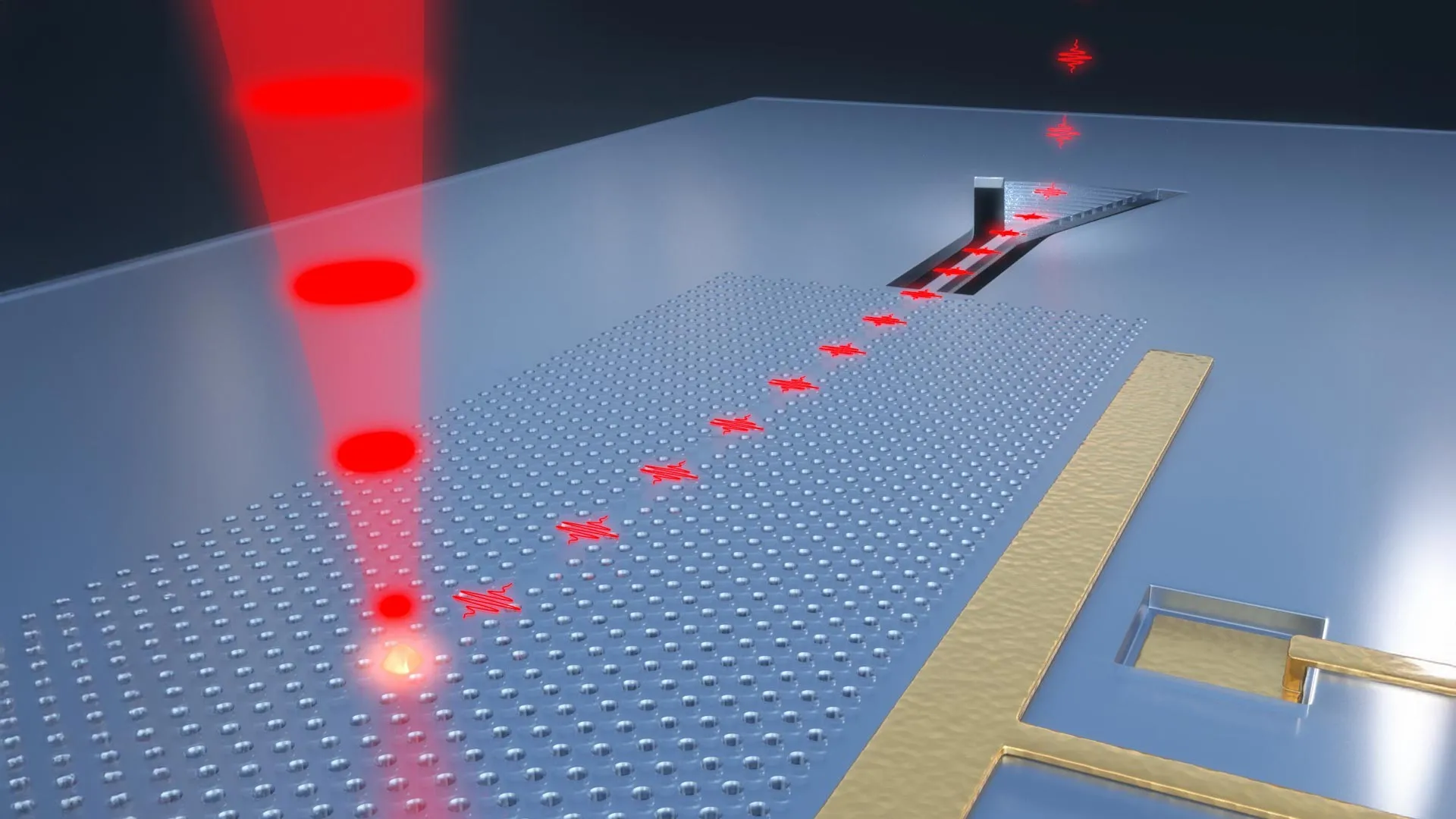
Researchers at the University of Iowa have achieved a groundbreaking advancement in the field of quantum optics, developing a novel method to "purify" single photons, the fundamental particles of light essential for advanced quantum technologies. This innovation directly addresses persistent limitations in optical quantum systems, paving the way for more robust and secure quantum computing and communication. The core of this development lies in a refined approach to producing single photons, overcoming two significant hurdles that have long plagued the generation of a reliable and consistent stream of these crucial quantum bits.
One of the primary obstacles the team tackled is a phenomenon known as laser scatter. In traditional methods, when a laser is used to excite an atom and trigger the emission of a single photon, the process is not perfectly clean. The interaction can inadvertently produce extra, unwanted photons alongside the desired one. These spurious photons act as a form of interference within optical circuits, akin to stray electrical current disrupting a conventional electronic circuit, thereby diminishing the overall efficiency and fidelity of quantum operations. This uncontrolled scattering of light leads to a less precise and reliable photon source, hindering the scalability and effectiveness of quantum technologies that depend on single-photon sources.
The second major challenge arises from the inherent behavior of atoms when interacting with laser light. While the goal is to emit a single photon, atoms occasionally respond by emitting more than one photon simultaneously. This multi-photon emission is highly detrimental to quantum operations, which often rely on the precise timing and order of individual photon arrivals. When multiple photons are emitted at once, the intended one-by-one sequence breaks down, introducing errors and corrupting the delicate quantum states that are being manipulated. This lack of control over the number of emitted photons poses a significant bottleneck for building functional photonic quantum computers and secure quantum communication channels that require a predictable and ordered flow of single photons.
The pivotal discovery made by Matthew Nelson, a graduate student in the Department of Physics and Astronomy at the University of Iowa, lies in an unexpected connection between these two seemingly disparate problems: laser scatter and multi-photon emission. Nelson’s research revealed that when an atom emits multiple photons, the resulting wavelength spectrum and waveform of these unwanted photons bear a striking resemblance to those of the laser light used to stimulate the emission in the first place. This unexpected similarity is the key to the purification process.
This close match between the unwanted photons and the stimulating laser light allows for a sophisticated cancellation technique. By carefully adjusting and fine-tuning the laser light, the researchers found that it could be used to actively suppress the unwanted photon emissions. In essence, the very phenomenon that causes interference – laser scatter – can be harnessed and manipulated to eliminate the unwanted multi-photon signals. This is a paradigm shift in how researchers approach these challenges, transforming a long-standing nuisance into a powerful tool for quantum technology development.
Ravitej Uppu, an assistant professor in the Department of Physics and Astronomy and the study’s corresponding author, highlighted the significance of this finding: "We have shown that stray laser scatter, typically considered a nuisance, can be harnessed to cancel out unwanted, multi-photon emission," he stated. "This theoretical breakthrough could turn a long-standing problem into a powerful new tool for advancing quantum technologies." This ability to use noise to create purity is a testament to the ingenuity of the research.
The importance of single photons for quantum computing cannot be overstated. Photonic computing, which leverages light instead of electricity to perform calculations, holds immense promise for creating systems that are both significantly faster and more energy-efficient than their conventional counterparts. While traditional computers rely on bits, represented by electrical or optical pulses signifying ones or zeroes, quantum computers employ qubits. These qubits are often embodied by subatomic particles, with photons being a particularly attractive candidate due to their speed and ability to travel long distances without decoherence.
Numerous forward-thinking technology companies are investing heavily in photonic platforms, recognizing their pivotal role in the future of quantum computing. However, the practical realization of this vision hinges on the ability to generate and control a stable and well-defined stream of single photons. An orderly and predictable photon stream is not only easier to manage and scale for complex quantum computations but also fundamentally enhances security. The researchers aptly compare this to guiding students through a cafeteria line one at a time rather than allowing them to move as a chaotic crowd. A well-ordered single-photon stream minimizes the risk of data interception or eavesdropping, a critical concern for secure quantum communication networks.
The new method developed by the Iowa team centers on achieving precise control over the laser beam. Uppu elaborated on this crucial aspect: "If we can control exactly how the laser beam shines on an atom — the angle at which it’s coming, the shape of the beam, and so on — you can actually make it cancel out all the additional photons that the atom likes to emit," he explained. "We would be left with a stream that is actually very pure." This level of control allows for the elimination of both laser scatter and multi-photon emissions simultaneously, addressing two major barriers to faster and more efficient photonic circuitry in a single, elegant solution.
The theoretical implications of this work are substantial. It demonstrates the potential to overcome two significant impediments to the advancement of photonic quantum circuits. While the current study presents a theoretical framework, the researchers are eager to validate their findings through experimental verification. If confirmed experimentally, this technique could significantly accelerate the development of next-generation quantum computers, leading to breakthroughs in areas such as drug discovery, materials science, and complex financial modeling. Furthermore, it holds the promise of bolstering the security of communication systems, ushering in an era of truly unhackable data transmission.
The groundbreaking research, titled "Noise-assisted purification of a single-photon source," has been formally published in the esteemed journal Optica Quantum. The project received crucial funding from the Office of the Under Secretary of Defense for Research and Engineering within the U.S. Department of Defense, underscoring the strategic importance of this advancement for national security and technological leadership. Additional support was generously provided through a seed grant from the University of Iowa Office of the Vice President for Research, administered via the P3 program, which was instrumental in launching this pioneering endeavor. The successful translation of this theoretical concept into practical application promises to be a defining moment in the evolution of quantum technologies.