Imroatul Nasiyah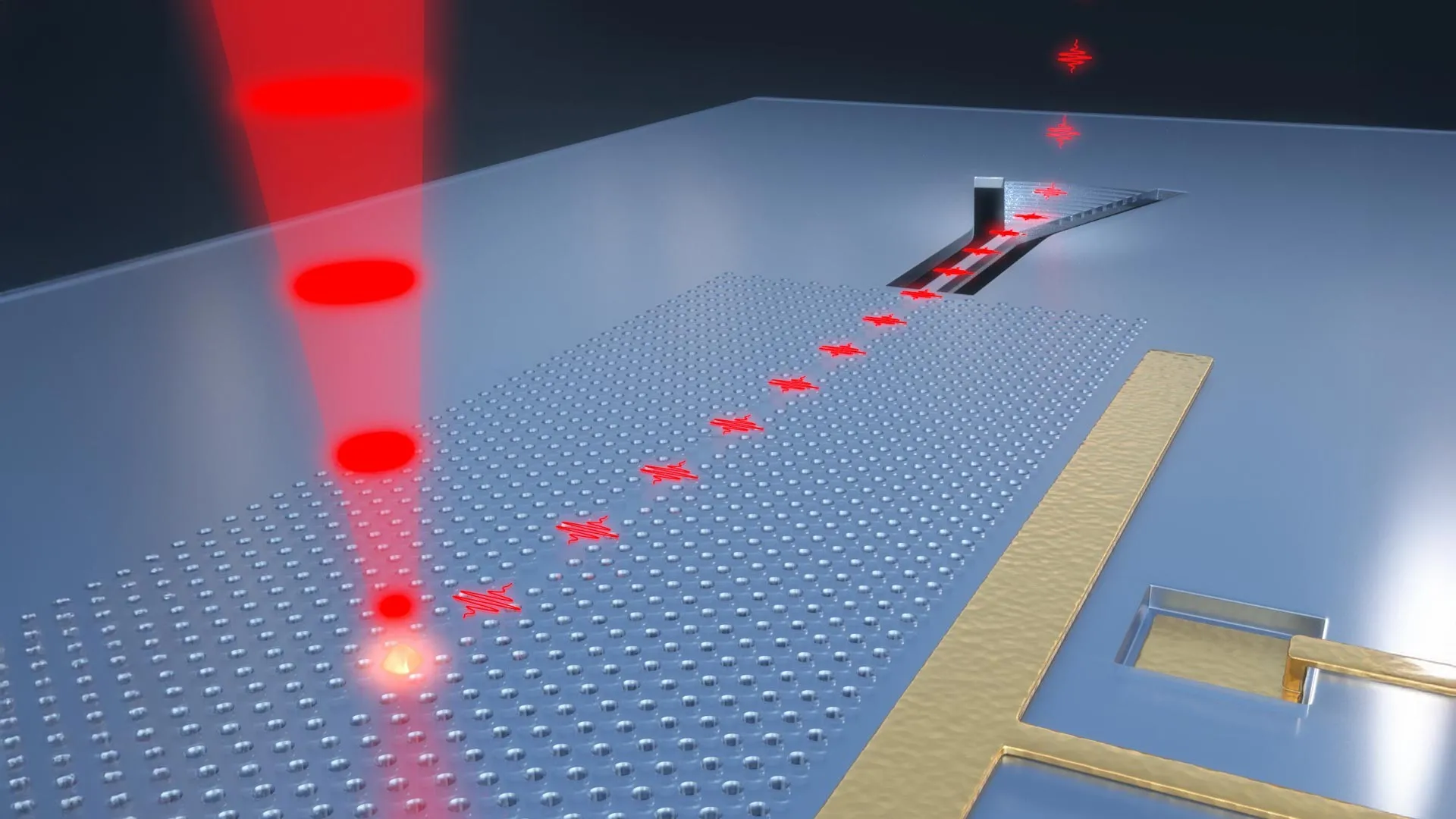
At the heart of this discovery is the University of Iowa team’s focus on two critical obstacles that impede the generation of a dependable flow of single photons, the essential building blocks for advanced quantum technologies. The first significant challenge is known as laser scatter. When a laser is used to stimulate an atom and elicit the emission of a single photon, the process is not always perfectly efficient. Often, the laser’s interaction with the atom inadvertently produces additional, unwanted photons. These extraneous particles act as a form of interference within an optical circuit, akin to stray electrical current disrupting a conventional electronic circuit, leading to a significant reduction in overall efficiency. The second major issue stems from the inherent behavior of atoms when subjected to laser light. In certain rare instances, an atom might emit more than one photon simultaneously. This multi-photon emission is problematic because it disrupts the precise, sequential nature required for quantum operations. The unintended extra photons can interfere with the intended single-photon flow, jeopardizing the integrity of quantum information processing.
The new study, spearheaded by Matthew Nelson, a graduate student in the Department of Physics and Astronomy, uncovers an unexpected and powerful connection between these two seemingly disparate problems. Nelson’s research reveals that when an atom emits multiple photons, the resulting wavelength spectrum and waveform bear a striking resemblance to those of the original laser light used to trigger the emission. This remarkable similarity is the key to the purification technique. According to the researchers, this close match allows for a sophisticated adjustment of both the laser light and the unwanted photon emissions, enabling them to precisely cancel each other out. In essence, the very laser scatter that has historically been a source of interference and inefficiency can now be harnessed as a tool to actively suppress the unwanted multi-photon emissions.
"We have shown that stray laser scatter, typically considered a nuisance, can be harnessed to cancel out unwanted, multi-photon emission," states Ravitej Uppu, assistant professor in the Department of Physics and Astronomy and the study’s corresponding author. "This theoretical breakthrough could turn a long-standing problem into a powerful new tool for advancing quantum technologies." This sentiment underscores the transformative potential of the discovery, shifting a fundamental limitation into a strategic advantage.
The significance of single photons in the realm of quantum computing cannot be overstated. Photonic computing, which leverages light instead of electricity to perform calculations, holds the promise of ushering in an era of significantly faster and more energy-efficient computational systems. While conventional computers rely on bits, which are streams of electrical or optical pulses representing binary states of one or zero, quantum computers utilize qubits. These qubits are often embodied by subatomic particles, with photons being a prominent candidate for photonic quantum computing platforms. A vast number of emerging technology companies are placing considerable faith in the future of quantum computing being intrinsically linked to photonic platforms. The realization of this vision hinges critically on the ability to generate and control a stable and well-defined stream of single photons.
An orderly stream of photons offers a multitude of benefits. It is not only easier to manage and scale for complex computations but also significantly enhances the security of communication networks. The researchers draw a compelling analogy: guiding students through a cafeteria line one at a time is far more organized and manageable than allowing them to move as a disorganized crowd. Similarly, a neat, single-photon stream minimizes the risk of data interception or eavesdropping, making quantum communication networks inherently more secure. This analogy highlights how precision in photon generation directly translates to robustness in quantum information transfer.
The new method hinges on achieving meticulous control over the laser beam. Uppu elaborates on this crucial aspect: "If we can control exactly how the laser beam shines on an atom — the angle at which it’s coming, the shape of the beam, and so on — you can actually make it cancel out all the additional photons that the atom likes to emit. We would be left with a stream that is actually very pure." This level of precision control, previously an elusive goal, is now theoretically within reach, paving the way for the generation of exceptionally pure single-photon streams.
The theoretical work demonstrates the potential to address two major barriers to the development of faster and more efficient photonic circuitry simultaneously. If these findings are successfully confirmed through experimental validation, this technique could dramatically accelerate the progress in developing advanced quantum computers and exceptionally secure communication systems. The researchers are already planning future experiments to rigorously test and validate their theoretical framework, marking a crucial next step in bringing this promising technology from theory to practice.
The study, titled "Noise-assisted purification of a single-photon source," has been formally published in the esteemed journal Optica Quantum, signifying its contribution to the scientific community. The research was generously funded by the Office of the Under Secretary of Defense for Research and Engineering within the U.S. Department of Defense, underscoring the strategic importance of this advancement for national security and technological innovation. Further support was also provided through a crucial seed grant from the University of Iowa Office of the Vice President for Research, administered via the P3 program, which played a pivotal role in initiating and nurturing this groundbreaking project. This multifaceted support highlights a collaborative effort to push the boundaries of quantum science.