Imroatul Nasiyah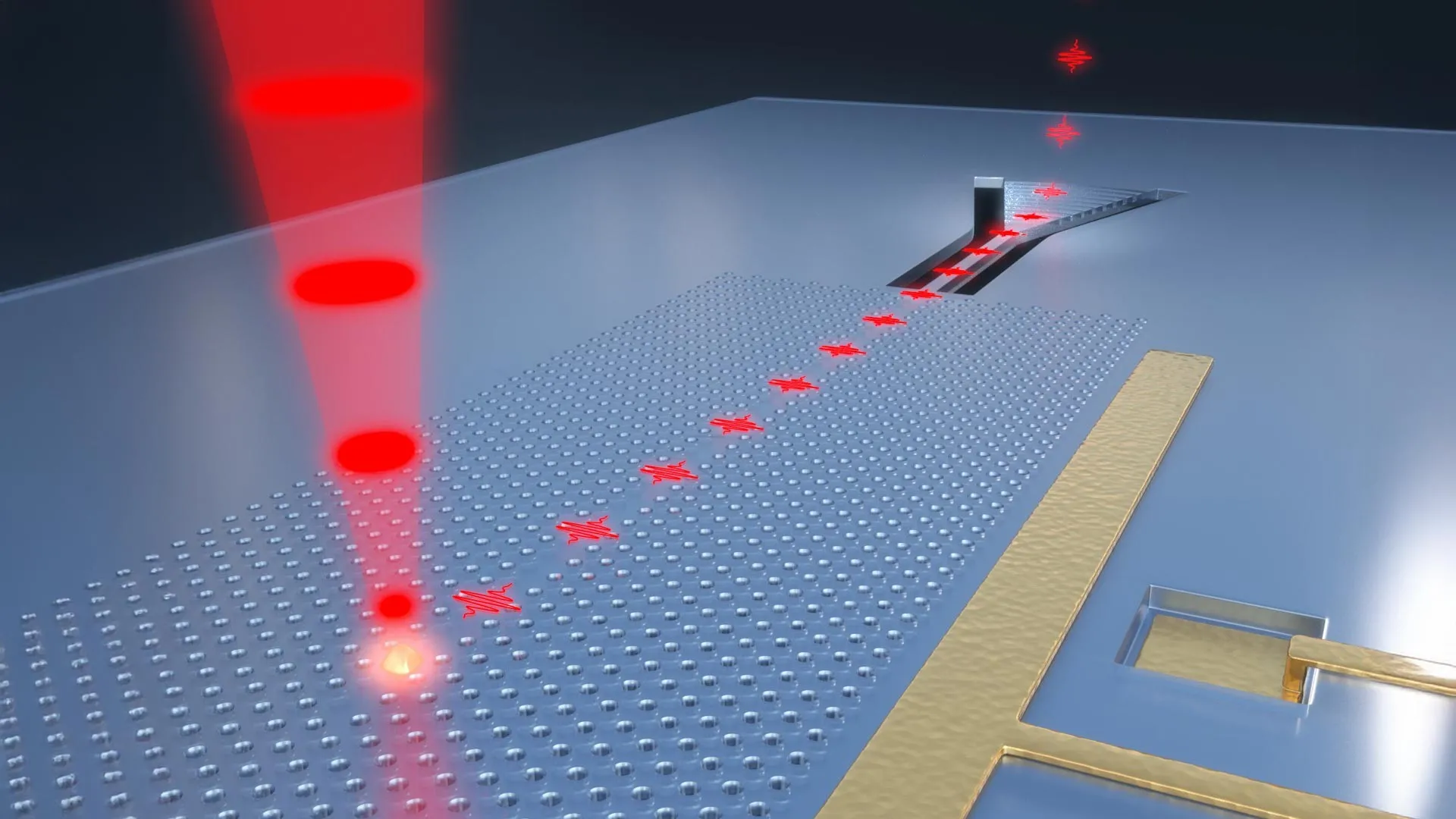
At the heart of this advancement lies the team’s focus on overcoming two significant hurdles that impede the generation of a reliable and consistent supply of single photons. These are crucial for the intricate operations of quantum computing and the robust security protocols demanded by modern communication. The first formidable challenge is known as laser scatter. This phenomenon occurs when a laser beam interacts with an atom to excite it and trigger the emission of a single photon. Unfortunately, this excitation process is not always perfectly precise; it can inadvertently produce a cascade of extra, unwanted photons. These superfluous particles act as disruptive noise within an optical circuit, akin to stray electrical currents that degrade the performance of conventional electronic systems. Their presence significantly reduces the efficiency of quantum operations, making it harder to encode and transmit information accurately.
The second major impediment arises from the inherent behavior of atoms when interacting with laser light. While the goal is for an atom to release precisely one photon at a time, there are rare instances where an atom, under specific conditions, can emit more than one photon simultaneously. This multi-photon emission is a critical failure point for quantum operations. The precise timing and order of photon arrivals are paramount for quantum protocols, and the emission of multiple photons at once shatters this delicate sequence. The unintended photons interfere with the intended single photon, disrupting the one-by-one flow that is essential for encoding quantum information and performing complex calculations. This breakdown in order makes it exceedingly difficult to perform reliable quantum operations, effectively limiting the scalability and accuracy of current photonic quantum technologies.
In a pivotal turn of events, Matthew Nelson, a graduate student in the Department of Physics and Astronomy at the University of Iowa, has uncovered a surprising and elegant solution to these intertwined problems. His research has revealed an unexpected connection between laser scatter and multi-photon emission. Nelson discovered that when an atom releases multiple photons, the resulting spectral and waveform characteristics of these unwanted photons bear a striking resemblance to those of the laser light used to trigger the emission in the first place. This remarkable similarity is the key to the new purification technique.
According to the researchers, this close match between the unwanted multi-photon emission and the triggering laser light allows for a sophisticated form of cancellation. By carefully tuning the laser parameters, the team can manipulate the interaction such that the laser light itself is used to actively suppress the emission of these unwanted photons. In essence, the very noise that has historically plagued optical quantum systems – laser scatter – can be repurposed as a tool to cancel out the very problem it creates. This ingenious approach turns a long-standing nuisance into a powerful mechanism for achieving high-purity single photon streams.
Ravitej Uppu, assistant professor in the Department of Physics and Astronomy and the study’s corresponding author, articulated the significance of this discovery with enthusiasm. "We have shown that stray laser scatter, typically considered a nuisance, can be harnessed to cancel out unwanted, multi-photon emission," Uppu stated. "This theoretical breakthrough could turn a long-standing problem into a powerful new tool for advancing quantum technologies." This sentiment underscores the transformative potential of their work, suggesting that the limitations that have held back photonic quantum systems for years can now be addressed with an elegant, self-correcting mechanism.
The importance of single photons in the realm of quantum computing cannot be overstated. Photonic computing, which leverages light instead of electricity to perform calculations, holds the promise of systems that are not only significantly faster but also far more energy-efficient than their conventional counterparts. Traditional computers operate using bits, which are streams of electrical or optical pulses representing either a one or a zero. Quantum computers, on the other hand, utilize qubits. These are often subatomic particles, such as photons, which can exist in superposition – representing both zero and one simultaneously – and exhibit entanglement, allowing for exponentially greater computational power.
The burgeoning field of quantum computing is increasingly looking towards photonic platforms as a cornerstone of its future development. A stable, well-controlled stream of single photons is not merely beneficial; it is absolutely central to making this ambitious vision a practical reality. An orderly and predictable photon stream is far easier to manage and scale up, which is crucial for building larger and more complex quantum processors. Furthermore, the purity of the photon stream directly impacts the security of quantum communication networks. The researchers aptly compare this to managing a crowd in a cafeteria line. Guiding students one at a time ensures order and prevents disruptions. Similarly, a neat, single-photon line minimizes the risk of data being intercepted, eavesdropped upon, or corrupted during transmission. This enhanced security is a critical advantage for applications ranging from secure financial transactions to national defense.
The new method hinges on achieving exquisite precision in controlling the laser beam. Uppu elaborated on the technical nuances, explaining that "If we can control exactly how the laser beam shines on an atom – the angle at which it’s coming, the shape of the beam, and so on – you can actually make it cancel out all the additional photons that the atom likes to emit. We would be left with a stream that is actually very pure." This level of control, previously thought to be elusive, now appears within reach, offering a pathway to generating photon streams of unprecedented purity.
The study’s theoretical findings demonstrate, at least on paper, that two of the most significant barriers to accelerating photonic circuitry can be addressed simultaneously. The prospect of achieving this dual benefit – improved performance and enhanced security – through a single, elegant technique is highly compelling. If these theoretical predictions are successfully confirmed through experimental validation, this innovative approach could significantly accelerate the development of advanced quantum computers and bolster the security of future communication systems. The research team is already planning future experiments to put their theory to the test, marking the next crucial step in translating this promising discovery into tangible technological advancements.
The seminal study, titled "Noise-assisted purification of a single-photon source," has been formally published in the esteemed journal Optica Quantum, signaling its significance within the scientific community. The research received crucial financial backing from the Office of the Under Secretary of Defense for Research and Engineering, a testament to the potential national security implications of this work. Additional support was generously provided through a seed grant from the University of Iowa Office of the Vice President for Research via the P3 program, a vital initiative that helped to launch this groundbreaking project and foster its early development. This multifaceted funding underscores the collaborative effort and strategic investment required to push the boundaries of scientific innovation in critical areas like quantum technology.