Imroatul Nasiyah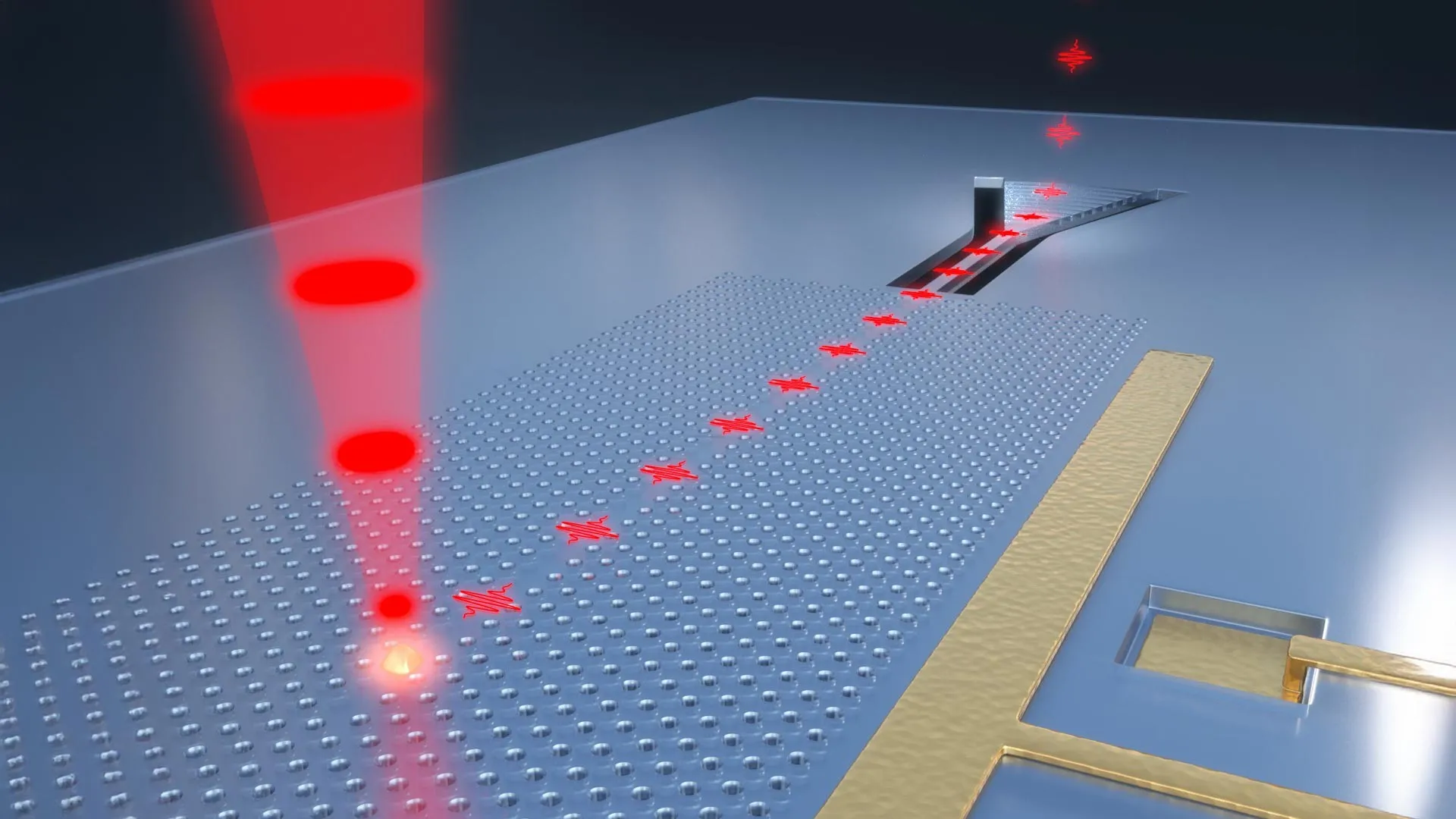
Researchers at the University of Iowa have achieved a groundbreaking advancement in the realm of quantum technologies, identifying an ingenious method to "purify" photons. This innovative approach promises to significantly enhance both the performance and the security of light-based quantum systems by refining the generation of single particles of light, thereby addressing long-standing limitations that have hampered optical quantum technologies. The implications of this discovery are far-reaching, potentially accelerating the development of powerful quantum computers and revolutionizing secure communication networks.
At the heart of this breakthrough lies the team’s meticulous focus on overcoming two principal obstacles that have historically plagued the reliable generation of single photons. These elusive particles are the fundamental building blocks for photonic quantum computers, which leverage the properties of light to perform complex calculations, and for quantum communication networks, which offer unprecedented levels of security. The first significant hurdle is a phenomenon known as laser scatter. In the process of using a laser to excite an atom and induce it to release a single photon, there is an unfortunate tendency for the laser to also produce a cascade of extra, unwanted photons. These spurious particles act as disruptive noise within an optical circuit, analogous to how stray electrical currents can degrade the performance of conventional electronic circuits. Their presence significantly diminishes the efficiency and fidelity of quantum operations.
The second critical challenge stems from the inherent behavior of atoms when interacting with laser light. While the goal is to elicit the emission of a single photon, atoms, in certain rare instances, can be coaxed into emitting more than one photon simultaneously. This multi-photon emission is particularly problematic for quantum applications because it disrupts the precise timing and sequential order required for quantum operations. When multiple photons are emitted at once, they interfere with the intended, single-photon-at-a-time flow, rendering the output unreliable and unsuitable for the delicate manipulations demanded by quantum computing and communication protocols.
In a remarkable turn of events, the new study, led by Matthew Nelson, a graduate student in the Department of Physics and Astronomy at the University of Iowa, uncovered an unexpected and powerful connection between these two seemingly disparate problems. Nelson’s research revealed that when an atom emits multiple photons, the resulting spectral characteristics and waveform of these unwanted photons bear a striking resemblance to those of the original laser light used to trigger the emission. This profound similarity, the researchers explain, opens up a novel pathway to actively counteract these unwanted emissions. By carefully tuning and adjusting the laser light and the atomic response, the two signals – the problematic laser scatter and the multi-photon emission – can be made to destructively interfere, effectively canceling each other out. In essence, the very phenomenon that has been a persistent nuisance, laser scatter, can be ingeniously repurposed to suppress the generation of unwanted, multi-photon emissions.
"We have demonstrated that stray laser scatter, which has historically been perceived as an impediment, can be harnessed to effectively cancel out unwanted, multi-photon emission," stated Ravitej Uppu, an assistant professor in the Department of Physics and Astronomy and the corresponding author of the study. "This theoretical breakthrough has the potential to transform a long-standing challenge into a potent new instrument for advancing the frontiers of quantum technologies."
The significance of single photons for the burgeoning field of quantum computing cannot be overstated. Photonic computing represents a paradigm shift, utilizing light instead of electricity as the medium for performing computations. This fundamental difference holds the promise of ushering in an era of significantly faster and more energy-efficient computing systems. Conventional computers operate on the principle of bits, which are binary units representing either a one or a zero, typically conveyed through streams of electrical or optical pulses. Quantum computers, in contrast, employ qubits. These are often subatomic particles, such as photons, which can exist in multiple states simultaneously, enabling them to perform calculations that are intractable for even the most powerful classical supercomputers.
A substantial segment of the technology sector, including numerous emerging companies, firmly believes that photonic platforms will play a pivotal role in shaping the future of quantum computing. The realization of this vision hinges critically on the ability to generate and control a stable and predictable stream of single photons. An orderly and well-managed photon stream offers substantial advantages: it is far easier to manipulate and scale up for complex quantum operations, and it significantly enhances security. The researchers draw a compelling analogy to managing a cafeteria line: guiding students one at a time ensures order and predictability, much like a well-ordered single photon stream reduces the risk of data interception or eavesdropping. In the context of secure communication, a pure stream of single photons ensures that each quantum bit of information is transmitted individually, making any attempt at eavesdropping immediately detectable.
Uppu further elaborated on the core of this new methodology, emphasizing the paramount importance of precision control over the laser beam. "The key to this new method lies in our ability to meticulously control the laser beam’s interaction with the atom," he explained. "By precisely dictating parameters such as the angle of incidence, the beam’s shape, and other characteristics, we can engineer the system to actively cancel out all the additional photons that the atom might otherwise emit. The result would be a stream of photons that is exceptionally pure."
This theoretical work, if validated through experimental confirmation, addresses two of the most significant impediments to the development of faster and more robust photonic circuitry. The potential impact of this technique is immense, offering a tangible path towards accelerating the creation of advanced quantum computers capable of tackling grand scientific and societal challenges, as well as bolstering the security of communication systems to an unprecedented level. The research team is actively planning future experiments to translate this theoretical breakthrough into practical reality.
The foundational study, titled "Noise-assisted purification of a single-photon source," has been formally published in the prestigious journal Optica Quantum, marking a significant contribution to the field of optical physics and quantum information science. The research was generously supported by funding from the Office of the Under Secretary of Defense for Research and Engineering, underscoring the U.S. Department of Defense’s commitment to advancing cutting-edge technologies with strategic implications. Additional crucial support was provided through a seed grant from the University of Iowa Office of the Vice President for Research, specifically via the P3 program, which played a vital role in nurturing and launching this groundbreaking project from its inception. This multifaceted support highlights a collaborative effort to push the boundaries of scientific knowledge and technological innovation.