Imroatul Nasiyah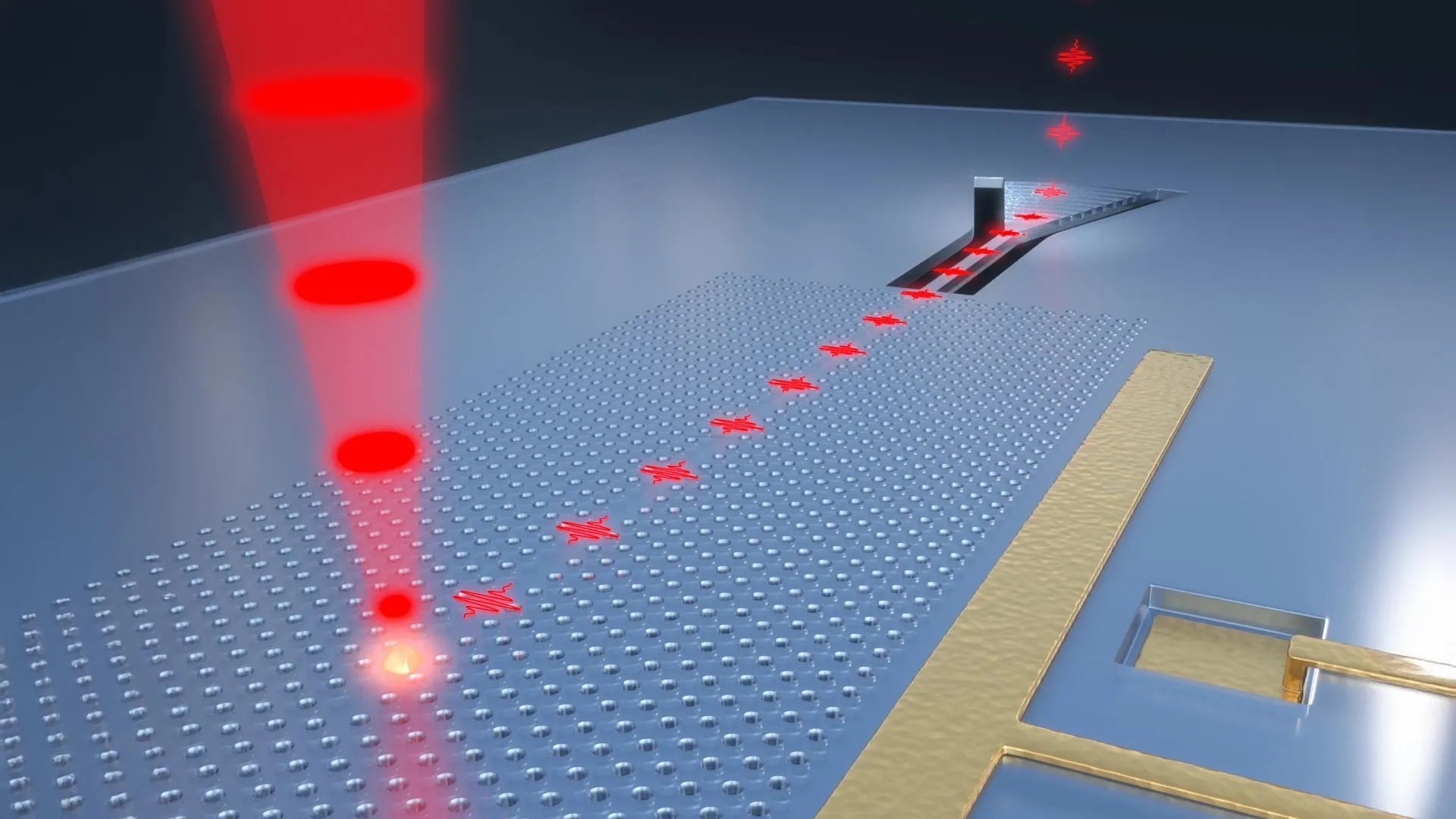
The quest for pristine single photons, the fundamental building blocks of photonic quantum computers and ultra-secure communication networks, has been a persistent challenge for scientists. The team at the University of Iowa focused their attention on two primary obstacles that have historically hindered the reliable and efficient production of these essential light particles. The first significant hurdle is known as laser scatter, a phenomenon that plagues the process of exciting an atom with a laser to trigger the release of a single photon. While the intended outcome is a solitary particle of light, the laser’s interaction with the atom can inadvertently produce a cascade of additional, unwanted photons. These superfluous particles act as a form of optical interference, akin to stray electrical currents disrupting the flow of information in conventional electronic circuits, thereby diminishing the overall efficiency and fidelity of the quantum system.
The second major impediment arises from the inherent probabilistic nature of atomic responses to laser light. In a small but significant fraction of instances, an atom, when stimulated by a laser, can emit not one, but multiple photons simultaneously. This multi-photon emission fundamentally disrupts the precise, sequential nature required for delicate quantum operations. The intended single photon, crucial for carrying specific quantum information, becomes entangled with these accompanying photons, leading to a breakdown in the ordered, one-by-one flow that underpins photonic quantum protocols. This lack of control over photon emission directly impacts the ability to perform complex quantum computations and maintain the integrity of quantum communication channels.
In a remarkable turn of events, the new study, spearheaded by Matthew Nelson, a graduate student in the Department of Physics and Astronomy at the University of Iowa, unveiled an unexpected and profound connection between these two seemingly disparate problems. Nelson’s research revealed a striking correlation: when an atom emits multiple photons, the resulting spectral characteristics and waveform of these unwanted photons exhibit a remarkable similarity to those of the original laser light used to excite the atom. This discovery was not merely an academic observation; it presented a potentially revolutionary pathway to overcoming the very limitations it identified.
According to the researchers, this observed similarity is the key to a novel purification strategy. The dual nature of the light – the intended single photon and the unwanted multi-photon emission – can be strategically manipulated. By carefully tuning and adjusting the properties of the laser light, the scientists found that the stray laser scatter, which has long been considered a detrimental nuisance, can be harnessed as a powerful tool to actively suppress and cancel out the unwanted multi-photon emissions. This is achieved by exploiting the interference patterns created by the overlapping wavelengths and waveforms of the laser light and the emitted multi-photons.
"We have shown that stray laser scatter, typically considered a nuisance, can be harnessed to cancel out unwanted, multi-photon emission," states Ravitej Uppu, assistant professor in the Department of Physics and Astronomy and the study’s corresponding author. "This theoretical breakthrough could turn a long-standing problem into a powerful new tool for advancing quantum technologies." This elegant solution flips the script on a persistent obstacle, transforming a source of noise into a mechanism for signal purification.
The significance of single photons for quantum computing cannot be overstated. Photonic computing represents a paradigm shift in computation, leveraging light instead of electricity to perform calculations. This approach promises systems that are not only faster but also exponentially more efficient than their conventional counterparts. While traditional computers rely on bits – discrete electrical or optical pulses representing binary states of one or zero – quantum computers harness the principles of quantum mechanics, employing qubits. These qubits are often embodied by subatomic particles, with photons being a particularly promising candidate due to their speed and ability to travel long distances without decoherence.
A stable, precisely controlled stream of single photons is considered the bedrock upon which the future of photonic quantum computing will be built. Many emerging technology companies are investing heavily in photonic platforms, recognizing their potential to unlock unprecedented computational power. The ability to generate and manipulate single photons with high fidelity is central to making this ambitious vision a practical reality.
Beyond raw computational power, an orderly photon stream is also paramount for enhancing the security of quantum communication. The researchers aptly compare the management of single photons to guiding individuals through a cafeteria line. A single-file procession is far easier to manage, track, and secure than a chaotic crowd. Similarly, a neat, predictable stream of single photons significantly reduces the risk of data interception or eavesdropping. This inherent orderliness is the foundation of quantum key distribution (QKD), a revolutionary method for secure communication that relies on the principles of quantum mechanics to detect any attempts at eavesdropping.
Uppu elaborates on the practical implications of their findings, emphasizing the critical role of precision in controlling the laser beam. "If we can control exactly how the laser beam shines on an atom — the angle at which it’s coming, the shape of the beam, and so on — you can actually make it cancel out all the additional photons that the atom likes to emit," he explains. "We would be left with a stream that is actually very pure." This level of control, achieved through sophisticated manipulation of laser parameters, is what enables the purification process. By fine-tuning the laser’s properties, the researchers can induce constructive and destructive interference effects that selectively eliminate the unwanted multi-photon emissions while preserving the single photons.
The theoretical work presented by the University of Iowa team demonstrates, in principle, that two of the most significant barriers to the development of faster and more robust photonic circuitry can be addressed concurrently. If these theoretical findings are successfully validated through experimental verification, this innovative technique could dramatically accelerate the pace of development for advanced quantum computers and significantly bolster the security of future communication systems. The researchers are now poised to translate this theoretical breakthrough into tangible results by conducting future experiments to test the efficacy of their proposed purification method in a real-world setting.
The groundbreaking study, titled "Noise-assisted purification of a single-photon source," has been formally published in the esteemed journal Optica Quantum, marking a significant contribution to the field of quantum optics. The research was made possible through substantial funding from the Office of the Under Secretary of Defense for Research and Engineering within the U.S. Department of Defense, underscoring the strategic importance of advancements in quantum technologies. Furthermore, the project received crucial early-stage support through a seed grant from the University of Iowa Office of the Vice President for Research via the P3 program, which provided the foundational resources necessary to launch this ambitious research endeavor. This collaborative effort and dedicated funding highlight the collective commitment to pushing the boundaries of scientific discovery in the realm of quantum information science.