Faris Adani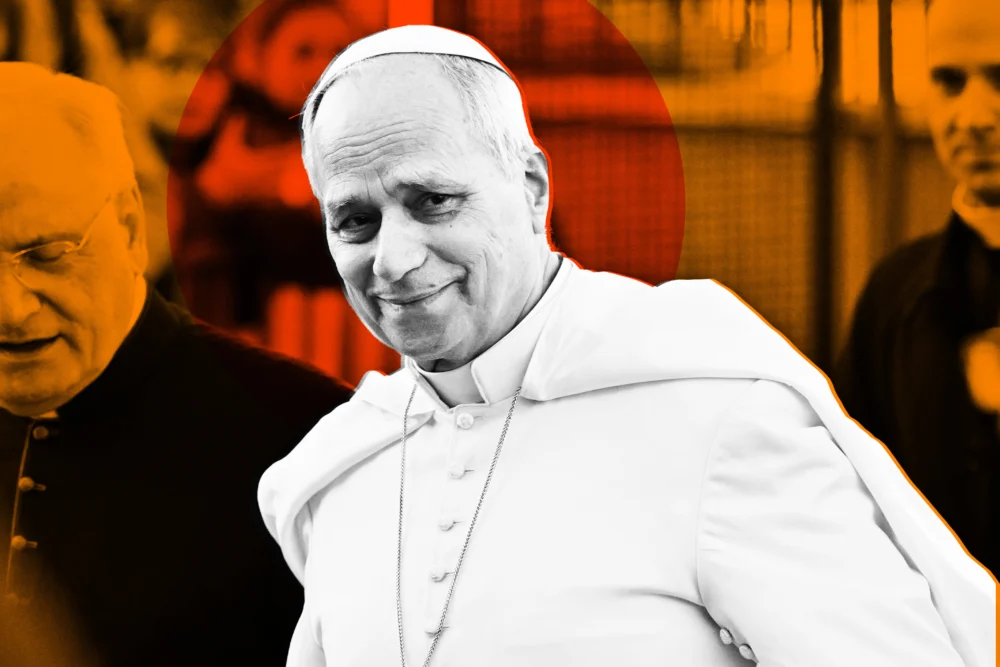
In a significant and forward-looking directive issued during a recent closed-door meeting with clergy from the Diocese of Rome, Pope Leo XIV emphatically urged his priests to resist the burgeoning temptation to prepare homilies using artificial intelligence, as reported by Vatican News, marking a distinct line in the sand regarding the role of technology in spiritual guidance for the year 2026. The pontiff, known for his pragmatic approach to modern challenges, framed his admonition not merely as a cautionary tale against intellectual laziness but as a vital call to preserve the very essence of priestly ministry and the authenticity of faith sharing. Drawing a compelling analogy, Pope Leo XIV reportedly stated, "Like all the muscles in the body, if we do not use them, if we do not move them, they die. The brain needs to be used, so our intelligence must also be exercised a little so as not to lose this capacity," underscoring the critical importance of intellectual and spiritual exertion in crafting a meaningful sermon. This powerful metaphor highlights a profound concern that over-reliance on AI could atrophy the human faculties essential for deep theological reflection, empathetic understanding, and the personal spiritual journey that underpins a truly impactful homily. The holy father articulated a fundamental distinction between the capabilities of advanced AI and the irreplaceable role of a flesh-and-blood priest, asserting that "To give a homily is to share faith," and unequivocally adding that AI "will never be able to share faith." This statement cuts to the core of the issue, distinguishing between the algorithmic processing of information, which AI excels at, and the deeply human, relational act of transmitting a lived spiritual experience. Faith, in this context, is not merely a collection of doctrines or moral imperatives to be delivered, but a dynamic, personal encounter with the divine, a journey fraught with human struggles, doubts, and epiphanies, all of which inform and enrich the priest’s ability to connect with his congregation on a profound level. An AI, however sophisticated, can only synthesize existing data, patterns, and texts; it lacks consciousness, personal experience, empathy, and the capacity for genuine spiritual discernment, all of which are indispensable for truly sharing faith in a way that resonates with the human heart. The priest, through his own prayer, study, pastoral experience, and personal relationship with God, brings an irreplaceable authenticity and vulnerability to the pulpit, offering not just words but a witness to a lived faith. Beyond the specific concern regarding AI in homilies, the Pope also extended his counsel to the broader digital landscape, cautioning his clergymen against conflating social media engagement with genuine spiritual connection, as also noted by Vatican News. He posited that a life "authentically rooted in the Lord" inherently offers something unique and special to the world, contrasting this with what he termed a common "illusion on the internet, on TikTok," where followers and likes are often mistakenly perceived as indicators of authentic spiritual connection or community. This aspect of his advice speaks to a wider concern within the Church about the superficiality that can accompany digital interactions, urging priests to foster deep, meaningful relationships and community building that transcend the ephemeral nature of online metrics. For clergy, the pressure to maintain an online presence can be significant, yet the Pope’s message serves as a reminder that the true measure of spiritual impact lies in authentic human encounter and genuine pastoral care, not in viral trends or follower counts. This dual warning against the misuse of AI and the pitfalls of social media provides a unique snapshot of the complex ethical and pastoral issues confronting the Vatican and indeed, religious institutions worldwide, in the rapidly advancing digital age of 2026. It highlights a nuanced approach, acknowledging the pervasive influence of technology while simultaneously reaffirming the enduring value of human agency, intellectual rigor, and authentic spiritual presence. The timing of the Pope’s admonition is particularly noteworthy, as it coincided with the announcement of the Vatican’s own ambitious project: an upcoming AI translation system designed to translate liturgical texts into up to 60 languages in real time. This tool, announced on the very same day as the Pope’s meeting with clergy, might initially appear to sit awkwardly with his cautionary stance on AI-generated homilies. However, a deeper examination reveals a consistent and thoughtful distinction in the Vatican’s strategy. The AI translation system represents a logical and progressive step in the Church’s centuries-long endeavor to make biblical teachings and liturgical practices accessible to the common language of the people. This pursuit echoes historical movements, most famously exemplified by figures like Martin Luther, who critically championed the translation of the Bible into vernacular languages to empower believers with direct access to sacred texts, challenging the ecclesiastical monopoly on interpretation. In this light, the Vatican’s AI translation tool is not seen as replacing human spiritual guidance but rather as an enabler, a powerful utility that breaks down linguistic barriers and facilitates broader participation in the Church’s global mission. It serves as an instrument for dissemination and inclusivity, enhancing accessibility without usurping the priest’s unique role in preaching, interpreting, and applying the faith to specific human contexts. The difference lies precisely in the function of AI: as a tool for translation and information processing versus a substitute for human creativity, empathy, and spiritual discernment in the crafting of a sermon, which is inherently an act of personal witness and interpretation. The Vatican’s engagement with AI is therefore not a wholesale rejection but a discerning adoption, reflecting a broader commitment to ethical technology use that upholds human dignity and the sacredness of religious experience. The Church, an institution that has weathered nearly two millennia of profound technological shifts – from the scroll to the printing press, from radio waves to the internet – appears intent on defining its boundaries and principles concerning AI with considerable foresight. This proactive stance is further evidenced by the Vatican’s ongoing involvement in broader discussions around AI ethics, including initiatives like the "Rome Call for AI Ethics," which advocates for responsible innovation grounded in principles of transparency, inclusion, responsibility, impartiality, reliability, and security. Such engagements demonstrate that the Vatican is not merely reacting to technological advancements but actively seeking to shape their ethical trajectory, ensuring that technology serves humanity rather than diminishing it. The Pope’s warnings serve as a potent reminder for all, regardless of religious affiliation, about the critical importance of cultivating human intelligence, fostering genuine connection, and maintaining authenticity in an increasingly mediated and algorithm-driven world. For the clergy, it is a clarion call to lean into the demanding yet deeply rewarding work of spiritual formation and intellectual wrestling, ensuring that the homily remains a vibrant, human-centered act of faith sharing. As technology continues its inexorable march forward, the Vatican’s measured approach offers a valuable framework for navigating the complex interplay between innovation and tradition, between artificial intelligence and human spirituality, safeguarding the irreplaceable human element at the heart of faith.