Faris Adani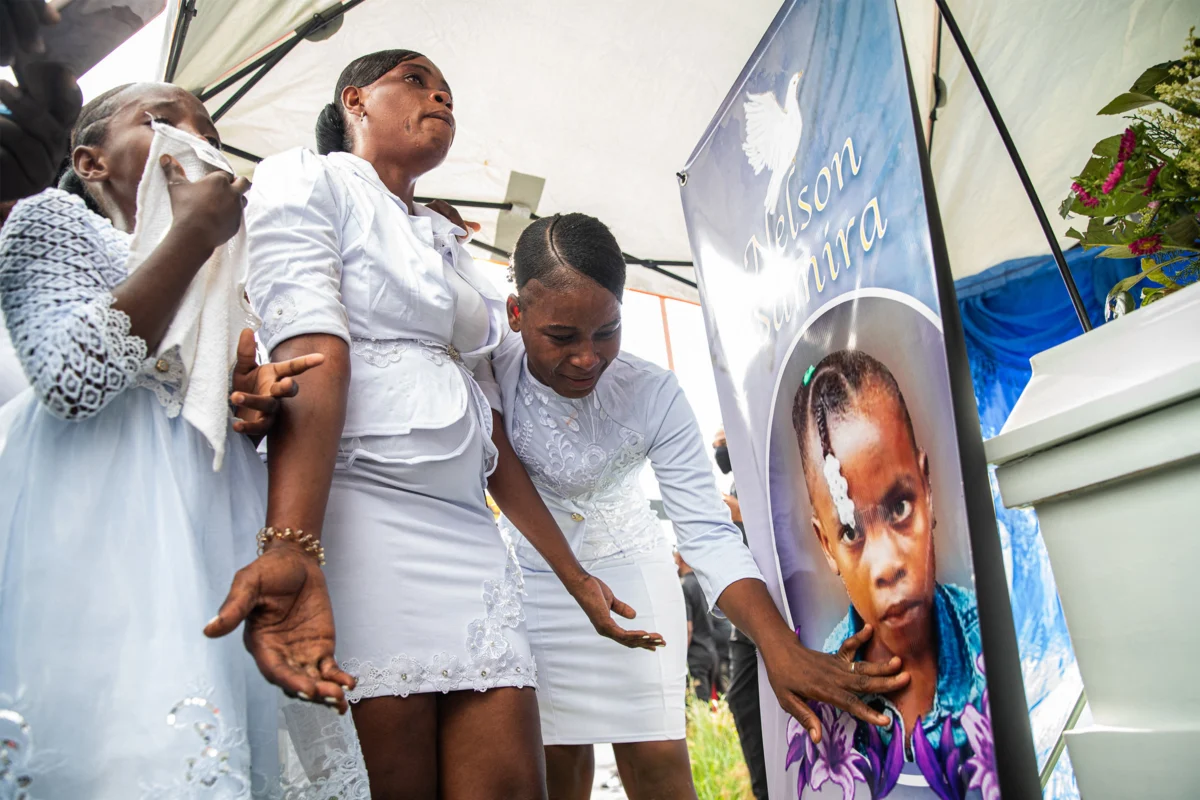
As global attention remains fixated on geopolitical flashpoints in West Asia, where the United States and Israel are deploying significant military force, a silent yet devastating conflict is escalating in the Caribbean nation of Haiti. A recent and alarming report from Human Rights Watch (HRW), brought to wider attention by ABC News, reveals that drone strikes, purportedly aimed at curbing rampant gang activity, have claimed the lives of at least 1,243 individuals between March 1, 2025, and January 21, 2026. This tragic toll includes a confirmed 17 children and 43 adult civilian non-combatants, painting a grim picture of a conflict spiraling out of control in the densely populated capital of Port-au-Prince.
The crisis in Haiti is multifaceted, rooted in decades of political instability, economic hardship, and foreign intervention. Following the assassination of President Jovenel Moïse in July 2021, the nation plunged deeper into chaos, with a power vacuum exploited by increasingly powerful and violent gangs. These armed groups have effectively taken control of large swathes of Port-au-Prince, paralyzing daily life, extorting businesses, and inflicting widespread terror through kidnappings, sexual violence, and turf wars. The Haitian National Police (PNH), under-resourced and outmatched, has struggled to maintain order, leading to calls for international assistance and, controversially, the deployment of private security forces.
According to the HRW report, Haitian security forces, often operating in conjunction with private military contractors, have resorted to a particularly lethal form of combat: manually-operated quadcopter drones equipped with explosives. These "suicide drones" have been deployed in at least 139 documented attacks over the past year. The most destructive of these single incidents resulted in 57 fatalities, underscoring the indiscriminate potential of these weapons in urban environments. Juanita Goebertus, Americas director at Human Rights Watch, issued a stark warning in the report: “Dozens of ordinary people, including many children, have been killed and injured in these lethal drone operations. Haitian authorities should urgently rein in the security forces and private contractors working for them before more children die.”
The use of drones in this context raises profound ethical and legal questions. While proponents argue that drones offer a precise way to target militants with reduced risk to ground forces, the reality in Port-au-Prince appears far different. HRW’s investigation found compelling evidence that Haitian police and their mercenaries have repeatedly attacked vehicles and groups of people with these explosive drones. Crucially, the report states that there was "no evidence of drone attacks on people that pose an immediate threat to civilian lives." This finding directly challenges the justification often given for lethal force, which under international law, should be a last resort and proportionate to an immediate threat. The report goes further, suggesting these videos "bolster the impression that many of the drone attacks are attempts to target and extrajudicially kill people, rather than a law enforcement response that might justify the deliberate, lethal use of force." Extrajudicial killings, by definition, are illegal and violate fundamental human rights and international humanitarian law.
A significant, and highly controversial, player in this escalating drone warfare is Erik Prince, the founder of the infamous private military company Blackwater. Since August 2025, Prince, a prominent donor to Donald Trump, has reportedly facilitated the deployment of hundreds of private mercenaries to Haiti. Beyond supplying personnel, Al Jazeera and The New York Times have reported that Prince has acted as a "key advisor" to the drone assassination task force responsible for these devastating attacks. His involvement, and that of his contractors, has drawn widespread condemnation from human rights organizations, which allege serious violations of international law.
Blackwater’s history is stained with controversy, most notably the 2007 Nisour Square Massacre in Iraq, where its contractors opened fire on unarmed civilians, killing 17. The four contractors responsible for this atrocity were controversially pardoned by then-President Trump during his first term, a move that drew international outrage and was widely seen as an insult to justice. Now, critics argue, Prince appears to be exporting a similar brand of aggressive, privatized warfare to Haiti, albeit with a technological twist. The transition from ground-based security operations to drone warfare, while seemingly more "surgical" from a distance, appears to have done little to prevent civilian casualties and may even exacerbate the problem of accountability. The deployment of private actors, often operating in legal grey areas and with less transparency than state militaries, makes oversight and prosecution of abuses exceedingly difficult.
Haiti has a long and painful history of foreign intervention, particularly from the United States, which has often played a heavy-handed role in its political and economic affairs. From military occupations to influencing elections and supporting various regimes, US involvement has frequently been criticized for undermining Haitian sovereignty and contributing to its instability. Prince’s current operations in Haiti, facilitated by private means rather than overt state action, can be seen as a continuation of this pattern of external meddling, albeit through a privatized, less accountable channel. This privatization of conflict further complicates efforts to establish stability and rule of law, as it blurs the lines of responsibility and potentially introduces actors whose primary motivations may be profit rather than humanitarian concerns or genuine national security.
The implications of this drone campaign extend far beyond the immediate casualty count. The psychological impact on a population living under the constant threat of unseen attacks from above is profound. The fear of drones can foster deep distrust in any authority, further eroding the social fabric necessary for recovery and reconstruction. For a nation already reeling from natural disasters, political assassinations, and gang violence, the addition of a privatized, lethal drone program that disproportionately affects civilians only deepens the humanitarian catastrophe.
As civil society groups strive for a fuller accounting of the civilian dead, and as the chaotic skirmishes continue to rock Port-au-Prince, the number of innocent victims is only likely to increase. The lack of robust international oversight, combined with the apparent impunity enjoyed by private military contractors, creates a dangerous precedent. It highlights the growing global trend of outsourcing conflict, where accountability becomes a casualty alongside innocent lives. The international community, and particularly those nations with historical ties and influence in Haiti, face an urgent moral imperative to address this escalating crisis. Halting these lethal drone operations, ensuring accountability for past abuses, and supporting a comprehensive, rights-respecting approach to restoring security and stability in Haiti must become a priority before the nation descends further into irreversible devastation. The story of Haiti’s drone crisis is a chilling reminder of the human cost when advanced technology meets political desperation and privatized warfare, far from the spotlight of mainstream media.