Faris Adani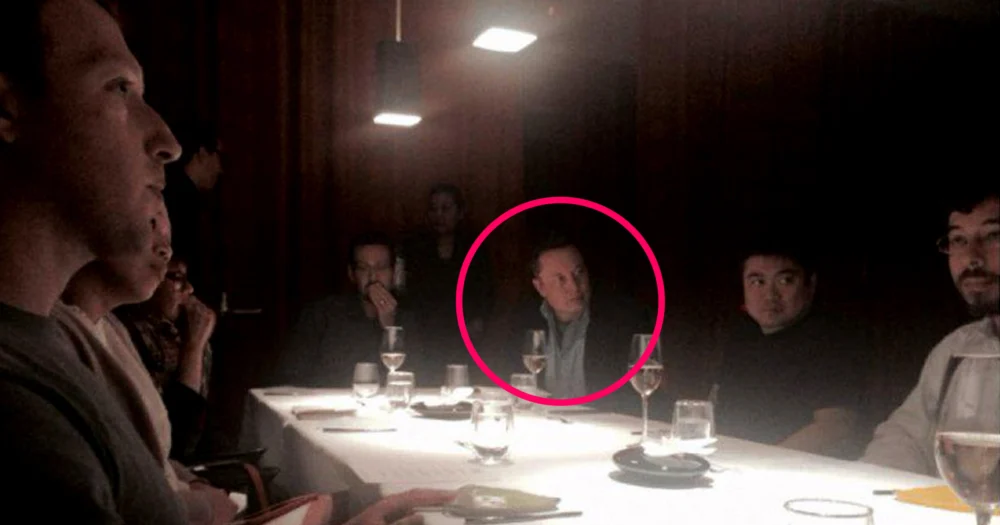
A newly revealed photograph, unearthed from the extensive cache of documents recently unsealed by the Department of Justice, unequivocally places Elon Musk at a 2015 dinner alongside convicted sex offender Jeffrey Epstein and other prominent figures from the tech world, including Facebook co-founder Mark Zuckerberg, directly contradicting Musk’s long-held public assertions of minimal contact with Epstein. The image, which appears to have been captured by Epstein himself, was part of the latest tranche of judicial documents made public following ongoing legal proceedings related to Epstein’s vast network, offering a stark visual confirmation of an association Musk has consistently downplayed. Dated August 2, 2015, the dimly lit photograph shows a gathering around a rectangular dining table with a white tablecloth, adorned with various glasses, plates, and cutlery, where Musk is prominently visible, circled in red in the released document, engaging with the group. This dinner, as corroborated by various files and earlier reporting from Vanity Fair in 2019, was hosted by LinkedIn co-founder Reid Hoffman, a key figure in Silicon Valley and another member of the influential "PayPal Mafia" alongside Musk and Peter Thiel, who was also in attendance. Epstein, in an email sent on the very day of the dinner to Peter Attia, a wellness and longevity influencer, explicitly mentioned his attendance and listed Musk, Thiel, and Zuckerberg as expected guests, subsequently emailing himself the revealing photograph the following day, ensuring a record of his proximity to these powerful individuals. His apparent satisfaction with the event was underscored later that month when he bragged about the dinner to Tom Pritzker of the billionaire Pritzker family, describing the occasion as "wild," a term that, in retrospect and given Epstein’s notorious activities, carries deeply unsettling connotations. Further documentation, specifically an email from Epstein’s personal assistant Lesley Groff on the morning of the dinner, with the subject "Reconfirming tomorrow’s dinner," provided a comprehensive list of attendees, which included Musk, Zuckerberg and his wife Priscilla Chan, Hoffman and his wife Michelle Yee, Palantir cofounder Thiel, then-head of MIT Media Lab Joi Ito, MIT neuroscientist Ed Boyden, and Musk’s college roommate Navaid Farooq, confirming the high-profile nature of the gathering. According to Vanity Fair, the dinner was specifically hosted by Hoffman in honor of Boyden, highlighting a convergence of scientific, technological, and financial power brokers, all brought into Epstein’s orbit.
This photographic evidence and accompanying communications directly challenge Elon Musk’s long-maintained narrative that his interactions with Jeffrey Epstein were fleeting, superficial, and entirely innocent, particularly given Epstein’s well-publicized 2008 conviction for soliciting prostitution from a minor. Musk has repeatedly attempted to distance himself from the disgraced financier, often portraying himself as an incidental acquaintance rather than an active participant in Epstein’s social circles. However, the depth of interaction revealed in these documents suggests a far more involved relationship, extending beyond casual encounters. The timing of these revelations is particularly salient, arriving amidst a highly public and acrimonious dispute between Musk and Reid Hoffman on X (formerly Twitter). In this ongoing "catfight," Musk initially launched accusations against Hoffman, highlighting emails suggesting Hoffman had visited Epstein’s infamous private island, Little St. James, and publicly demanding an investigation into Hoffman’s alleged ties to the sex trafficker. Hoffman, in turn, swiftly countered Musk’s offensive by sharing his own evidence of Musk’s involvement, which included an email wherein Musk directly inquired of Epstein about when his "wildest" party would be held on the island, thereby turning Musk’s accusations back on himself. Despite the mounting evidence, Musk defiantly continued to assert his innocence, tweeting, "The big difference between you and me, Reid, is that you went and I did not," attempting to draw a crucial distinction about physical presence on the island. He further rationalized his curiosity about Epstein’s parties by claiming he "obviously didn’t anticipate anything actually shady, as I was bringing my wife [Talulah Riley] at the time," implying that his intent was pure. However, this defense crumbles under the weight of other damning email exchanges that took place well after Epstein’s 2008 conviction. In a particularly disturbing conversation on Christmas Day 2012, Epstein explicitly cautioned Musk that the "ratio on my island might make Talilah [sic] uncomfortable," a chilling euphemism widely understood to refer to a disproportionate number of young women or girls present compared to men, often implying the presence of underage individuals. Musk’s response to this deeply troubling warning was equally concerning: "Ratio is not a problem for Talulah." This exchange strongly suggests that Musk was, at the very least, aware of the morally questionable, if not outright illicit, nature of the gatherings Epstein hosted, yet chose to disregard or downplay these implications.
The implications of these newly unsealed documents and the photographic evidence extend far beyond a mere social engagement. They contribute significantly to the broader understanding of Jeffrey Epstein’s strategy to cultivate and leverage relationships with the world’s most influential and wealthy individuals, intertwining himself with the highest echelons of power in tech, finance, and politics. The presence of such a concentrated group of Silicon Valley titans – the architects of much of our modern digital world – at a dinner with a convicted sex offender raises profound ethical questions about the judgment and responsibility of these leaders. Their association, particularly after Epstein’s 2008 conviction, indicates either a shocking lack of due diligence, a profound indifference to his crimes, or, most troubling, a tacit acceptance of his illicit lifestyle. For Elon Musk, a figure who commands immense public attention and often positions himself as a champion of free speech and truth, these revelations are particularly damaging, eroding public trust and further complicating his already controversial public image. His continued attempts to deny or minimize his ties to Epstein, even in the face of irrefutable evidence, suggest a calculated effort to control a narrative that is increasingly slipping from his grasp. The "PayPal Mafia" connection, uniting Musk, Hoffman, and Thiel, underscores a network of influence that facilitated Epstein’s access to vast wealth and power, allowing him to operate with a veneer of legitimacy despite his criminal background. This ongoing unsealing of documents serves as a powerful reminder that the full extent of Epstein’s network and the complicity of those within it are still coming to light, prompting continued public demand for accountability and full transparency from all individuals, regardless of their status, who are found to have had meaningful associations with the disgraced financier. The dinner photo, therefore, is not merely a snapshot in time, but a critical piece of evidence that fundamentally reshapes the public’s understanding of Elon Musk’s relationship with Jeffrey Epstein, transforming vague denials into undeniable evidence of active engagement and potential awareness, prompting further scrutiny of his and other tech moguls’ past associations and the ethical landscape of their powerful circles.