Faris Adani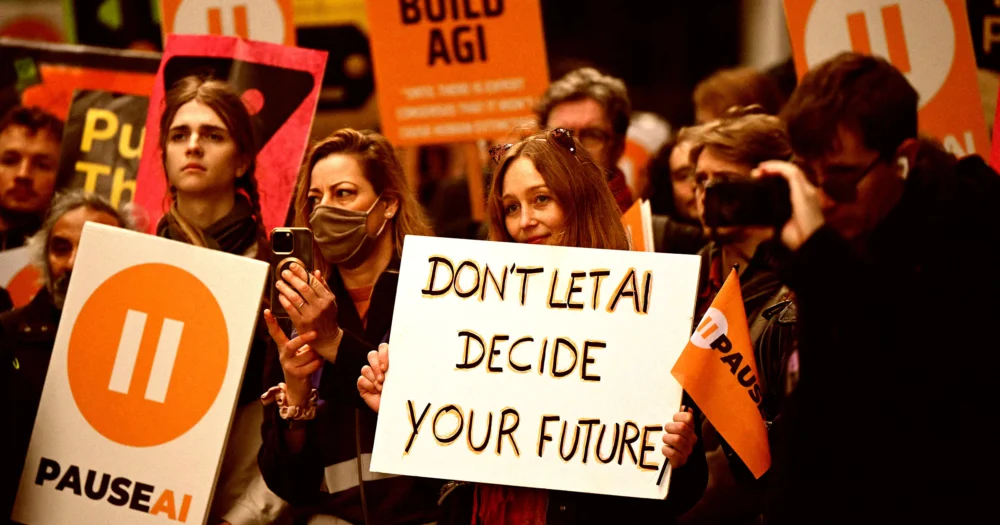
The relentless march of artificial intelligence into nearly every facet of modern life has not been met with universal acclaim; instead, a recent national survey conducted by NBC News has unveiled a startling degree of public antipathy towards AI, revealing that it is viewed even more negatively than the US Immigration and Customs Enforcement (ICE), an agency long mired in controversy and public criticism. This profound disillusionment, far from a fringe sentiment, underscores a rapidly widening chasm between the unbridled enthusiasm of tech titans and the growing unease, frustration, and outright rejection felt by a significant portion of the general populace.
According to the comprehensive poll, which surveyed 1,000 registered voters between February 27 and March 3, a mere 26 percent of respondents held a positive view of AI, while a substantial 46 percent expressed negative sentiments. This translates into a dismal net favorability rating of negative 20 points for artificial intelligence. To put this into perspective, ICE, an agency that has faced intense scrutiny for its deportation programs, border enforcement tactics, and alleged human rights abuses—including controversial incidents like the fatal shooting of unarmed civilians—scored a comparatively less terrible negative 18 points. Even Donald Trump, a figure who polarizes public opinion like few others, registered a slightly better negative 12 points. Only the Democratic Party, grappling with its own political challenges, and Iran, likely impacted by recent geopolitical tensions, managed to score more negatively than AI, with -53 points for Iran and a comparable negative rating for the Democratic Party in certain contexts.
This striking outcome serves as a powerful indictment of the current trajectory of AI development and its integration into society. The narrative spun by Silicon Valley, often portraying AI as an unmitigated good and an inevitable path to progress, appears to be increasingly out of sync with public perception. Over the past year, anti-AI sentiment has surged dramatically, fueled by a confluence of factors that extend far beyond mere technological apprehension. The initial hype, once characterized by awe and curiosity, has begun to curdle into a potent cocktail of fear, resentment, and annoyance.
One of the most prominent drivers of this backlash is the perceived economic threat posed by AI. The promise of increased efficiency has often translated into real-world job displacement, leading to mass layoffs across various industries. Companies, eager to cut costs and boost productivity, have readily adopted AI technologies, frequently using them as a justification for reducing human workforces. This has fostered a deep sense of insecurity among employees, many of whom are being "encouraged," if not outright compelled, to incorporate AI tools into their daily tasks, often against their will and with the unsettling realization that they might be training their own replacements. This phenomenon, often dubbed "AI washing," where companies exaggerate their AI capabilities to attract investment or justify workforce reductions, only exacerbates public mistrust.
Beyond economic anxieties, profound ethical concerns have deeply tainted AI’s public image. The news that the US military has utilized AI to determine bombing targets in Iran sent shockwaves, igniting debates about autonomous weapon systems and the moral implications of delegating life-and-death decisions to algorithms. This specific incident, occurring within the survey’s timeframe, undoubtedly contributed to the negative perception. The subsequent high-profile legal battle between AI ethics firm Anthropic and the Pentagon, where Anthropic reportedly sued the Department of Defense over the ethical boundaries of AI use in warfare, further highlighted the contentious nature of military AI applications. These developments underscore a widespread fear that AI, if unchecked, could be deployed in ways that violate fundamental human rights and international law, eroding the moral fabric of warfare itself.
The environmental footprint of AI is another growing concern that contributes to public resentment. The insatiable computational demands of training and running large language models and other advanced AI systems require colossal data centers. These facilities are not only energy hogs, driving up electricity bills for surrounding communities and straining power grids, but they also contribute significantly to carbon emissions, undermining efforts to combat climate change. Residents living near these burgeoning data centers have also reported unbearable noise pollution from the gas-powered turbines used to cool the powerful AI chips, transforming quiet neighborhoods into industrial zones and directly impacting quality of life. This direct, tangible impact on local communities transforms abstract technological progress into concrete local grievances.
Furthermore, AI has rapidly become an "insufferable and practically inescapable part of everyday life," as the original article noted. From frustrating AI-powered customer service chatbots that fail to understand complex queries to the pervasive use of AI in content generation that often lacks nuance or creativity, many people feel barraged by imperfect or irritating AI applications. The proliferation of deepfakes and AI-generated misinformation has eroded trust in digital media, making it increasingly difficult to discern reality from fabrication. Concerns about privacy are also rampant, as AI systems often rely on vast quantities of personal data, leading to fears of pervasive surveillance and algorithmic manipulation. The feeling of losing control over one’s data and being constantly monitored or analyzed by opaque algorithms contributes significantly to public unease.
The poll results highlight a critical disconnect between the visionaries of Silicon Valley and the general public. Tech giants continue to pour hundreds of billions of dollars into AI research and infrastructure, convinced that AI represents the future and holds the key to unprecedented innovation and economic growth. This relentless pursuit of AI dominance, however, seems to overlook or underestimate the profound societal anxieties it engenders. The industry’s focus on technological advancement often eclipses the broader ethical, social, and economic consequences, leading to a perception that profit and progress are prioritized over people and planet.
Historically, major technological shifts have often been met with resistance, from the Luddites protesting industrialization to widespread concerns about privacy in the early days of the internet. However, the speed and pervasiveness of AI’s integration, coupled with its immense potential for both good and ill, seem to have accelerated and intensified this backlash. The comparison to ICE, an agency widely seen as controversial and punitive, is particularly telling. It suggests that AI, in the public imagination, is not merely a neutral tool but an entity associated with negative outcomes, lacking accountability, and potentially exerting coercive power. This perception is far more damning than simple skepticism; it indicates a deep-seated distrust.
This growing disillusionment presents a formidable challenge for AI developers, policymakers, and indeed, society as a whole. Ignoring public sentiment would be perilous, potentially leading to increased regulatory pressures, widespread adoption resistance, and a further erosion of trust in technological institutions. The findings of the NBC News poll serve as a powerful wake-up call, indicating that the future of AI cannot be solely dictated by technological capability or corporate ambition. It must, instead, be shaped by a more inclusive dialogue that addresses the legitimate fears, ethical dilemmas, and practical concerns of the people it is designed to serve—or, as current trends suggest, might ultimately displace or control. The path forward for AI, if it is to gain widespread acceptance and truly benefit humanity, must prioritize transparency, accountability, and a profound commitment to ethical development, rather than merely pushing forward with unchecked technological zeal.