Faris Adani
Former President Barack Obama recently ignited a firestorm of speculation, confirming to a podcast host that aliens "are real" but adding a crucial caveat that he hasn’t personally seen them and that they’re not holed up in Area 51, unless, of course, there’s a conspiracy so vast it even managed to deceive the Commander-in-Chief himself. The remarks, made during a rapid-fire "lightning round" segment of an interview with political commentator Brian Tyler Cohen, quickly cascaded across social media and news outlets, proving once again that few topics capture the public imagination quite like the prospect of extraterrestrial life, especially when a former world leader weighs in. This wasn’t a formal declaration or a leaked classified document, but rather a casual utterance, delivered with a characteristic Obama smirk, that nevertheless sent shockwaves through the UAP (Unidentified Aerial Phenomena) community and beyond, compelling millions to dissect every word, gesture, and sip of tea.
Obama’s initial statement, delivered with a cool confidence, was: "They’re real, but I haven’t seen them. And they’re not being kept in… what is it? Area 51. There’s no underground facility unless there’s this enormous conspiracy and they hid it from the president of the United States." When pressed on his first question upon entering the Oval Office, Obama playfully confessed, "Where are the aliens?" For many, this was a moment of validation, a presidential nod to a phenomenon long relegated to the fringes of science fiction and conspiracy theory. For others, it was simply Obama being Obama – articulate, witty, and masterfully navigating a provocative question with a blend of candor and plausible deniability. The nuance, however, was often lost in the echo chamber of online discourse, where snippets and soundbites take on a life of their own.
The former president’s comments immediately brought to mind the enduring mystery of the Fermi Paradox, a concept that asks: if the universe is so vast and ancient, with billions of stars and potentially habitable planets, where is everybody? Why haven’t we found any evidence of intelligent extraterrestrial life? Obama’s "statistically, the universe is so vast that the odds are good there’s life out there" aligns perfectly with the initial premise of the paradox. He articulated a perspective shared by many scientists and cosmologists: the sheer scale of the cosmos makes it almost arrogant to assume Earth is the sole bastion of life. However, he then deftly pivoted to the second half of the paradox – the lack of direct evidence – stating that "the distances between solar systems are so great that the chances we’ve been visited by aliens is low." This is the crux of the scientific consensus: probability suggests life exists elsewhere, but concrete proof, especially of visitation, remains elusive.
Area 51, the infamous United States Air Force facility in Nevada, has long been a gravitational center for alien conspiracy theories. Generations of enthusiasts have speculated about reverse-engineered alien spacecraft and captured extraterrestrials being held within its heavily guarded perimeter. Obama’s direct dismissal of Area 51 as a holding pen for aliens, coupled with his "unless they hid it from the president" remark, was a direct challenge to this persistent narrative. It implicitly underscored the unimaginable scale of secrecy required to conceal such a truth from the highest office in the land. While his words offered a degree of reassurance to those who trust official narratives, they simultaneously fueled the very conspiratorial mindset he seemed to be playfully debunking, as many interpreted his "unless" as a subtle wink, a coded message that perhaps there was indeed something being hidden.
This presidential foray into extraterrestrial discourse comes at a time of unprecedented public and governmental interest in UAP. In recent years, the Pentagon has declassified numerous videos of unexplained aerial phenomena, and congressional hearings have brought former intelligence officials like David Grusch before lawmakers to testify about alleged government possession of "non-human biologics" and crashed UAP material. These developments have lent an air of legitimacy to what was once a fringe topic, shifting it from "UFOs" and "flying saucers" to the more sober and scientifically inclined "UAP." Obama’s remarks, whether intentional or not, inject a high-profile political voice into this evolving conversation, further blurring the lines between popular culture, scientific inquiry, and national security concerns. The fact that official investigations are now reaching the floor of Congress provides a fertile ground for every public figure’s comment, no matter how casual, to be scrutinized for hidden meaning.
The immediate aftermath of Obama’s podcast appearance saw a predictable flurry of activity among self-proclaimed body language experts and online sleuths. Reddit threads and Twitter feeds exploded with frame-by-frame analyses of his eye movements, facial expressions, and the timing of his tea sip. Some argued his confidence was a tell, a sign that he had seen something definitive but was bound by secrecy. Others saw his slight smile and casual demeanor as proof that he was merely indulging in a hypothetical. This phenomenon highlights the inherent difficulty in interpreting casual remarks from figures of such immense public stature, especially on emotionally charged topics. Every micro-expression is magnified, every pause scrutinized, leading to a cacophony of conflicting interpretations, none of which can be definitively proven or disproven without further, far more explicit, information.
Recognizing the ripple effect of his casual comments, Obama later issued a follow-up statement on Instagram to clarify his position, aiming to quell the burgeoning storm of speculation. He explained that he was merely trying to "stick with the spirit of the speed round," reiterating the statistical probability of life elsewhere due to the universe’s vastness. Crucially, he reaffirmed, "But the distances between solar systems are so great that the chances we’ve been visited by aliens is low, and I saw no evidence during my presidency that extraterrestrials have made contact with us. Really!" This clarification, intended to ground the discussion in scientific probability and personal experience, ironically has the potential to fuel even more conspiracy theorizing. For the truly "galaxy-brained observers," such a swift and definitive retraction, especially one ending with an emphatic "Really!", could be seen as evidence of external pressure – a sign that the "deep state" or even the "Greys’ ambassador" had intervened to enforce a narrative, creating a momentary diplomatic crisis within the shadowy councils of alien governance.
This isn’t the first time Obama has playfully engaged with the topic of extraterrestrial life, often leveraging his wit to address a subject that has long fascinated the public. In a 2015 appearance on "Jimmy Kimmel Live!", he famously joked about aliens exercising "strict control over us" and preventing the release of Area 51 files. These repeated humorous engagements suggest a comfort with the topic, perhaps even an acknowledgment of its cultural significance, while consistently maintaining a stance of having no direct knowledge or evidence. It underscores the unique position of a president, who, by virtue of their office, is expected to be privy to all of the nation’s deepest secrets, including any potential contact with alien civilizations.
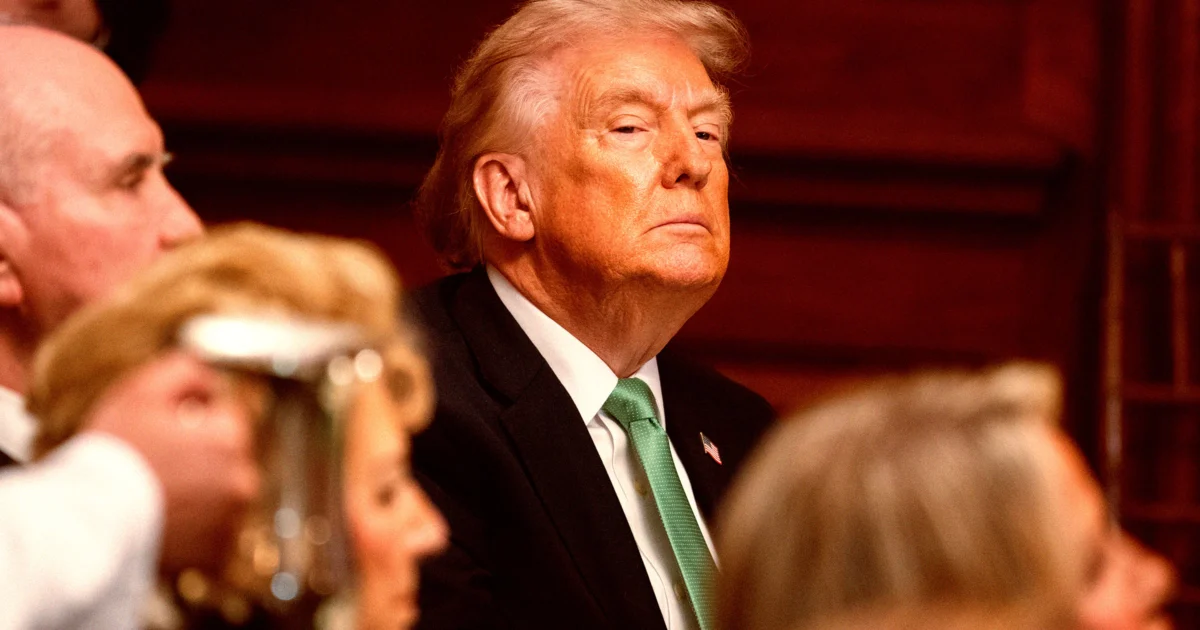
The most probable, albeit unexciting, explanation remains that Obama was being entirely literal. He, like many intelligent individuals, finds the statistical probability of alien life compelling, yet, in his official capacity as President of the United States, he was never presented with concrete, verifiable evidence of extraterrestrial contact or visitation. His joke about an "enormous conspiracy" hiding aliens from the president is likely just that – a joke, albeit one that highlights the immense challenge of maintaining such a secret at the highest levels of government. Indeed, as the article shrewdly observes, if such earth-shattering information truly existed within the U.S. government, it is highly conceivable that Obama’s "outburst-prone successor," Donald Trump, would have inadvertently blurted it out by now, given his penchant for unfiltered communication. This mundane conclusion, while lacking the thrilling allure of hidden truths and secret alien pacts, nonetheless provides a grounding perspective in a discussion often dominated by speculation and fervent belief. The enduring fascination with alien life, however, ensures that any utterance from a figure of Obama’s stature, no matter how carefully worded or clarified, will continue to spark debate and dream-weaving about the ultimate question: are we alone? And if not, who else is out there, and what secrets do our leaders truly hold?