Faris Adani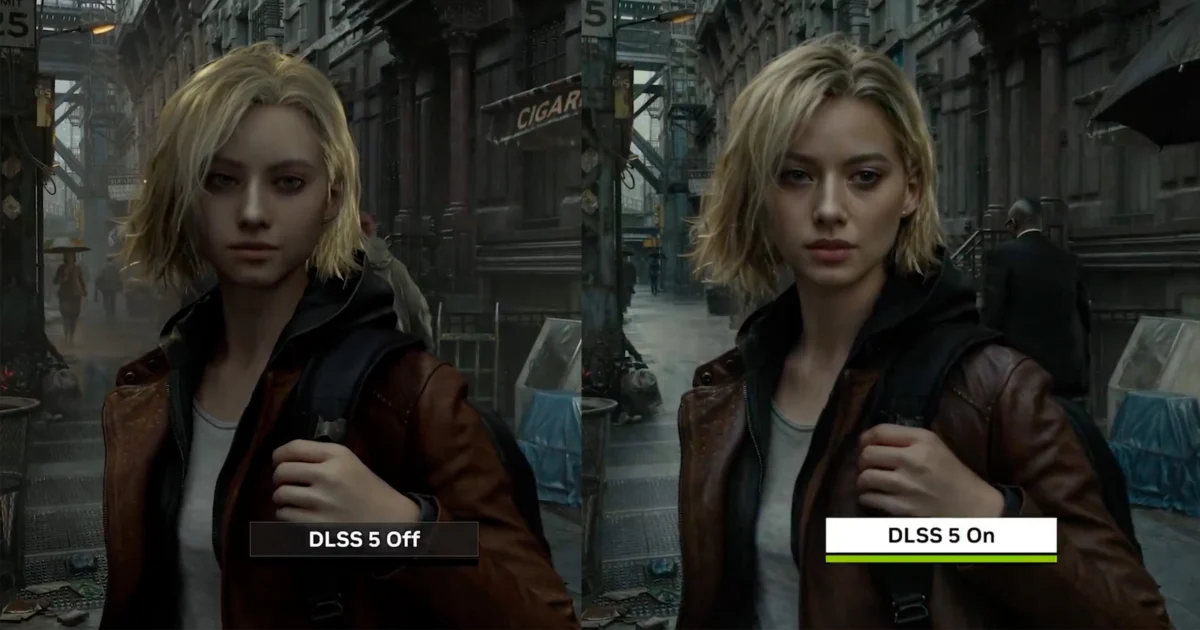
On Monday, the multi-trillion dollar AI chipmaker Nvidia, known globally more recently for its pioneering work in artificial intelligence and less so exclusively as a gaming GPU company, found itself at the center of a storm of controversy following the unveiling of its latest technological advancement aimed at integrating AI into video games, a feature dubbed DLSS 5, which immediately backfired with widespread condemnation from the gaming community. DLSS, or Deep Learning Super Sampling, has been a cornerstone of Nvidia’s strategy since its debut in 2018, offering a sophisticated AI-powered upscaling technology designed to boost frame rates and visual fidelity by rendering games at a lower resolution and then intelligently reconstructing a higher-resolution image, typically leading to performance improvements without a noticeable degradation in image quality; however, DLSS 5, which the company boldly proclaimed to be its "most significant breakthrough in computer graphics since the debut of real-time ray tracing" in that same year, presented a radical departure from its predecessors, and the initial reactions to the demo footage shared online were overwhelmingly negative, plunging the tech giant into an unexpected public relations quagmire.
The core promise of earlier DLSS iterations (DLSS 1, 2, 3, and the more recent 3.5) revolved around performance optimization, allowing gamers to achieve smoother gameplay and higher resolutions on less powerful hardware or with more demanding graphical settings like ray tracing enabled. These versions worked by leveraging AI to reconstruct frames, interpolating pixels and sharpening details while striving to maintain the original artistic intent and visual style of the game developers. They were generally well-received for their ability to deliver tangible benefits, becoming a key selling point for Nvidia’s RTX series graphics cards. DLSS 5, however, introduced a new paradigm: "real-time neural rendering," as described by Nvidia. This wasn’t merely about upscaling or generating intermediate frames; it was about actively "infusing pixels with photorealistic lighting and materials," aiming to bridge what Nvidia saw as a gap between conventional rendering and ultimate reality. The company’s announcement elaborated that the AI model takes a game’s color and motion vectors for each frame as input, then uses this model to infuse the scene with photoreal lighting and materials that are "anchored to source 3D content," a process trained "end to end to understand complex scene semantics such as characters, hair, fabric and translucent skin." While sounding revolutionary on paper, the practical demonstration painted a starkly different picture.
Gamers, developers, and tech enthusiasts alike reacted with a mix of fury and disbelief, labeling the new feature as "slop" and a "betrayal" of the carefully crafted artistic visions inherent in video games. The core of the criticism centered on the feature’s perceived disregard for a game’s established art direction. Video game development is an arduous, creative process where artists, designers, and animators spend countless hours meticulously crafting every visual element, from character models and environmental textures to lighting and color palettes, all to evoke a specific mood, style, and narrative. To introduce an AI layer that fundamentally alters this established aesthetic, regardless of its "photorealistic" aspirations, was seen by many as an affront to artistic integrity. The internet, ever quick to satirize, swiftly produced a barrage of memes that spread like wildfire across social media platforms like X (formerly Twitter). These memes typically contrasted an original character or scene with a "DLSS 5" version, depicting the subject in an unrecognizable, often garish, and aesthetically homogenized style. The most prevalent and biting nickname to emerge from the backlash was "sloptracing," a derisive play on Nvidia’s groundbreaking ray tracing technology, suggesting that instead of enhancing realism, DLSS 5 merely churned out generic, uninspired "slop."
The visual effect generated by DLSS 5, as demonstrated, went far beyond merely providing clarity to a fuzzy image; it appeared to function more like an aggressive, all-encompassing generative AI filter. This filter varnished the art style of games with an overwrought, almost uncanny, finish, stripping away the unique charm and specific visual identity that made each game distinct. The impact was particularly jarring when applied to human or humanoid faces. Iconic characters, such as Leon Kennedy from the beloved Resident Evil franchise, were, by common consensus and without exaggeration, literally "yassified." The term "yassification," as defined by the Cambridge Dictionary, refers to "the act of making something or someone more glamorous, fashionable, or aesthetically pleasing, often to an extreme or artificial degree." In the context of DLSS 5, this meant characters acquiring smoother, almost plastic-like skin, exaggerated cheekbones, poutier lips, and a general uniformity of features that conformed to a narrow, often generic, "gooner beauty standard." Grace Ashcroft, another character from an upcoming Resident Evil game featured in the demos, similarly exhibited hollower cheeks, stronger cheekbones, and altered lips, losing her distinctive character model in favor of a homogenized, AI-driven ideal. The result was that the games no longer looked like themselves; instead, they began to resemble any other generic, high-fidelity clip spat out by a video-generating AI model, often shared in enthusiastic AI circles with the prematurely triumphal caption, "Hollywood is cooked."
Nvidia chief Jensen Huang, in an attempt to frame DLSS 5 as a monumental leap forward, was effusive about the technology’s implications, boldly calling it gaming’s "GPT moment." He declared, "DLSS 5 is the GPT moment for graphics — blending hand-crafted rendering with generative AI to deliver a dramatic leap in visual realism while preserving the control artists need for creative expression." This statement, however, struck many as profoundly disconnected from the reality presented by the demo. The public outcry clearly indicated that far from preserving creative expression, DLSS 5 appeared to override and homogenize it. The promise of "preserving control" felt hollow when the AI model fundamentally altered the aesthetic of the games in such a dramatic and, to many, undesirable way. This controversy tapped into broader anxieties surrounding the integration of generative AI into creative industries. Concerns about AI’s potential to displace human artists, infringe on intellectual property, and dilute unique artistic visions are already prevalent. DLSS 5, in its current iteration, inadvertently fueled these fears, demonstrating how powerful AI tools, when misapplied or poorly understood in terms of their aesthetic impact, can unintentionally undermine the very art they aim to enhance.
Despite the immediate and vociferous backlash, Nvidia states that DLSS 5 is slated to arrive this fall. Crucially, its implementation appears to be selective, initially limited to "participating games" that will include major titles such as Resident Evil Requiem, Starfield, Hogwarts Legacy, and Assassin’s Creed Shadows. The involvement of such high-profile franchises, along with their respective publishers and developers like Capcom, Bethesda, Ubisoft, and Warner Bros Games, signals a significant level of industry buy-in, or at least a willingness to explore Nvidia’s vision. This raises questions about why major studios would support a potentially controversial feature. Possible reasons could include the promise of enhanced performance (even if aesthetic changes are a byproduct), a belief in the long-term trajectory of AI-driven graphics, or simply the immense influence wielded by Nvidia in the GPU market, making it difficult for developers to ignore its latest innovations. It is also possible that the feature will be entirely optional, allowing players to toggle it on or off, thereby mitigating some of the aesthetic concerns for those who prefer the original art style.
The "sloptracing" controversy surrounding DLSS 5 serves as a potent reminder of the delicate balance between technological innovation and artistic integrity in the rapidly evolving landscape of video game development. While generative AI undoubtedly holds immense potential for pushing the boundaries of realism and efficiency in graphics, Nvidia’s misstep highlights that the aesthetic impact and the preservation of artistic intent are paramount to the discerning gaming audience. The backlash offers a crucial feedback loop for AI developers: raw processing power and "photorealism" are not sufficient if they come at the expense of unique style and creative expression. The future of game graphics, and indeed the broader integration of AI into creative fields, will likely depend on how effectively companies can develop tools that augment human creativity rather than attempting to supplant or homogenize it. Whether Nvidia will refine DLSS 5 based on this feedback, or if this marks a significant divergence in the philosophical approaches to game rendering, remains to be seen.