anjir abdul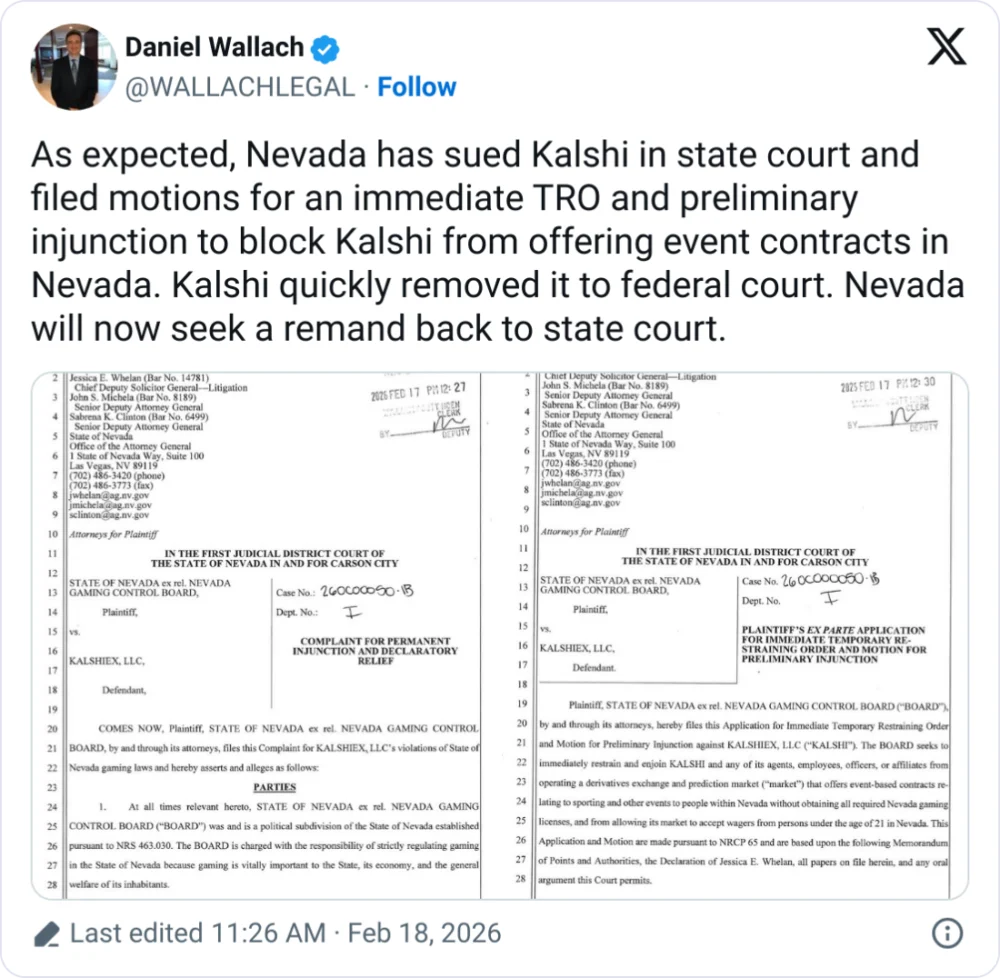
On Tuesday, the US Court of Appeals for the Ninth Circuit delivered a pivotal ruling, denying Kalshi’s strenuous bid to halt Nevada’s gaming regulator from proceeding with actions concerning its controversial sports event contracts. This denial effectively dissolved a temporary injunction that had, for months, prevented the Nevada Gaming Control Board (NGCB) from launching a civil suit against the company. For Kalshi, this appellate court decision represents a considerable setback in its year-long struggle to keep its sports-related prediction markets operational within Nevada’s borders, pushing the company further onto the defensive in a legal environment that is increasingly scrutinizing its business model.
In the immediate aftermath of the Ninth Circuit’s ruling, the Nevada Gaming Control Board wasted no time, promptly filing a comprehensive civil enforcement action against Kalshi in state court. The NGCB’s complaint asserts that Kalshi is actively offering and facilitating "unlicensed wagering in violation of Nevada law," specifically referencing the company’s sports event contracts. The state regulator’s primary objective with this lawsuit is clear: to obtain a judicial order that permanently blocks Kalshi from continuing to offer these services without proper licensing and adherence to Nevada’s stringent gaming regulations. This swift legal maneuver underscores the state’s unwavering commitment to asserting its regulatory authority over what it classifies as gambling activities within its jurisdiction.
Kalshi, demonstrating its resolve and consistent legal strategy, responded almost immediately by filing a motion to transfer the state-level lawsuit to a federal court. This strategic move reiterates Kalshi’s long-held and foundational argument that its operations, particularly its event contracts, fall under "exclusive federal jurisdiction" as regulated by the Commodity Futures Trading Commission (CFTC). This jurisdictional dispute is at the heart of the conflict, with Kalshi contending that its prediction markets are sophisticated financial instruments—commodity derivatives—rather than traditional sports betting, thereby placing them squarely outside the purview of state gambling laws and under federal oversight.
The appeals court’s order and the subsequent civil enforcement action by Nevada represent a significant turning point in Kalshi’s protracted legal confrontation with the state. This battle began nearly a year ago when Kalshi proactively sued Nevada in March, following the receipt of a cease-and-desist order from the NGCB, which demanded an immediate cessation of all sports-related markets within the state. In April, a federal court initially sided with Kalshi, granting a temporary block on Nevada’s enforcement actions, allowing court proceedings to unfold without immediate operational disruption for the company. However, the recent Ninth Circuit decision effectively overturns that temporary reprieve, granting Nevada the green light to proceed with its enforcement efforts. This outcome also signals a broader challenge for Kalshi and other prediction market operators, as they face similar regulatory pressures and lawsuits from a growing number of other states across the country, each seeking to assert their own jurisdictional claims over these innovative, yet legally ambiguous, financial products.
The core of Nevada’s argument, as articulated in its latest lawsuit, is straightforward: Kalshi’s sports event contracts undeniably meet the criteria for activities requiring a state gaming license under Nevada law. The NGCB asserts that these contracts fundamentally allow "users to wager on the outcomes of sporting events," a description that aligns them directly with the definition of sports betting, which is a heavily regulated and licensed activity in the state. The regulator emphasizes that despite facilitating what it deems as wagers and other gaming activities accessible to Nevada residents, Kalshi operates without any state-issued license and has consistently failed to comply with Nevada’s comprehensive gaming laws and regulations. This, the NGCB contends, puts Kalshi in direct violation of state statutes designed to protect consumers and ensure the integrity of the gaming industry.
Kalshi, in its federal court motion, vehemently disputes this characterization, arguing that for the court to accept Nevada’s claim, it "must adopt a narrow interpretation" of existing federal commodity exchange laws. Kalshi maintains that its event contracts are properly classified as swaps or commodity options, making them subject to the exclusive regulatory authority of the CFTC under the Commodity Exchange Act (CEA). This legal framework, Kalshi argues, preempts state gambling laws, meaning federal law should supersede state law in this instance. The company’s argument hinges on the idea that these contracts are not mere bets on sports outcomes but rather sophisticated financial instruments designed for hedging or price discovery, a distinction that has profound legal and regulatory implications.
Adding a significant layer of federal backing to the prediction market industry’s position, CFTC Chair Mike Selig made a strong assertion earlier on the same Tuesday, declaring his agency’s jurisdiction over these markets. Selig confirmed that the CFTC had filed an amicus curief (friend of the court brief) in support of Crypto.com, another major player in the crypto and prediction market space, which is embroiled in a strikingly similar lawsuit against Nevada. An amicus brief is a legal document filed by non-litigants with a strong interest in the subject matter, offering information, expertise, or insight that has a bearing on the issues in the case. The CFTC’s intervention here is a powerful signal that the federal regulator intends to actively defend its turf against state-level incursions.
Crypto.com’s legal battle mirrors Kalshi’s experience, having sued Nevada’s regulators in June after also receiving a cease-and-desist letter. Following an initial loss in a federal court motion to block the state from taking action, Crypto.com appealed to the Ninth Circuit in November. The CFTC’s amicus brief in this parallel case directly challenges Nevada’s regulatory reach, arguing forcefully that "states cannot invade the CFTC’s exclusive jurisdiction over CFTC-regulated designated contract markets by re-characterizing swaps trading on DCMs as illegal gambling." This statement is critical, as it directly addresses the preemption argument and the fundamental definitional dispute at play. Designated Contract Markets (DCMs) are exchanges regulated by the CFTC where futures and options contracts are traded. The CFTC’s stance is that if a prediction market is operating as a DCM, its offerings are commodity derivatives, and therefore, federal law governs.
Selig further clarified the CFTC’s position, stating unequivocally that event contracts "are commodity derivatives and squarely within the CFTC’s regulatory remit," and that the agency would "defend its exclusive jurisdiction over commodity derivatives." This firm declaration from the top federal commodities regulator provides a crucial pillar of support for companies like Kalshi and Crypto.com, bolstering their claims that they are not engaged in illegal gambling but in federally regulated financial activities. The outcome of these cases could therefore set a national precedent regarding the regulatory framework for prediction markets, determining whether they fall under the purview of state gambling commissions or federal financial regulators.
The CFTC’s assertive push comes amidst a broader surge of interest in prediction markets, even from prominent figures and entities. Notably, Trump Media and Technology Group, the parent company of Truth Social, announced in October its intentions to explore bringing prediction markets to its flagship social media platform through a partnership with Crypto.com. This move highlights the growing mainstream recognition and potential market capitalization of prediction platforms. Furthermore, Donald Trump Jr., the son of the former US president, has been a strategic advisor to Kalshi since January 2025 (likely a typo in the original text, probably meant 2023 or 2024 given the context), and has also advised rival prediction market Polymarket after investing in that company in August. Such high-profile involvement underscores the significant financial and political stakes associated with the future of this innovative, yet legally contested, industry.
The fundamental legal conundrum in these cases revolves around the classification of prediction market contracts. Nevada, and other states, view these contracts through the lens of traditional gambling laws, which typically define gambling as risking something of value on an event with an uncertain outcome, primarily for entertainment or profit. Under this definition, Kalshi’s sports event contracts, which allow users to "wager on the outcomes of sporting events," fit the bill for unlicensed gambling. However, Kalshi and the CFTC argue for a different classification: that these are sophisticated financial instruments, akin to futures or options contracts, used for hedging, speculation, or price discovery in an economic context. They contend that the Commodity Exchange Act (CEA) grants the CFTC exclusive jurisdiction over "any agreement, contract, or transaction that is a swap" or "any contract of sale of a commodity for future delivery." The core of the legal battle is whether these "event contracts" genuinely qualify as such "commodity derivatives" under federal law, or if they are simply thinly veiled sports bets. The principle of federal preemption is key here; if federal law applies, state gambling laws would be rendered inapplicable.
The implications of this legal saga are far-reaching. For Kalshi, an unfavorable ruling could severely restrict its ability to operate in key markets, potentially undermining its business model and growth prospects. For the broader prediction market industry, the outcome will likely establish a critical precedent, influencing how these platforms are regulated across the United States. A decision favoring Nevada could embolden other states to pursue similar enforcement actions, creating a fragmented and challenging regulatory landscape. Conversely, a ruling affirming the CFTC’s exclusive jurisdiction would provide a clearer, potentially more favorable, federal framework for innovation in this space. This ongoing conflict underscores the urgent need for clearer legislative or regulatory guidance at the federal level to reconcile the innovative nature of prediction markets with existing legal frameworks designed for either traditional finance or traditional gambling. The resolution of the Kalshi v. Nevada lawsuit, therefore, will not only impact the companies directly involved but will undoubtedly shape the future trajectory of the entire prediction market ecosystem in the United States.