Faris Adani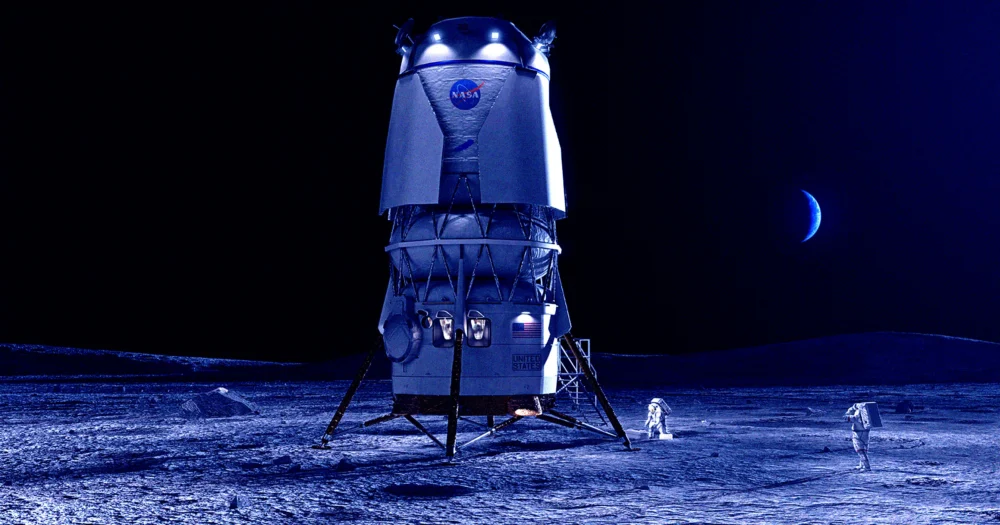
Sign up to see the future, today
Can’t-miss innovations from the bleeding edge of science and tech
NASA Has No Plan to Rescue Lunar Astronauts in Case of Emergency
Late last month, in a pivotal moment for humanity’s renewed lunar ambitions, NASA administrator Jared Isaacman delivered a sobering announcement during a livestreamed press conference. The space agency would be making significant revisions to its ambitious Artemis program, particularly its third mission, Artemis III. What was once envisioned as a triumphant return of humans to the lunar surface was downgraded to a critical, uncrewed test flight of its Human Landing Systems (HLS) partners’ spacecraft – SpaceX’s Starship and Blue Origin’s Blue Moon – sometime next year.
A Pragmatic Shift or a Troubling Delay?
Isaacman framed this strategic pivot as a necessary measure to ensure long-term success and astronaut safety. “We need to chunk it into achievable objectives,” he explained to reporters, emphasizing the goal to increase “reliability and standardization” through a series of incremental missions rather than making an immediate leap from a crewed circumlunar trip (Artemis II) directly to a landing attempt. This iterative approach, he argued, would build a more robust foundation for sustainable lunar presence.
However, this seemingly pragmatic shift belies deeper, systemic concerns regarding the program’s inherent risks and readiness. The decision to delay a human landing came just as a new, scathing report from the agency’s internal watchdog, the NASA Office of Inspector General (OIG), surfaced. This report, completed before Isaacman’s announcement, painted a stark picture of the challenges ahead, suggesting that even with a revised timeline, the missions would continue to grapple with the profound and potentially catastrophic risks inherent in extreme space exploration.
The OIG’s Dire Warnings: No Rescue Capability
The OIG’s findings were unequivocal and alarming. Despite NASA’s stated commitment to “taking steps to prevent catastrophic events from occurring” and its proactive measures to mitigate potential hazards, a critical vulnerability remains: the agency “does not have the capability to rescue the stranded crew” from the lunar surface. This means that should astronauts encounter a “life-threatening emergency” on the Moon, there is currently no viable contingency plan to retrieve them, leaving them in an utterly precarious situation hundreds of thousands of miles from Earth.
This absence of a rescue mechanism is not merely a hypothetical concern; it echoes a chilling historical precedent. A document dated July 18, 1969, reveals that presidential speechwriter and columnist William Safire drafted a speech for President Richard Nixon, explicitly “intended to be read on TV in the event of a Moon disaster.” The opening lines of this chilling address painted a grim scenario: “Fate has ordained that the men who went to the Moon to explore in peace will stay on the Moon to rest in peace. These brave men, Neil Armstrong and Edwin Aldrin, know that there is no hope for their recovery. But they also know that there is hope for mankind in their sacrifice.”
Fortunately, both Armstrong and Aldrin, along with Michael Collins, made it back safely from Apollo 11, rendering Safire’s address a notable “speech that never was.” Yet, its very existence underscores the profound understanding of unrecoverable risks inherent in early lunar missions. The fact that NASA, over half a century later, still faces a similar dilemma regarding crew rescue, despite exponential advancements in technology, highlights the enduring and formidable challenges of deep space exploration. The OIG report explicitly states that, despite all efforts to “mitigate and prevent hazards associated with the landers,” “gaps still exist in the Agency’s risk reduction methodology.”
Manual Controls and Unanswered Questions
Beyond the absence of a rescue plan, the OIG also raised pertinent questions regarding the manual control design of both SpaceX’s and Blue Origin’s landers. The ability for crew members to manually take over in an emergency is deemed a “key element of HLS’s human-rating certification and part of an essential crew survival strategy.” Any deficiencies or unresolved issues in this crucial aspect could jeopardize the safety of future lunar missions, adding another layer of risk to an already complex endeavor.
The Herculean Task of Starship: Fueling the Lunar Dream
While NASA publicly casts its revised approach as a more cautious and iterative path back to the Moon, the underlying ambition remains colossal. The agency is now targeting not one, but two lunar landing missions in 2028, contingent on the readiness of one or both commercial landers. However, the scale of the challenge, particularly for SpaceX’s Starship, is almost unfathomable.
The OIG report delves into the intricate logistics required for SpaceX’s enormous 171-foot Starship, which stands as tall as a “14-story commercial building,” to reach the Moon. Its sheer size necessitates prodigious amounts of fuel, far beyond what a single launch can carry. This challenge introduces a complex and unproven orbital refueling strategy: the deployment of a “Starship tanker” to “deliver propellant to low Earth orbit where it will be stored in the Starship storage depot before being distributed to the Starship lander.”
The statistics are staggering: a minimum of ten Starship tankers will be required to fill this orbital depot, a process that must commence at least 200 days before NASA’s planned mission to the Moon. Only then can a Starship lander launch from the Kennedy Space Center, rendezvous with the depot, refuel, and finally embark on its journey to the lunar surface. This intricate ballet of launches, orbital maneuvers, and refueling has yet to be successfully demonstrated. SpaceX, for all its revolutionary achievements, has yet to successfully launch its Starship into space and land it in a fully controlled manner, let alone achieve stable orbit, establish a functional orbital fuel depot, or perform in-space refueling at this unprecedented scale. Each step represents a monumental engineering and operational hurdle.
Blue Origin’s Parallel Path and Shared Risks
Blue Origin faces a similarly complex logistical challenge for its Blue Moon lander, also planning to utilize a propellant depot in orbit before its journey to the Moon. While Blue Moon is considerably shorter than Starship at 53 feet, it too presents significant engineering and operational demands that must be met with absolute precision.
The Perilous Descent: Landing on the Moon
Well before any astronauts’ lives are on the line, NASA intends to put both landers through extensive, uncrewed tests in lunar orbit. However, touching down on the lunar surface introduces a fresh set of formidable challenges. The OIG report highlights the critical requirement for a “tilt tolerance” of just eight degrees at the landing spot on the Moon. This seemingly small margin is vital to ensure that a towering Starship does not “tip over” upon touchdown. To put this into historical context, the tallest lunar module NASA sent to the Moon during the Apollo program was a mere 23 feet – less than half the height of the Blue Moon lander and a tiny fraction of Starship’s immense stature.
The risks are starkly illustrated by recent events. Even NASA’s much shorter 14-foot lunar lander, built and operated by Houston-based Intuitive Machines, toppled over after attempting to land in February 2024, despite successfully reaching the Moon. This incident serves as a potent reminder of the inherent difficulties and unpredictable nature of lunar landings, even for smaller, more manageable craft. The OIG noted that even the shorter Blue Moon lander “faces landing risks,” including “exceeding the lander’s tilt tolerance for safe and effective execution of critical crew functions.”
The Elevator Dilemma: A Single Point of Failure
Finally, for Starship, the logistics of crew egress and ingress present a unique and potentially dangerous conundrum. Given its immense height, Starship will require an elevator to transport astronauts down to the lunar surface and back into the vehicle. The OIG report points out a critical flaw in this design: “Currently, there is no other method for the crew to enter the vehicle from the lunar surface in the event of an elevator failure.” This creates a single point of failure that could leave astronauts stranded on the Moon, unable to return to their spacecraft – a scenario as dire as the lack of a rescue vehicle.
NASA’s Response and the Broader Lunar Race
In a letter appended to the OIG report, Lori Glaze, NASA’s acting associate administrator for exploration systems development, acknowledged that its partners “have experienced delays.” She asserted that NASA is “actively implementing mitigation measures, such as increased collaboration with experts to monitor and manage the partners’ lander development while implementing lessons learned to minimize further impact.”
However, the question of whether SpaceX and Blue Origin can truly deliver on these unprecedented technological demands within the revised timelines remains a contentious issue. The delays and unaddressed risks outlined by the OIG report cast a shadow over NASA’s ambitious lunar timetable, especially when considering the geopolitical context of a burgeoning “Moon Race to China.” As China aggressively pursues its own lunar exploration goals, including plans for a crewed landing, the pressure on NASA to accelerate its Artemis program is immense. Yet, the OIG’s findings underscore that speed cannot come at the expense of fundamental safety and operational readiness.
The revised Artemis program, while aiming for a more measured approach, is still a testament to colossal ambition. But as the OIG report makes clear, until the fundamental gaps in rescue capability, risk reduction, and critical system reliability are definitively addressed, the dream of a sustainable human presence on the Moon will remain shadowed by profound and potentially unrecoverable dangers.
More on lunar landing: After Nixing Its Artemis 3 Moon Landing, NASA Is Starting to Seriously Lose the Moon Race to China