Faris Adani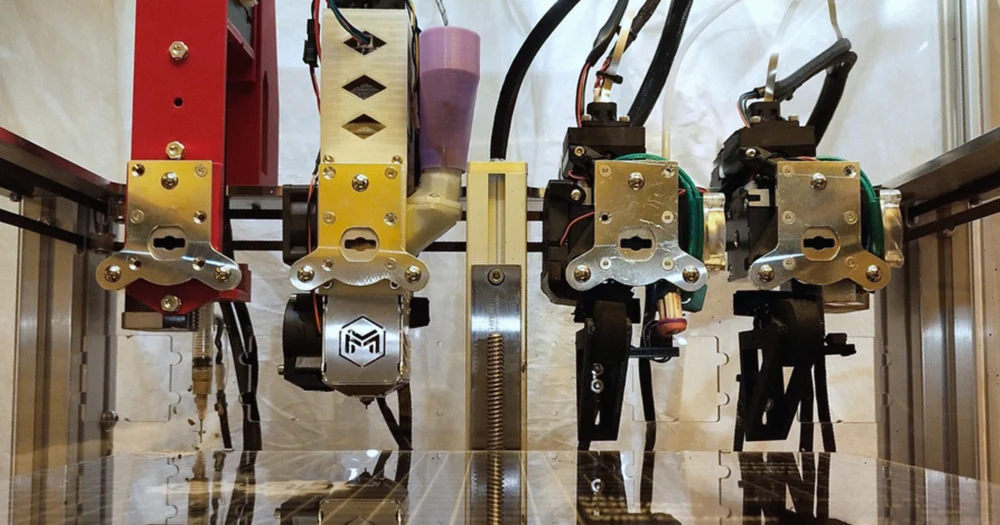
In a monumental leap forward for additive manufacturing, researchers at the Massachusetts Institute of Technology (MIT) have engineered a novel 3D printing platform capable of rapidly producing entire complex machines, complete with intricate moving parts, in mere hours. This groundbreaking development, highlighted by the successful 3D printing of a functional electric motor, marks a significant departure from traditional manufacturing paradigms and hints at a future where intricate hardware can be fabricated on demand, decentralizing production and dramatically accelerating innovation.
The journey of 3D printing, or additive manufacturing, has been one of continuous evolution, steadily transforming from a niche industrial tool into a versatile technology with far-reaching applications. Initially, the technique, which meticulously builds objects layer by layer, served primarily for rapid prototyping in industrial settings, allowing engineers to quickly test designs. Over the past decades, its capabilities have expanded exponentially. Today, 3D printing is integral to high-end fabrication across a diverse range of fields, from creating bespoke medical implants that precisely fit a patient’s anatomy to the ambitious construction of entire residential neighborhoods and even the sophisticated rocket engines propelling humanity into space. The ability to craft complex geometries, optimize material usage, and reduce waste has cemented 3D printing’s role as a transformative technology. However, a persistent challenge has been the integration of multiple materials with diverse properties—such as conductive, magnetic, and structural components—into a single, cohesive print, especially when aiming for a fully functional, electromechanical device. This is precisely where MIT’s latest innovation makes its indelible mark.
The MIT team’s breakthrough centers on a retrofitted 3D printer, a marvel of engineering that significantly enhances multi-material deposition capabilities. Unlike conventional printers that might handle one or two material types, this advanced platform features four independent extruders. This quartet of nozzles allows for the simultaneous deposition of a wide variety of printable materials, each squeezed through its dedicated nozzle with precision. Crucially, these materials include not only standard structural polymers but also specialized magnetic and conductive substances. This multi-modal, multi-material extrusion capability is the linchpin of their success, enabling the creation of components that possess distinct electrical and magnetic properties alongside their structural integrity.
To demonstrate the platform’s prowess, the researchers chose a challenging yet highly relevant target: an electric linear motor. This simple but ubiquitous type of electric motor finds widespread application in various industrial robots, including CNC machining tools, where precise linear motion is paramount. Utilizing just five different materials, the novel 3D printing platform was able to fabricate this entire electromechanical device in an astonishingly short period of only three hours. The financial implications are equally impressive, with the total cost of materials for the motor amounting to a mere 50 cents. This combination of speed and cost-efficiency underscores the disruptive potential of the technology.
As detailed in their new paper published in the journal Virtual and Physical Prototyping, the MIT team utilized the device to print the core components necessary for a functional motor. This included solenoids, which are electromechanical devices that convert electrical energy into linear motion; hard magnets, essential for generating magnetic fields; and springs, providing mechanical elasticity. These disparate parts were then integrated into what the researchers proudly claim to be the "first fully 3D-printed electric motor." A key highlight of their process is its near-complete autonomy; the only post-printing step required was the magnetization of the hard magnets. "This study demonstrates the capability of multi-modal, multi-material extrusion 3D printing to fabricate all critical components of electrical machines, with magnetization of the hard magnets being the only post-printing step," the authors concluded in their paper, emphasizing the streamlined nature of their manufacturing process.
Beyond the sheer feat of integration, the performance of the 3D-printed motor has exceeded expectations. Following continuous improvements to their printing platform and material formulations, the researchers found that the resulting motor was not only functional but also more powerful than conventionally manufactured counterparts. According to an official statement from MIT, the motor could generate "several times more actuation than a common type of linear engine that relies on complex hydraulic amplifiers." This remarkable performance gain suggests that 3D printing is not just about convenience or cost-reduction; it has the potential to yield superior products. The ability to precisely control the deposition of materials with specific properties, such as the spatial arrangement of magnetic particles, allows for optimized designs that might be challenging or impossible to achieve with traditional subtractive manufacturing methods.
The broader implications of this technology are nothing short of transformative. Senior author and MIT Microsystems Technology Laboratories principal investigator Luis Fernando Velásquez-García expressed immense enthusiasm for the future. "Even though we are excited by this engine and its performance, we are equally inspired because this is just an example of so many other things to come that could dramatically change how electronics are manufactured," he stated. Velásquez-García envisions a paradigm shift in manufacturing, where companies can quickly print their own hardware components on-site, bypassing the costly and often time-consuming process of ordering parts from a global supply chain. This move towards decentralized, on-demand production could revolutionize everything from rapid prototyping and product development to repair and maintenance, significantly reducing lead times and operational costs.
"This is a great feat, but it is just the beginning," Velásquez-García added. "We have an opportunity to fundamentally change the way things are made by making hardware onsite in one step, rather than relying on a global supply chain. With this demonstration, we’ve shown that this is feasible." This vision extends beyond mere convenience; it speaks to increased supply chain resilience, allowing nations and businesses to mitigate risks associated with geopolitical instabilities, natural disasters, or pandemics that disrupt global trade. Furthermore, it democratizes hardware development, lowering the barrier to entry for innovators, small businesses, and researchers who might otherwise be constrained by the capital investment required for traditional manufacturing facilities or the logistical complexities of sourcing specialized components. Imagine engineers being able to design and print a custom robotic gripper or a specialized sensor module tailored for a unique application, all within a day, drastically accelerating research and product cycles.
The development also brings the long-held science fiction trope of "downloading a car" or other complex objects a tantalizing step closer to reality, as Gizmodo half-jokingly pointed out, referencing the much-derided anti-piracy ad from the early 2000s. While the immediate future won’t see consumers downloading blueprints for a fully functional vehicle and printing it in their garage, MIT’s work undeniably lays crucial groundwork. It demonstrates that the complex interplay of materials and mechanics required for such a feat is becoming increasingly achievable through additive manufacturing. This breakthrough signifies a substantial stride towards a future where intricate machines, once confined to specialized factories, could be produced locally, precisely when and where they are needed.
While the potential is vast, the road ahead will involve further refinement and exploration. Scaling up the process for larger machines, expanding the library of printable materials to encompass an even broader range of properties, and ensuring the long-term durability and reliability of 3D-printed components in critical applications will be key areas of focus. Standardizing design protocols and material specifications will also be essential for widespread adoption. Nevertheless, the MIT team has unequivocally proven the feasibility of printing functional electromechanical systems in a single, streamlined process. Their achievement is not merely an incremental improvement; it is a foundational step towards fundamentally redefining how we design, produce, and interact with the complex machinery that underpins our modern world, promising an era of unprecedented manufacturing agility and innovation.