Imroatul Nasiyah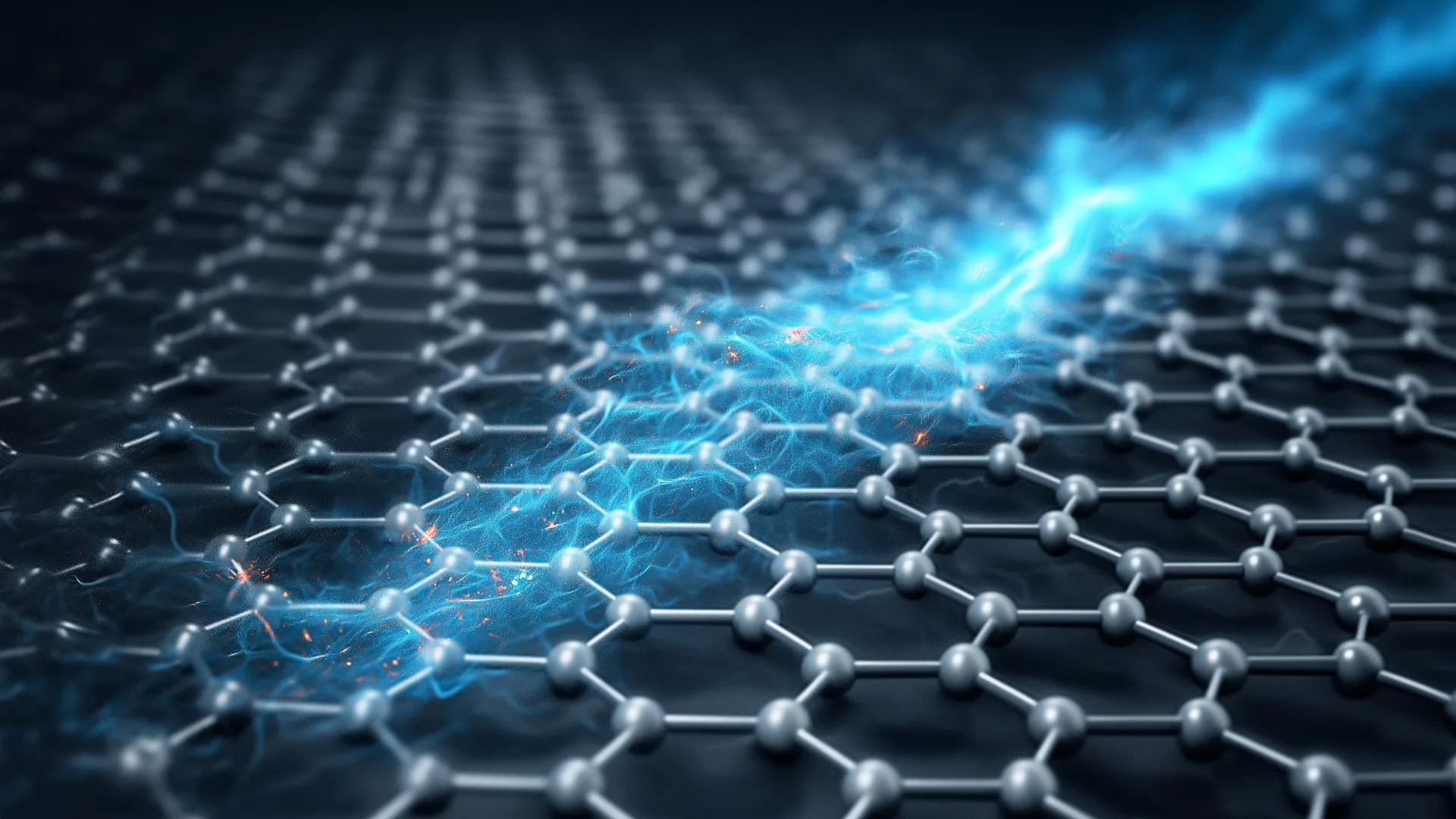
However, a groundbreaking new study, spearheaded by researchers at the University of Göttingen in collaboration with esteemed teams from Braunschweig, Bremen, and Fribourg, has unveiled an even more profound dimension to graphene’s capabilities. For the very first time, scientists have achieved direct observation of "Floquet effects" within graphene. This pivotal discovery not only provides irrefutable evidence but also definitively settles a long-standing scientific debate: Floquet engineering, a sophisticated technique that harnesses precisely timed light pulses to dynamically sculpt a material’s intrinsic properties, can indeed be effectively applied to metallic and semi-metallic quantum materials like graphene. The profound implications of this research have been meticulously documented and published in the prestigious scientific journal, Nature Physics.
Direct and Unambiguous Evidence of Floquet States in Graphene
The scientific inquiry into these elusive Floquet effects necessitated the deployment of cutting-edge experimental methodologies. The research team ingeniously employed femtosecond momentum microscopy, a powerful technique that grants researchers the unprecedented ability to capture and analyze extremely rapid, transient changes in the electronic behavior of materials. In their meticulously designed experiments, the graphene samples were subjected to intense, ultrashort bursts of light, akin to microscopic lightning strikes. Immediately following these light pulses, a precisely timed, secondary probing pulse was utilized to meticulously track and map the intricate response of the electrons within the graphene lattice over incredibly short timescales, measured in femtoseconds – quadrillionths of a second.
Dr. Marco Merboldt, the lead author of the study and a distinguished researcher at the University of Göttingen, articulated the significance of their findings with palpable enthusiasm: "Our measurements provide unequivocally clear proof that ‘Floquet effects’ manifest themselves within the photoemission spectrum of graphene. This observation leaves no room for doubt: Floquet engineering is not merely theoretical but demonstrably functional within these remarkable quantum materials. The sheer magnitude of the potential unlocked by this discovery is nothing short of immense." The research unequivocally demonstrates that Floquet engineering’s efficacy extends across a broad spectrum of quantum materials, thereby bringing scientists significantly closer to achieving the ultimate goal of precisely tailoring quantum materials with specific, desired characteristics through the controlled application of laser pulses within vanishingly short temporal windows.
Light-Controlled Quantum Materials: The Vanguard of Future Technologies
The ability to precisely tune the properties of materials at the quantum level with such exquisite control holds the promise of laying an indispensable foundation for the development of a new generation of advanced electronics, unprecedented computing architectures, and exceptionally sensitive sensor technologies. Professor Marcel Reutzel, who co-led the ambitious research project at Göttingen alongside Professor Stefan Mathias, elucidated the far-reaching impact of their work: "Our findings usher in entirely novel paradigms for controlling the electronic states within quantum materials by leveraging the power of light. This opens up the tantalizing prospect of realizing future technologies where electrons can be manipulated with unparalleled precision and targeted control."
Professor Reutzel further elaborated on the specific avenues of scientific exploration that this breakthrough unlocks: "What is particularly exhilarating about this development is its capacity to facilitate the investigation of topological properties. These are highly specialized, exceptionally robust characteristics that possess immense potential for the realization of fault-tolerant quantum computers and the creation of entirely new classes of sensors for the future." The research was generously supported by the German Research Foundation (DFG) through the Collaborative Research Centre "Control of Energy Conversion at Atomic Scales" at the University of Göttingen, underscoring the collaborative and well-funded nature of this pioneering scientific endeavor.
The profound implications of this research extend beyond the immediate scientific community, hinting at a future where materials can be dynamically reconfigured on demand. Imagine electronic devices that can adapt their performance based on environmental conditions or computational tasks, or sensors so sensitive they can detect single molecules. This ability to engineer materials with light opens up avenues for creating dynamic interfaces, where information is not just stored but actively manipulated and shaped in real-time. The concept of "Floquet engineering" itself suggests a paradigm shift in how we interact with matter, moving from static materials to dynamically programmable ones.
The meticulous experimental setup, employing femtosecond momentum microscopy, is a testament to the advanced instrumentation available to modern physicists. This technique allows for a glimpse into the fleeting dance of electrons, a realm previously inaccessible to direct observation. By synchronizing light pulses with picosecond precision, scientists can effectively "freeze" the quantum state of electrons and observe their evolution. This level of temporal resolution is crucial for understanding phenomena that occur on timescales far shorter than any conventional measurement could capture.
The "Floquet effects" themselves are a fascinating manifestation of quantum mechanics. When a material is subjected to a periodic external field, such as light, its electronic band structure can be effectively modified, creating new, "Floquet" states. These states can possess properties that are fundamentally different from the original material, allowing for the engineering of new functionalities. The fact that these effects are observable in graphene, a material already renowned for its exceptional properties, suggests that the potential for further innovation is vast.
The connection to topological properties is particularly noteworthy. Topological materials are characterized by their robust, unconventional electronic properties that are protected by symmetry. They are considered promising candidates for building stable qubits for quantum computers and for developing highly efficient and noise-resistant sensors. The ability to manipulate these topological states with light could be a game-changer for the field of quantum information science, potentially accelerating the development of practical quantum technologies.
The collaborative nature of this research, spanning multiple institutions in Germany and Switzerland, highlights the global effort to unlock the secrets of advanced materials. Such interdisciplinary collaborations are essential for tackling complex scientific challenges and translating fundamental discoveries into tangible technological advancements. The funding provided by the German Research Foundation (DFG) underscores the importance placed on supporting cutting-edge research in quantum physics and materials science.
In essence, this study on graphene and Floquet effects represents a significant leap forward in our understanding and control of quantum materials. It moves us closer to a future where materials are not just chosen for their inherent properties but are actively engineered and dynamically tuned using light, paving the way for a new era of intelligent and adaptive electronic devices and revolutionary scientific instruments. The humble, single-atom-thick sheet of graphene, once a scientific curiosity, is now at the forefront of a quantum revolution, promising to reshape the very fabric of our technological world. The ability to manipulate quantum materials with light is not just an incremental improvement; it represents a fundamental shift in how we can interact with and utilize matter at its most basic level, opening up a universe of possibilities for innovation across countless fields.