Imroatul Nasiyah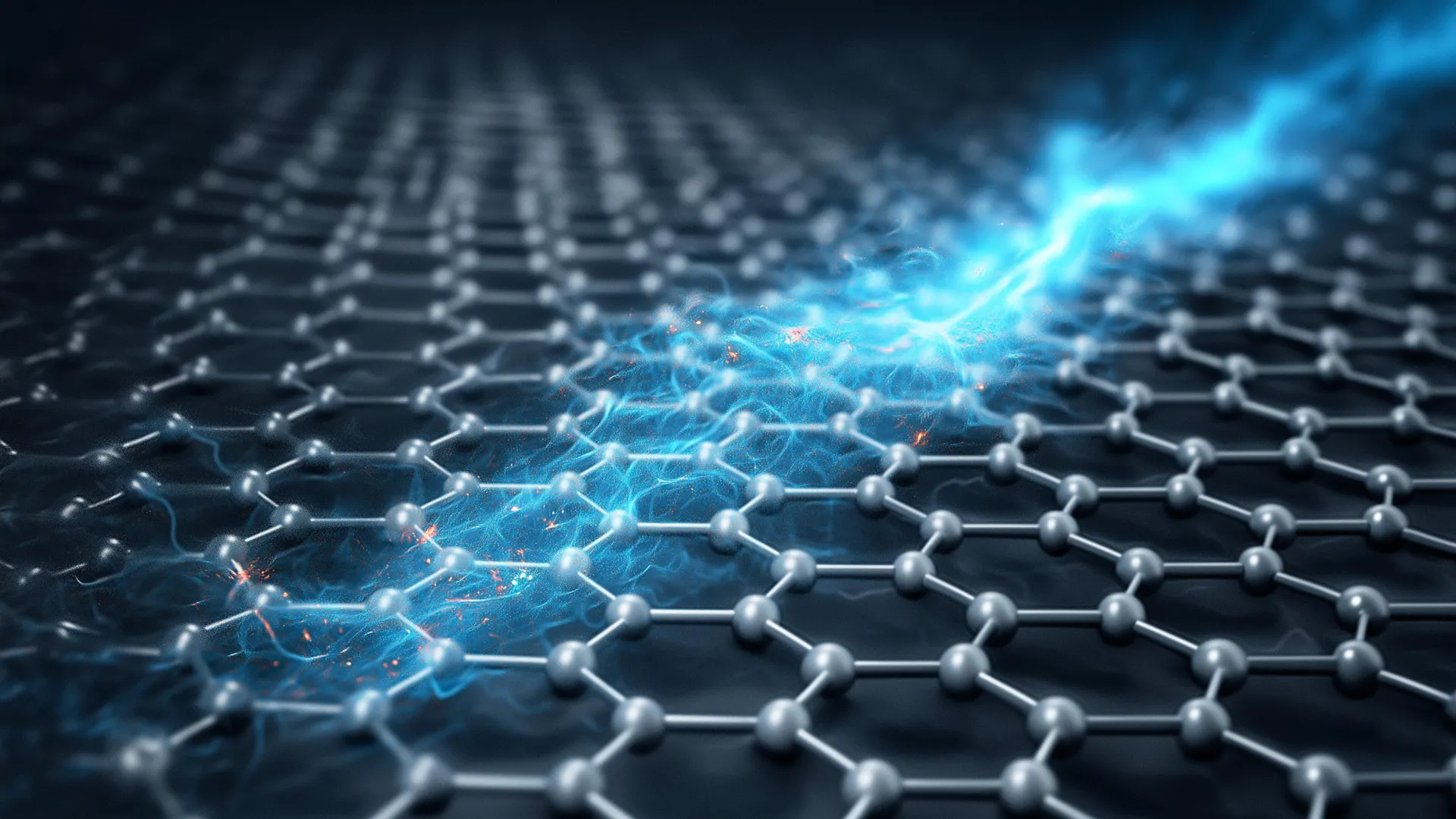
A recent collaborative research effort, spearheaded by scientists at the University of Göttingen and involving teams from Braunschweig, Bremen, and Fribourg, has provided the first direct experimental observation of “Floquet effects” in graphene. This landmark discovery not only resolves a long-standing scientific debate but also confirms that Floquet engineering – a sophisticated technique that leverages precisely timed light pulses to dynamically alter a material’s intrinsic properties – is indeed effective in metallic and semi-metallic quantum materials like graphene. The findings, published in the prestigious journal Nature Physics, are poised to revolutionize how we design and control materials at the quantum level.
The investigation into these elusive Floquet effects employed a cutting-edge technique known as femtosecond momentum microscopy. This advanced method allows researchers to capture and analyze the extremely rapid dynamics of electrons within a material, effectively providing a high-speed camera for quantum phenomena. In their experiments, the scientists subjected meticulously prepared graphene samples to intense, ultrashort bursts of light, akin to rapid flashes. Immediately following these excitation pulses, a precisely timed secondary pulse was used to probe the electronic behavior of the graphene. By analyzing the energy and momentum of the emitted electrons at these ultrafast timescales, the researchers could reconstruct the dynamic evolution of the material’s electronic states.
Dr. Marco Merboldt, the first author of the study and a researcher at the University of Göttingen, expressed his excitement about the findings: "Our measurements clearly prove that ‘Floquet effects’ occur in the photoemission spectrum of graphene. This makes it clear that Floquet engineering actually works in these systems – and the potential of this discovery is huge." The study’s success demonstrates that the principles of Floquet engineering are applicable across a broad spectrum of materials, bringing scientists significantly closer to realizing the ability to sculpt quantum materials with tailor-made characteristics using laser pulses with unprecedented temporal precision.
The ability to precisely tune the properties of materials using light has profound implications for the development of future electronic devices, advanced computing architectures, and highly sophisticated sensor technologies. Professor Marcel Reutzel, who co-led the project in Göttingen alongside Professor Stefan Mathias, elaborated on the significance of their work: "Our results open up new ways of controlling electronic states in quantum materials with light. This could lead to technologies in which electrons are manipulated in a targeted and controlled manner." This level of control over electron behavior could pave the way for entirely new paradigms in electronics, where functionality is not merely designed into the material but actively sculpted and reconfigured on demand.
Professor Reutzel further highlighted a particularly exciting facet of their discovery: "What is particularly exciting is that this also enables us to investigate topological properties. These are special, very stable properties which have great potential for developing reliable quantum computers or new sensors for the future." Topological properties refer to the robust, inherent characteristics of quantum materials that are remarkably resilient to external perturbations. Harnessing these properties through Floquet engineering could be a crucial step towards building fault-tolerant quantum computers, which are essential for tackling complex computational problems currently intractable for even the most powerful supercomputers. Furthermore, the ability to manipulate and probe these stable topological states could lead to the development of ultra-sensitive sensors capable of detecting minute changes in their environment with exceptional accuracy and reliability.
The research was generously supported by the German Research Foundation (DFG) through the University of Göttingen’s Collaborative Research Centre “Control of Energy Conversion at Atomic Scales.” This funding enabled the interdisciplinary collaboration and provided the resources necessary for the advanced experimental setup and theoretical analysis. The collaborative nature of this project, bringing together expertise from different institutions, was instrumental in achieving this breakthrough.
The implications of this research extend beyond the immediate scientific community, hinting at a future where materials can be dynamically reconfigured on demand, leading to adaptive electronics that can change their function based on user needs or environmental conditions. Imagine devices that can seamlessly switch between high-performance computing modes and energy-efficient communication protocols, or sensors that can adapt their sensitivity and selectivity to detect a wider range of analytes. The ability to precisely control electronic states in quantum materials with light also opens avenues for novel optical computing architectures and advanced data storage solutions, where information could be encoded and manipulated using light-matter interactions at the quantum level.
Furthermore, the study’s success in observing Floquet effects in graphene, a material already at the forefront of technological innovation, suggests that similar phenomena might be observable and exploitable in other two-dimensional materials and novel quantum materials. This could lead to a broader revolution in materials science, where the dynamic control of quantum properties becomes a standard tool for material design and engineering. The research team’s meticulous experimental approach and the clarity of their results provide a robust foundation for future investigations into the complex interplay between light and matter at the quantum frontier.
The long-term vision fueled by this discovery is one of intelligent, adaptive, and highly efficient electronic systems. By mastering the art of Floquet engineering in materials like graphene, scientists are not just pushing the boundaries of fundamental physics; they are laying the groundwork for a new generation of technologies that could reshape our digital world, our understanding of computation, and our ability to interact with and sense our environment. The journey from a single layer of carbon atoms to light-controlled quantum phenomena is a testament to human ingenuity and the enduring quest to unlock the universe’s most fundamental secrets for the betterment of society. The future of electronics, once imagined, is now being actively sculpted by the subtle yet powerful dance of light and quantum matter within materials like graphene.