Imroatul Nasiyah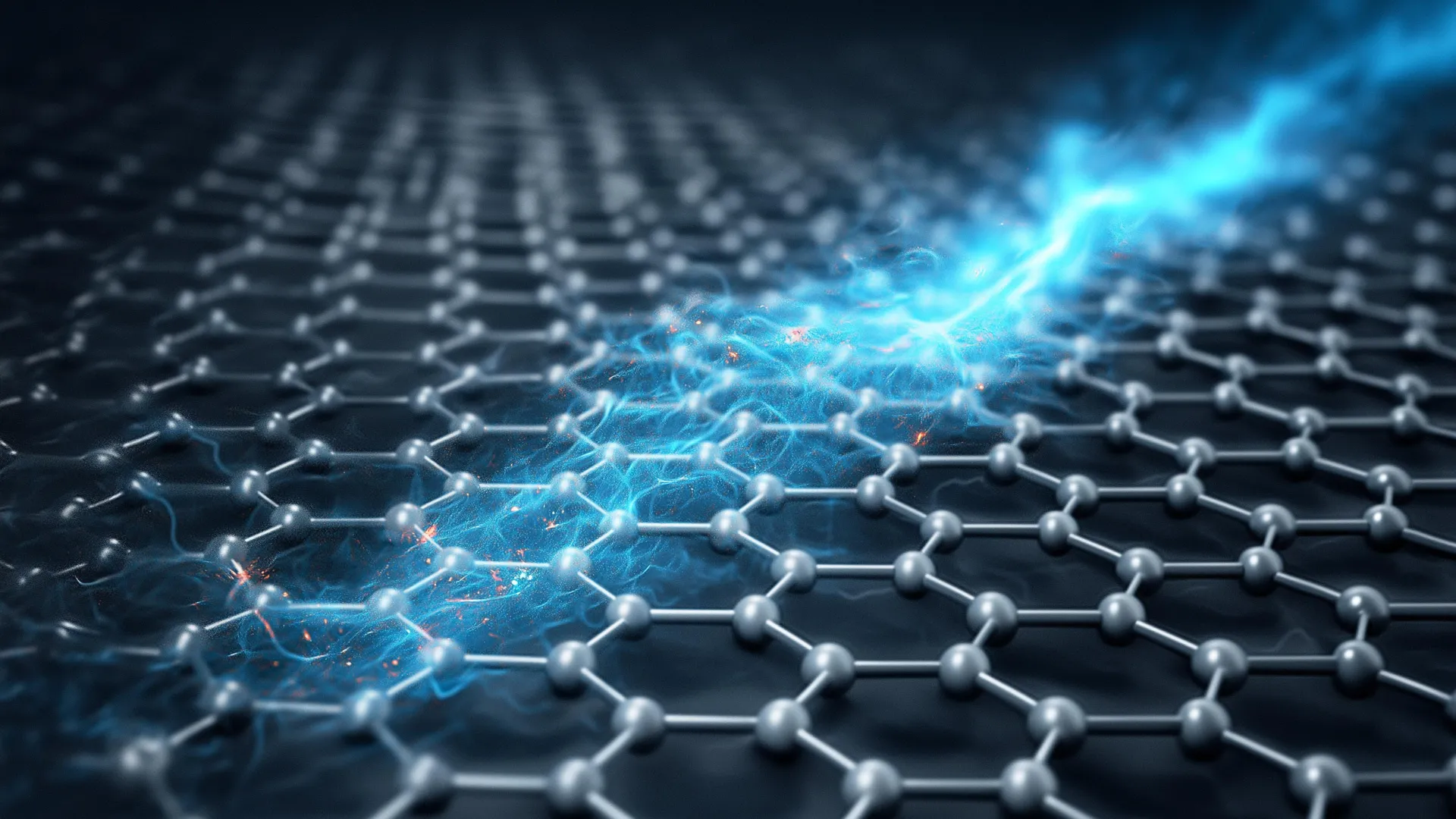
A pivotal new study, spearheaded by the esteemed University of Göttingen in Germany, and conducted in close collaboration with esteemed research teams from Braunschweig, Bremen, and Fribourg, has unveiled a previously hidden quantum dimension within graphene. For the very first time, scientists have achieved direct observation of "Floquet effects" in this extraordinary material. This landmark discovery not only confirms a long-standing scientific hypothesis but also definitively settles a persistent question within the physics community: the viability of Floquet engineering, a sophisticated technique that leverages precisely timed light pulses to dynamically alter a material’s intrinsic properties, within metallic and semi-metallic quantum materials like graphene. The profound implications of this research have been formally published in the prestigious scientific journal Nature Physics, marking a significant milestone in our understanding and manipulation of quantum materials.
Direct Evidence of Floquet States in Graphene: Unlocking Light-Controlled Quantum Phenomena
The experimental journey to uncover these elusive Floquet effects in graphene was a testament to cutting-edge scientific instrumentation and meticulous methodology. The research team employed a sophisticated technique known as femtosecond momentum microscopy, a powerful tool that enables scientists to capture and analyze extremely rapid changes in the electronic behavior of materials with astonishing temporal resolution. In their groundbreaking experiments, the graphene samples were subjected to intense, rapid bursts of light, essentially "exciting" the electrons within the material. Immediately following these light pulses, a carefully timed "probe" pulse was used to examine the resulting electronic responses. This dual-pulse approach allowed researchers to meticulously track the dynamics of the electrons over unimaginably short timescales, on the order of femtoseconds (quadrillionths of a second).
"Our measurements provide irrefutable and clear proof that ‘Floquet effects’ are indeed occurring within the photoemission spectrum of graphene," stated Dr. Marco Merboldt of the University of Göttingen, the lead author of the study. His assertion underscores the certainty and significance of their findings. "This observation definitively demonstrates that Floquet engineering is not only applicable but also highly effective in these types of quantum materials. The potential ramifications of this discovery are truly immense." The results of their meticulous experiments unequivocally show that Floquet engineering can be successfully applied to a broad spectrum of quantum materials, bringing scientists a significant step closer to realizing the ability to precisely sculpt and tailor the unique characteristics of quantum materials using finely tuned laser pulses delivered within extremely brief intervals. This precision control over quantum states opens up entirely new avenues for scientific exploration and technological innovation.
Light-Controlled Quantum Materials for Future Technologies: A New Era of Electronic Possibilities
The ability to manipulate materials with such exquisite precision at the quantum level holds the promise of revolutionizing numerous technological domains, laying the essential groundwork for the next generation of electronics, vastly more powerful computers, and exceptionally advanced sensor systems. Professor Marcel Reutzel, who co-led the project at Göttingen alongside Professor Stefan Mathias, articulated the transformative potential of their findings: "Our results unveil entirely novel pathways for controlling the electronic states within quantum materials using light as the primary instrument. This breakthrough could pave the way for entirely new classes of technologies where electrons can be manipulated in a highly targeted and controlled manner, leading to unprecedented performance and functionality."
Professor Reutzel further elaborated on the most exciting aspects of their discovery: "What is particularly thrilling is that this approach also empowers us to investigate topological properties. These are exceptionally stable and robust quantum properties that possess immense potential for the development of highly reliable quantum computers, which could tackle problems currently intractable for even the most powerful supercomputers, as well as for creating novel sensors with unparalleled sensitivity and accuracy for a wide range of future applications." The inherent stability of topological properties is crucial for the development of fault-tolerant quantum computing, a major hurdle in the field.
This groundbreaking research was generously supported by the German Research Foundation (DFG) through the University of Göttingen’s Collaborative Research Centre, aptly named "Control of Energy Conversion at Atomic Scales." This collaborative effort highlights the interdisciplinary nature of modern scientific inquiry and the critical role of sustained funding in pushing the boundaries of knowledge. The findings from this study represent a significant leap forward in our ability to harness the quantum realm for practical technological advancements, potentially ushering in an era where materials can be dynamically reconfigured on demand, leading to an explosion of innovation across diverse sectors. The future of electronics, computing, and sensing is being reshaped by the subtle yet powerful forces unlocked within a single layer of carbon atoms, guided by the precise manipulation of light.