Imroatul Nasiyah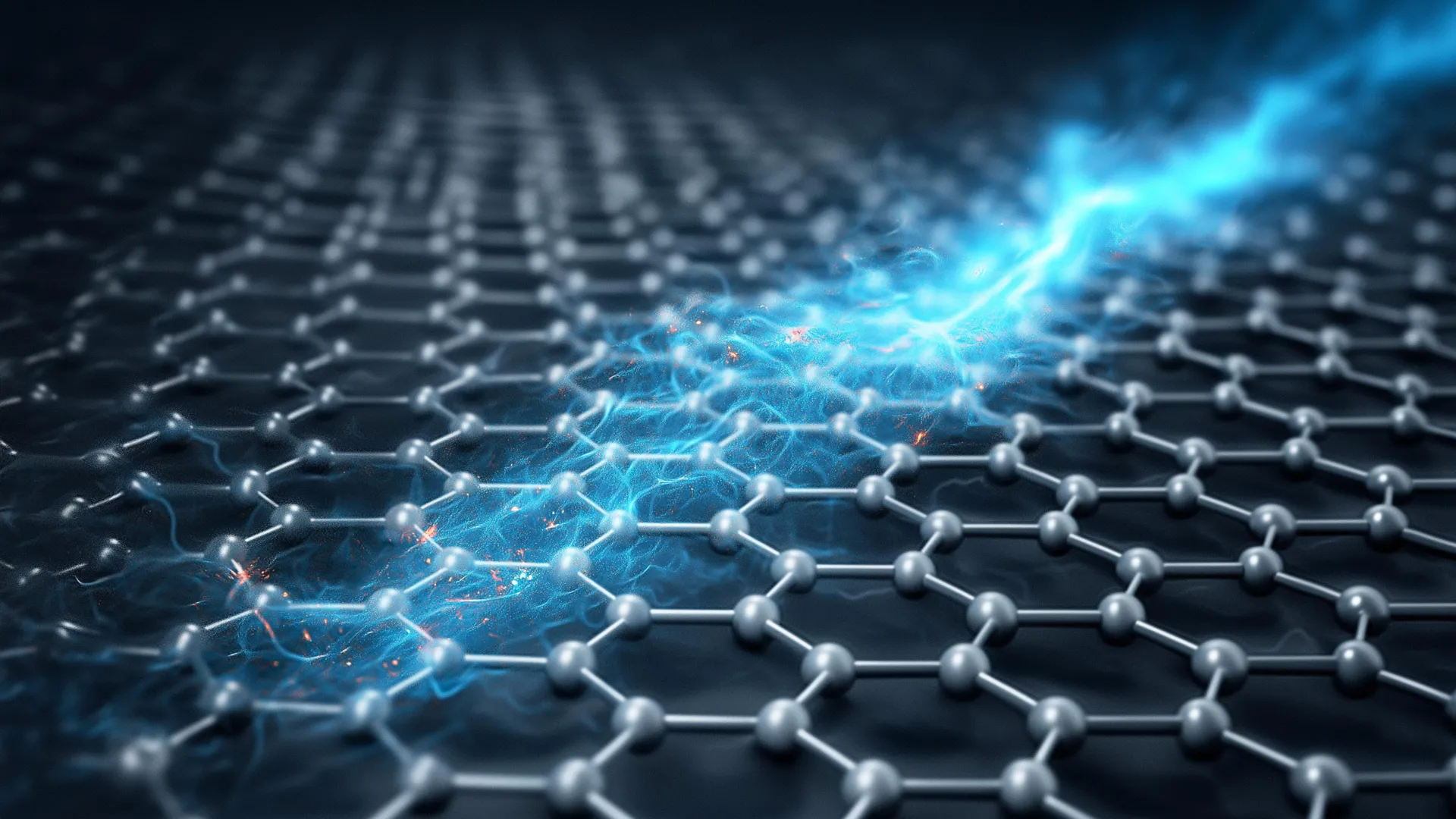
This pivotal research, published in the esteemed journal Nature Physics, provides the first direct experimental evidence of "Floquet effects" in graphene. This discovery, the culmination of years of scientific inquiry, definitively answers a long-standing question in condensed matter physics: whether Floquet engineering, a sophisticated technique that utilizes precisely timed pulses of light to dynamically sculpt the inherent properties of a material, can be effectively applied to metallic and semi-metallic quantum materials like graphene. The implications of this finding are nothing short of revolutionary, opening up entirely new avenues for manipulating matter at its most fundamental quantum level.
The scientific team employed a cutting-edge technique known as femtosecond momentum microscopy to meticulously probe these elusive quantum phenomena. This advanced method allows researchers to capture and analyze the incredibly rapid transformations in the electronic behavior of materials, essentially freezing moments in time to observe electron dynamics on attosecond timescales. In their experiments, the graphene samples were subjected to a series of rapid, high-intensity light pulses. Immediately following these excitations, a delayed probe pulse was used to meticulously track the response of the electrons within the graphene lattice. This intricate dance of light and electrons allowed the scientists to witness, in real-time, how the material’s electronic properties were being dynamically altered.
Dr. Marco Merboldt from the University of Göttingen, the lead author of the study, expressed profound excitement about the findings: "Our measurements clearly prove that ‘Floquet effects’ occur in the photoemission spectrum of graphene. This makes it clear that Floquet engineering actually works in these systems — and the potential of this discovery is huge." He further elaborated that these results unequivocally demonstrate the efficacy of Floquet engineering across a broad spectrum of materials, not just in graphene. This breakthrough brings scientists significantly closer to achieving a remarkable level of control, enabling them to precisely tailor the quantum characteristics of materials using laser pulses within incredibly short temporal intervals.
The ability to precisely tune the properties of materials with such exquisite control has profound implications for the development of future technologies. This research lays the foundational groundwork for the next generation of electronic devices, including superfast computers, ultra-sensitive sensor arrays, and novel data storage solutions. Professor Marcel Reutzel, who co-led the research project in Göttingen alongside Professor Stefan Mathias, highlighted the transformative potential: "Our results open up new ways of controlling electronic states in quantum materials with light. This could lead to technologies in which electrons are manipulated in a targeted and controlled manner."
Professor Reutzel further emphasized the particularly exciting aspect of this discovery: "What is particularly exciting is that this also enables us to investigate topological properties. These are special, very stable properties which have great potential for developing reliable quantum computers or new sensors for the future." Topological properties are a class of electronic characteristics that are exceptionally robust against perturbations and environmental noise. Their stability makes them ideal candidates for building fault-tolerant quantum computers, which are notoriously susceptible to errors. Furthermore, these properties could be harnessed to create highly sensitive and reliable sensors capable of detecting even the faintest signals, opening doors to applications in fields ranging from medical diagnostics to fundamental scientific research.
The research was generously supported by the German Research Foundation (DFG) through Göttingen University’s Collaborative Research Centre "Control of Energy Conversion at Atomic Scales." This funding was instrumental in enabling the sophisticated experimental setup and the collaborative environment necessary for such a groundbreaking discovery.
The implications of this study extend far beyond the immediate scientific community. The ability to engineer quantum materials with light on demand could revolutionize the way we design and build electronic devices. Imagine smartphones with screens that can change their properties to optimize viewing in any lighting condition, or computers that leverage quantum entanglement for processing power far exceeding anything currently imaginable. The development of new sensors could lead to breakthroughs in early disease detection, environmental monitoring, and even the search for extraterrestrial life.
The discovery of Floquet effects in graphene is not merely an academic curiosity; it represents a significant leap forward in our understanding and manipulation of matter at the quantum level. As scientists continue to explore the vast potential of Floquet engineering in graphene and other quantum materials, we can anticipate a future where our electronic devices are not only more powerful and efficient but also possess entirely new functionalities, fundamentally transforming our interaction with the digital world and unlocking unprecedented scientific capabilities. The "miracle material" graphene, it seems, still holds many more secrets, and its quantum power is poised to reshape the technological landscape for generations to come. The precision offered by Floquet engineering, when applied to the unique electronic structure of graphene, could unlock pathways to materials with tailor-made optical, electronic, and magnetic properties, pushing the boundaries of what is currently considered possible in materials science and nanotechnology. This research signifies a crucial step towards harnessing the fundamental laws of quantum mechanics for practical technological applications, heralding an era of unprecedented innovation.