Imroatul Nasiyah
Graphene, a material already hailed as a "miracle" for its extraordinary properties, continues to reveal its astonishing potential. This remarkable form of carbon, composed of a single layer of tightly bonded atoms, possesses an unparalleled thinness yet exhibits exceptional stability and conductivity. These attributes have propelled it to the forefront of scientific research, with ongoing explorations for applications in flexible electronic displays, ultra-sensitive sensors, high-capacity batteries, and next-generation solar cells. However, a recent breakthrough study, spearheaded by the University of Göttingen in collaboration with research teams from Braunschweig, Bremen, and Fribourg, has pushed the boundaries of graphene’s perceived capabilities, revealing a hidden quantum power that could fundamentally reshape the landscape of future electronics and digital content.
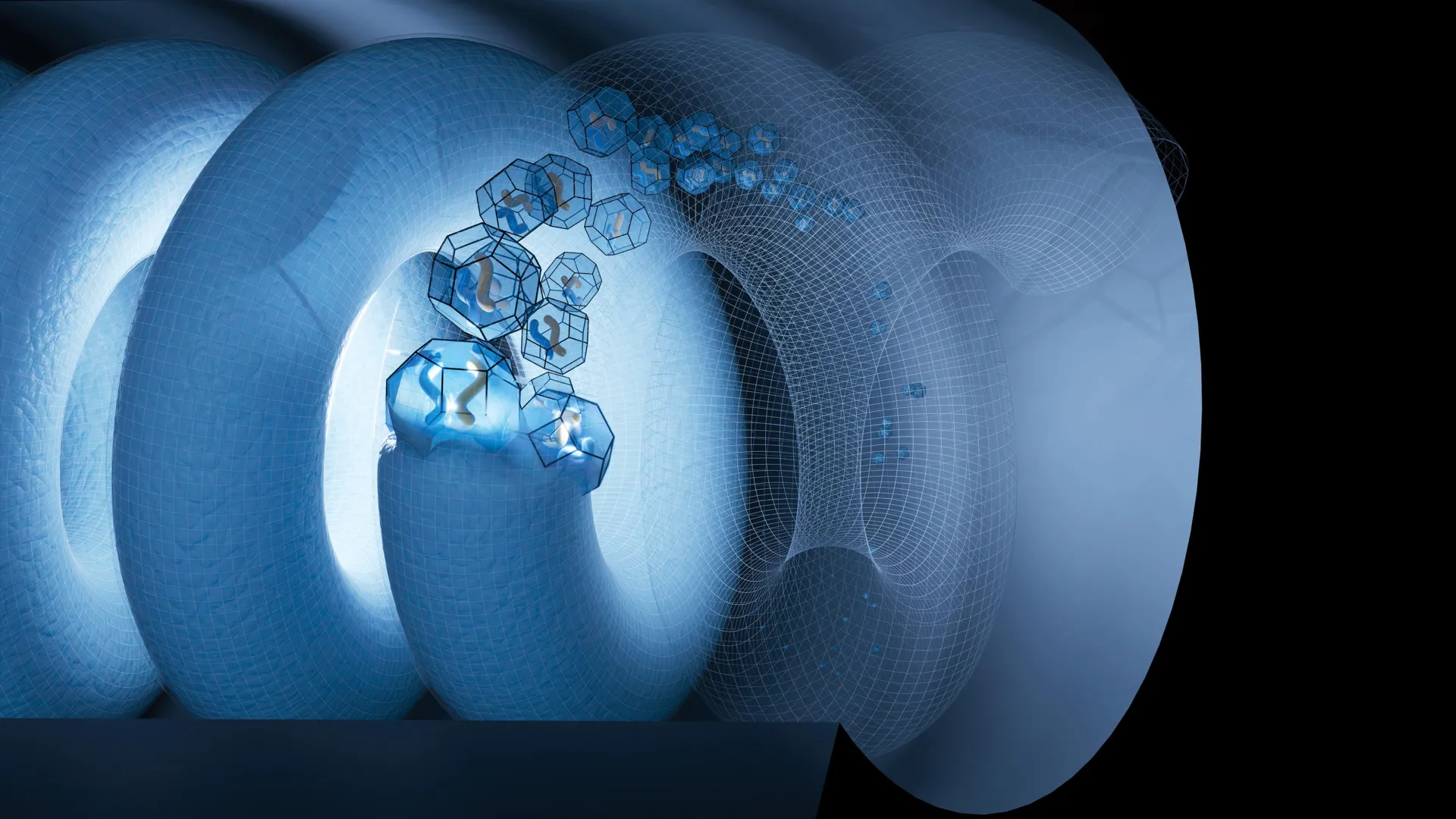
The core of this revelation lies in the direct observation of "Floquet effects" within graphene. This landmark finding, published in the prestigious journal Nature Physics, definitively answers a long-standing scientific question: whether Floquet engineering – a sophisticated technique that employs precisely timed light pulses to dynamically alter a material’s inherent properties – can be effectively applied to metallic and semi-metallic quantum materials like graphene. The implications of this confirmation are vast, opening up entirely new avenues for material design and technological innovation.
To achieve this significant discovery, the research team employed a cutting-edge technique known as femtosecond momentum microscopy. This advanced method allows scientists to capture and analyze extremely rapid changes in electronic behavior at the atomic level, essentially providing a high-speed camera for the quantum world. In their experiments, the graphene samples were subjected to intense, ultrashort bursts of light. Immediately following these light pulses, a second, delayed pulse was used to probe the graphene, meticulously tracking the subsequent responses of its electrons over incredibly short timescales. This meticulous approach enabled the researchers to witness the dynamic interplay between light and matter in unprecedented detail.
Dr. Marco Merboldt from the University of Göttingen, the study’s lead author, articulated the significance of their findings. "Our measurements clearly prove that ‘Floquet effects’ occur in the photoemission spectrum of graphene," he stated. "This makes it clear that Floquet engineering actually works in these systems – and the potential of this discovery is huge." The clarity of their experimental results leaves no room for doubt: Floquet engineering is not only feasible but demonstrably effective in graphene. This success broadens the scope of materials amenable to this light-driven manipulation, bringing scientists significantly closer to the ability to precisely sculpt quantum materials with tailored characteristics, all through the controlled application of laser pulses within infinitesimal timeframes.
The ability to tune materials with such exquisite precision holds the key to unlocking a new era of advanced technologies. Professor Marcel Reutzel, who co-led the project in Göttingen alongside Professor Stefan Mathias, elaborated on the transformative potential. "Our results open up new ways of controlling electronic states in quantum materials with light," he explained. "This could lead to technologies in which electrons are manipulated in a targeted and controlled manner." Imagine electronic devices that can dynamically reconfigure their electrical properties on demand, or sensors that can adapt their sensitivity based on environmental conditions, all orchestrated by light. This level of control was once the realm of theoretical speculation; now, it is rapidly becoming a tangible reality.
What further elevates the excitement surrounding this research is its profound connection to the investigation of topological properties. Professor Reutzel highlighted this crucial aspect: "What is particularly exciting is that this also enables us to investigate topological properties. These are special, very stable properties which have great potential for developing reliable quantum computers or new sensors for the future." Topological properties in materials are inherently robust, meaning they are resistant to disturbances and imperfections. This inherent stability is precisely what makes them so attractive for the development of quantum computers, where maintaining delicate quantum states is paramount for accurate computation. Furthermore, these properties could pave the way for novel sensors with unprecedented sensitivity and reliability, capable of detecting subtle changes in the environment with remarkable precision.
The collaborative nature of this research, supported by the German Research Foundation (DFG) through Göttingen University’s Collaborative Research Centre "Control of Energy Conversion at Atomic Scales," underscores the global effort to push the frontiers of materials science. The implications of this discovery extend beyond fundamental scientific understanding; they represent a tangible step towards realizing technologies that were once confined to science fiction.
The ability to dynamically control the electronic behavior of graphene with light opens a Pandora’s Box of possibilities for future electronics. Consider the potential for ultra-fast processors where information is not just processed but also dynamically reconfigured by light pulses, leading to computational speeds and efficiencies currently unimaginable. Flexible electronics could evolve beyond mere bendability to become dynamically responsive, adapting their conductivity and functionality in real-time. This could revolutionize everything from wearable technology, where devices seamlessly integrate with our bodies and adapt to our needs, to advanced medical diagnostics, where sensors can offer real-time, highly personalized health monitoring.
Beyond hardware, the impact on digital content and information processing could be equally profound. The ability to manipulate quantum states with light suggests new paradigms for data storage and retrieval. Imagine information encoded not just in binary bits but in the complex quantum states of materials, allowing for exponentially higher data densities and novel forms of encryption. The very nature of digital interactions could be transformed, with interfaces that respond not just to touch but to subtler cues, mediated by light-controlled quantum phenomena.
The concept of Floquet engineering, now proven in graphene, offers a pathway to creating "designer materials" with on-demand functionalities. This means that a single material could potentially perform multiple roles, switching between them as needed, dictated by the precise application of light. This level of adaptability and versatility could lead to a significant reduction in the complexity and resource requirements for electronic devices, promoting a more sustainable and efficient technological future.
The journey from observing fundamental quantum effects to widespread technological implementation is often a long one, but the confirmation of Floquet effects in graphene represents a critical inflection point. It validates a theoretical framework and provides experimental evidence that can now guide further research and development. The interdisciplinary nature of this work, bringing together physicists, materials scientists, and engineers, is crucial for translating these fundamental discoveries into practical applications.
In conclusion, the research from the University of Göttingen and its collaborators marks a significant leap forward in our understanding and manipulation of graphene. By unlocking its hidden quantum power through Floquet engineering, scientists have not only answered a fundamental scientific question but have also laid the groundwork for a future where materials are dynamically controlled by light, ushering in an era of unprecedented innovation in electronics, computing, sensing, and beyond. The "miracle material" has just revealed another, perhaps its most potent, superpower.