Imroatul Nasiyah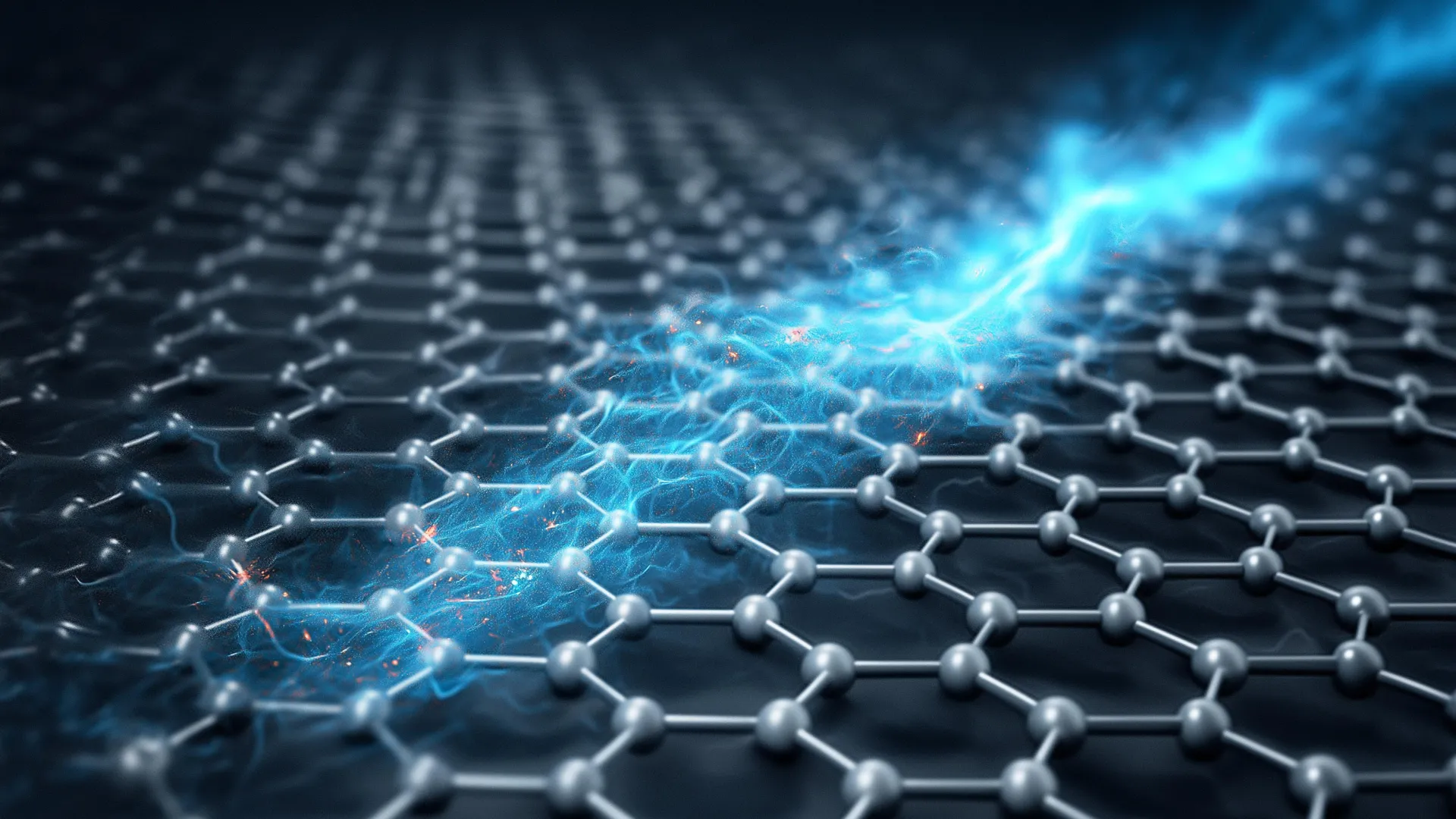
Graphene, a marvel of atomic engineering, is composed of a single, exquisitely thin layer of carbon atoms arranged in a hexagonal lattice. This seemingly delicate structure belies an astonishing robustness and exceptional electrical conductivity, earning it the moniker "miracle material." Its current applications are already impressive, ranging from the development of flexible electronic displays and hyper-sensitive sensors to the creation of more efficient batteries and next-generation solar cells. However, this latest discovery suggests that graphene’s potential extends far beyond these already revolutionary applications, delving into the realm of quantum mechanics and offering a new paradigm for technological innovation.
The experimental investigation, spearheaded by the University of Göttingen team, employed a state-of-the-art technique known as femtosecond momentum microscopy. This advanced method allows scientists to capture and analyze incredibly rapid changes in electron behavior, offering a fleeting glimpse into the dynamic quantum world. The researchers meticulously illuminated samples of graphene with ultrafast bursts of light, essentially "exciting" the electrons within the material. Immediately following these light pulses, a secondary, delayed pulse was used to probe the resulting electronic states. This intricate dance of light and electrons enabled the team to track, with astonishing temporal precision, how the electrons rearranged themselves in response to the applied electromagnetic field.
Dr. Marco Merboldt, the lead author of the study and a researcher at the University of Göttingen, articulated the significance of their findings: "Our measurements clearly prove that ‘Floquet effects’ occur in the photoemission spectrum of graphene. This makes it clear that Floquet engineering actually works in these systems — and the potential of this discovery is huge." The "Floquet effects" observed are a direct consequence of the material being subjected to a periodic driving force, in this case, the oscillating electric field of the light pulses. This driving force effectively modifies the material’s electronic band structure, creating what are known as "Floquet states." These engineered states can possess novel and desirable properties not found in the material’s equilibrium state. The success of Floquet engineering in graphene, a material with a unique electronic structure, implies that this powerful manipulation technique is applicable to a much broader spectrum of quantum materials. This advancement brings scientists considerably closer to the ambitious goal of precisely tailoring quantum materials with specific, desired characteristics using the controlled application of laser pulses within incredibly short timeframes.
The ability to precisely tune the electronic properties of materials using light opens up transformative avenues for future technologies. Professor Marcel Reutzel, who co-led the groundbreaking project at Göttingen alongside Professor Stefan Mathias, emphasized the far-reaching implications: "Our results open up new ways of controlling electronic states in quantum materials with light. This could lead to technologies in which electrons are manipulated in a targeted and controlled manner." This level of control is crucial for overcoming the limitations of current electronic devices and for developing entirely new forms of computation and sensing. Imagine electronic components that can dynamically reconfigure their properties on demand, or sensors that can detect minute changes with unprecedented sensitivity, all controlled by precisely modulated light.
Beyond mere manipulation, the research highlights a particularly exciting aspect: the ability to investigate and harness topological properties. Topological properties are a class of extremely robust and stable characteristics of materials that are intrinsically linked to their fundamental quantum mechanical structure. These properties are inherently resistant to environmental noise and imperfections, making them exceptionally promising for the development of reliable quantum computers. Quantum computers, which leverage the principles of quantum mechanics like superposition and entanglement, have the potential to solve problems that are currently intractable for even the most powerful supercomputers. The stability offered by topological properties could be a key ingredient in building robust and fault-tolerant quantum computing architectures. Furthermore, these unique topological characteristics could pave the way for the creation of novel sensors with unparalleled precision and reliability, capable of detecting subtle physical phenomena with applications spanning from fundamental scientific research to advanced medical diagnostics and industrial monitoring.
The collaborative nature of this research, drawing expertise from multiple leading German institutions, underscores the complexity and interdisciplinary nature of modern scientific endeavors. The project received crucial support from the German Research Foundation (DFG) through Göttingen University’s Collaborative Research Centre "Control of Energy Conversion at Atomic Scales." This funding mechanism fosters environments where fundamental questions about energy, matter, and their interactions at the atomic and quantum levels can be explored in depth, driving innovation and pushing the boundaries of scientific understanding.
The implications of this discovery are profound and far-reaching. The ability to engineer quantum materials with light pulses offers a new toolkit for scientists and engineers, enabling them to design and create materials with bespoke electronic and quantum properties. This could accelerate the development of a new generation of ultra-fast, low-power electronic devices, potentially revolutionizing everything from personal computing and mobile technology to advanced artificial intelligence systems. Furthermore, the insights gained into the manipulation of topological properties could be instrumental in realizing the long-held dream of practical quantum computing, unlocking computational power that could solve some of humanity’s most pressing challenges, from drug discovery and materials science to climate modeling and financial forecasting. The content creation landscape could also be profoundly impacted, with the possibility of entirely new forms of interactive and responsive digital experiences enabled by materials that can dynamically alter their optical and electronic properties. This discovery is not just a scientific curiosity; it is a significant step towards a future where the fundamental forces of quantum mechanics are harnessed and controlled to build the technologies of tomorrow.