Imroatul Nasiyah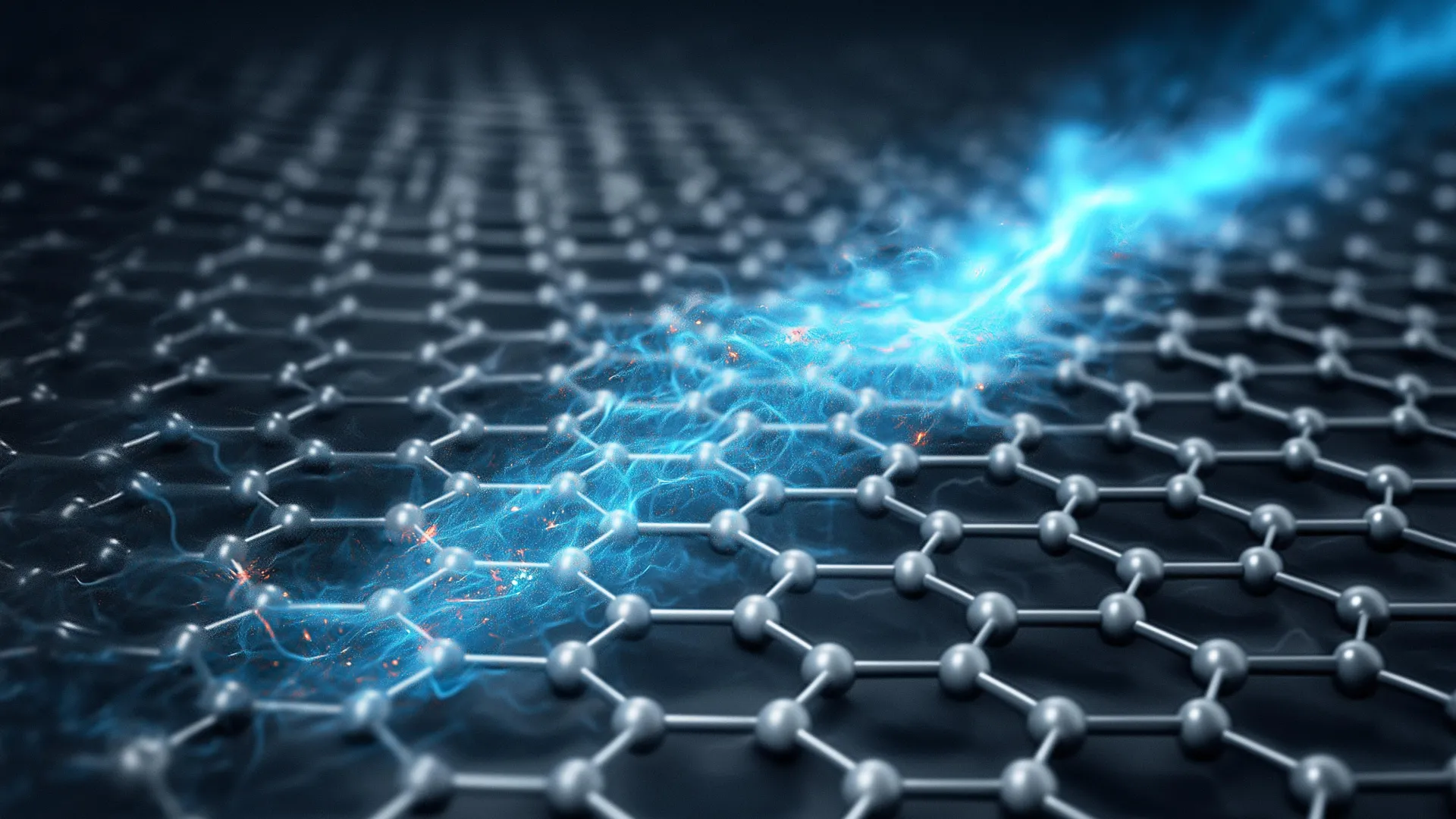
A pioneering study, spearheaded by researchers at the University of Göttingen in collaboration with esteemed teams from Braunschweig, Bremen, and Fribourg, has provided the first direct observational evidence of "Floquet effects" within graphene. This landmark discovery not only resolves a long-standing scientific debate but also validates the potential of Floquet engineering – a sophisticated technique that utilizes precisely timed light pulses to dynamically alter a material’s inherent properties – to be effectively applied to metallic and semi-metallic quantum materials, with graphene serving as a prime example. The profound implications of this research are detailed in a recent publication in the prestigious scientific journal, Nature Physics.
The experimental validation of Floquet effects in graphene was achieved through the ingenious application of femtosecond momentum microscopy, an advanced technique that grants scientists the ability to capture and analyze electronic behavior at extraordinarily rapid timescales, on the order of femtoseconds (one quadrillionth of a second). In this groundbreaking experiment, the graphene samples were subjected to intense, ultrashort bursts of laser light. Immediately following these light pulses, a secondary, delayed probe pulse was employed to meticulously track and observe the intricate dynamics of the electrons within the graphene lattice. This precise timing allowed researchers to witness, in real-time, how the electronic states were being perturbed and modified by the incident light.
Dr. Marco Merboldt, the lead author of the study from the University of Göttingen, expressed his profound excitement about the findings. "Our measurements provide irrefutable proof that ‘Floquet effects’ are indeed manifesting within the photoemission spectrum of graphene," he stated. "This unequivocally demonstrates that Floquet engineering is not just a theoretical possibility but a tangible reality in these quantum systems. The potential ramifications of this discovery are truly immense." The research team’s meticulously gathered data strongly indicates that Floquet engineering is a versatile and effective tool applicable across a broad spectrum of quantum materials. This breakthrough brings the scientific community significantly closer to achieving the ambitious goal of precisely tailoring the quantum characteristics of materials using the controlled application of laser pulses within incredibly short temporal windows.
The ability to meticulously tune materials with such unprecedented precision opens up a vast landscape of possibilities for the development of next-generation electronics, advanced computing architectures, and highly sophisticated sensor technologies. Professor Marcel Reutzel, who co-led the research project at the University of Göttingen alongside Professor Stefan Mathias, elaborated on the transformative potential of their work. "Our findings herald a new era in controlling electronic states within quantum materials through the direct manipulation of light," he explained. "This paves the way for the creation of entirely new technological paradigms where electrons can be precisely orchestrated and guided in a targeted and controlled manner."
Professor Reutzel further highlighted a particularly captivating aspect of their discovery: its capacity to unlock new avenues for investigating topological properties. These are intrinsically robust and exceptionally stable quantum characteristics that hold immense promise for the realization of fault-tolerant quantum computers, which are crucial for tackling computationally intractable problems, and for the development of novel, highly sensitive sensors capable of detecting minute changes in their environment. The inherent stability of topological states makes them ideal candidates for quantum information processing, offering a significant advantage over more fragile quantum systems.
This groundbreaking research was generously supported by the German Research Foundation (DFG) through the Collaborative Research Centre "Control of Energy Conversion at Atomic Scales" at Göttingen University, underscoring the collaborative and resource-intensive nature of pushing the boundaries of scientific understanding. The successful demonstration of Floquet effects in graphene signifies a pivotal moment in quantum materials science, moving from theoretical concepts to practical realization. It suggests a future where materials are not merely discovered and utilized for their inherent properties but are actively engineered and dynamically reshaped at the quantum level using light as a precise sculpting tool.
The implications for future electronics are far-reaching. Imagine processors that can dynamically reconfigure their electronic pathways on demand, leading to unprecedented computational flexibility and efficiency. Consider sensors that can be fine-tuned for specific detection tasks with remarkable sensitivity, revolutionizing fields from medical diagnostics to environmental monitoring. The ability to manipulate quantum states with light could also lead to entirely new forms of data storage and transmission, potentially increasing speed and capacity exponentially.
Beyond hardware, the impact on content creation and consumption could also be profound. The ability to control material properties at such a granular level might enable the development of displays with unparalleled visual fidelity, responsive to user interaction in ways we can only begin to imagine. Furthermore, the deeper understanding of quantum phenomena unlocked by this research could lead to novel forms of digital content that are not just visually or audibly engaging but also interact with the underlying physics of the devices they are displayed on, creating truly immersive and dynamic experiences.
The journey from observing fundamental quantum effects to widespread technological application is often long and complex. However, the direct observation of Floquet effects in graphene represents a significant leap forward, transforming Floquet engineering from a promising theoretical framework into a practical tool for manipulating quantum matter. As scientists continue to explore the full potential of this light-matter interaction, the "miracle material" graphene may yet reveal even more of its hidden quantum power, ushering in an era of electronic innovation and content creation that is currently the stuff of science fiction. The precise control over quantum states offered by Floquet engineering, coupled with graphene’s extraordinary conductivity and stability, presents a formidable combination for building the technologies of tomorrow. This research not only deepens our understanding of fundamental physics but also provides a tangible pathway toward realizing the next generation of electronic devices and unlocking novel forms of digital interaction.