anjir abdul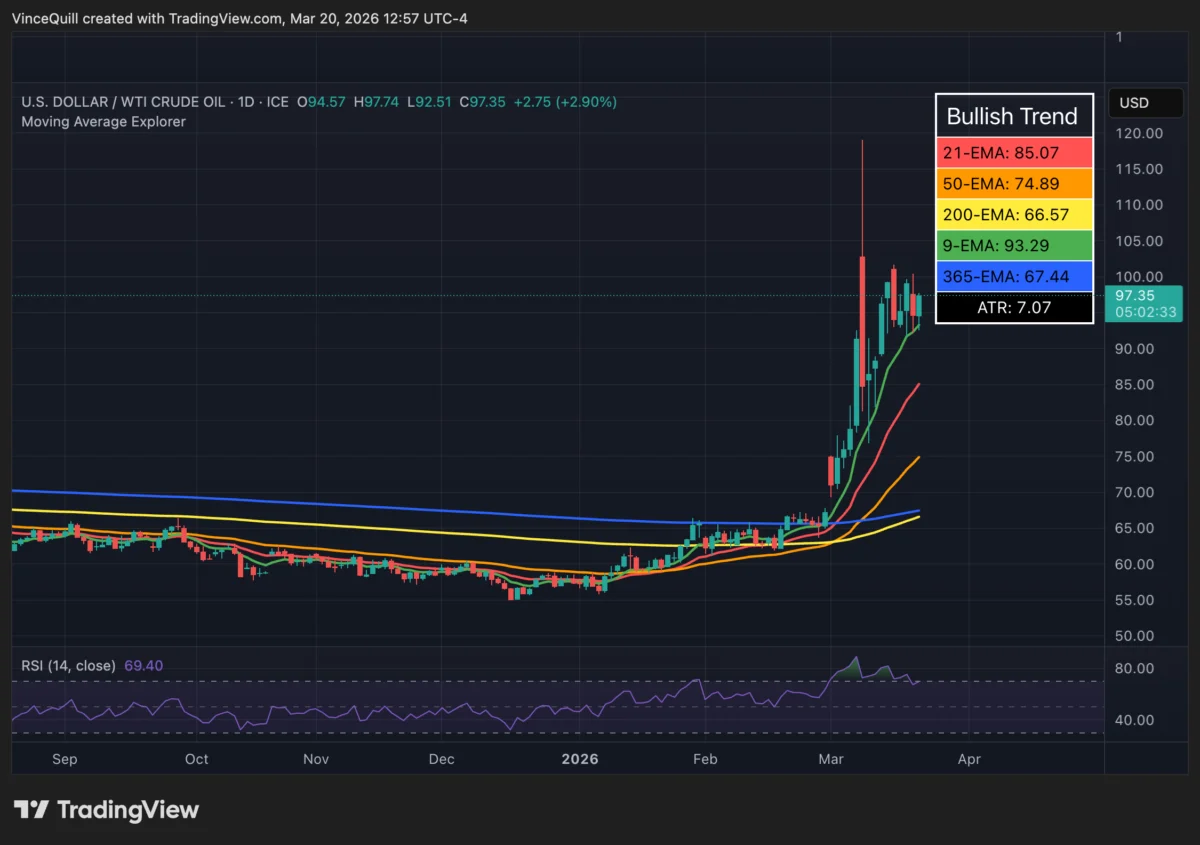
This perception, while prevalent on Wall Street and historically used to describe instances where former US President Donald Trump ultimately opted for de-escalation in geopolitical confrontations, is now being viewed as a dangerous misjudgment of the current landscape. Puckrin emphatically warned that "Trump is not in sole control of the situation," underscoring the complex, multi-faceted nature of the Middle East conflict that transcends any single leader’s influence. He stressed that there are no easy or quick exits from the current war, suggesting that market participants banking on a swift resolution and a return to normalcy are likely to face a "rude awakening."
The core of Puckrin’s concern revolves around the critical role of oil in the global economy. Should crude oil prices continue their upward trajectory and sustain levels above $100 per barrel, the economic consequences could be severe and far-reaching. Such a sustained price hike, he predicts, would inevitably lead to a deceleration in global economic growth. Simultaneously, Personal Consumption Expenditures (PCE) inflation, a key metric closely watched by the Federal Reserve, would likely surge by as much as 1 percentage point.
This combination of slowing growth and rising inflation creates a highly undesirable economic scenario known as stagflation. Stagflation is characterized by high inflation rates, stagnant economic growth, and elevated unemployment. It represents a particularly "dreaded" situation for policymakers and citizens alike, as traditional monetary tools designed to combat either inflation or unemployment often exacerbate the other. For instance, raising interest rates to curb inflation can further stifle economic growth and employment, while stimulating growth through lower rates risks fueling inflation.

Puckrin highlighted the historical precedent of the 1970s, a decade infamous for its prolonged period of stagflation. During that era, the S&P 500, a benchmark for the US stock market, saw virtually no real-term gains for an entire decade once stagflation took root. This historical parallel serves as a stark warning. "If oil stays above $100 throughout Q2 and into Q3, stagflation becomes a real problem for the Fed," Puckrin stated, indicating a looming crisis for the US central bank.
The current Middle East conflict poses a direct threat to global oil supply, primarily through the Strait of Hormuz. This narrow waterway is an absolutely vital chokepoint, through which an estimated 20% of the world’s total oil supply passes daily. Any prolonged disruption or closure of the Strait of Hormuz would have catastrophic economic effects, far surpassing those seen from temporary price spikes. Puckrin warned that even if the Strait were to reopen immediately, "the disruption to the Gulf’s oil-producing infrastructure will take months to rebuild." This implies that the impact is not just about transit but also about the physical capacity to produce and process oil, which can be severely damaged by conflict.
Energy is fundamentally a critical input for nearly all economic activities, from manufacturing and transportation to agriculture and services. A significant and sustained increase in energy prices, therefore, inevitably translates into higher costs for virtually all other goods and services, acting as a tax on consumers and businesses alike. This broad-based price increase is precisely what fuels the inflation component of stagflation.
The implications for monetary policy, particularly for the Federal Reserve, are profound. Elevated inflation, especially when coupled with weakening economic growth, means that the eagerly anticipated interest rate cuts – which are typically stimulative to risk assets like cryptocurrencies and equities – will likely not materialize. Instead, to combat persistent inflation, the Federal Reserve might be compelled to maintain higher interest rates for longer, or even consider raising rates further. Such actions would effectively quash any hopes of easing liquidity conditions in the financial system, thereby dampening prospects for a robust crypto market rally and potentially precipitating broader market corrections.

Indeed, the Federal Open Market Committee (FOMC), the body responsible for setting interest rate policy in the United States, chose to hold interest rates steady in March, keeping the Federal Funds rate within a target range of 3.5% to 3.75%. This decision reflected a cautious stance amidst geopolitical uncertainties. However, the outlook has shifted considerably. Rate cut odds for the upcoming April FOMC meeting have all but vanished. Furthermore, according to the Chicago Mercantile Exchange’s (CME) FedWatch tool, there’s a small but growing probability – around 12% – that the FOMC might actually raise rates next month, a stark reversal from expectations earlier in the year. This subtle shift in probability underscores the market’s increasing apprehension regarding inflationary pressures stemming from the Middle East.
Federal Reserve Chairman Jerome Powell himself acknowledged the gravity of the situation. At a recent press conference, he stated, "The implications of events in the Middle East for the US economy are uncertain in the near term. Higher energy prices will push up overall inflation." This direct admission from the Fed’s top official confirms that the conflict is indeed clouding the central bank’s economic forecasts and complicating its policy decisions. However, Powell also clarified that it is still "too soon" to accurately gauge the full scope and severity of the potential economic effects stemming from the war and the ongoing disruption to global energy infrastructure. This cautious assessment highlights the inherent unpredictability of the situation and the data-dependent approach the Fed must maintain.
The 1970s stagflationary period, triggered in part by the 1973 OPEC oil embargo and the 1979 Iranian Revolution, saw crude oil prices quadruple, leading to significant economic turmoil across industrialized nations. Unemployment soared, and inflation became endemic, creating a severe challenge for central banks worldwide. The then-Federal Reserve Chairman, Paul Volcker, famously tackled this by aggressively raising interest rates to unprecedented levels, inducing a recession but ultimately breaking the back of inflation. This historical context illustrates the painful trade-offs and difficult choices that policymakers might face if a similar stagflationary environment takes hold.
For investors, the prospect of stagflation is particularly concerning. Beyond the S&P 500’s decade-long stagnation in real terms during the 1970s, other asset classes also suffer. Bonds, typically seen as safe havens, can be eroded by high inflation. While commodities like gold sometimes perform well as inflation hedges, the overall environment of low growth and high uncertainty is generally detrimental to investment returns. For the burgeoning crypto market, which has often thrived on abundant liquidity and low interest rates, a tightening monetary policy driven by stagflationary fears would represent a significant headwind, likely prolonging any "crypto winter" or preventing a sustained bull run.

The current geopolitical climate, marked by a complex and evolving conflict in a region critical to global energy supplies, demands a reassessment of market assumptions. The "TACO" trade, rooted in past patterns, may prove ill-suited to the present realities, where the confluence of regional instability, vital energy infrastructure, and global economic dependencies creates a unique and potentially dangerous cocktail. As Nic Puckrin and Jerome Powell suggest, the economic fallout from the Middle East conflict, particularly its impact on oil prices, presents a serious risk of stagflation, a scenario that could reshape global economic forecasts and challenge central banks in ways not seen in decades. The world watches anxiously as events unfold, understanding that the stakes for economic stability are exceptionally high.