anjir abdul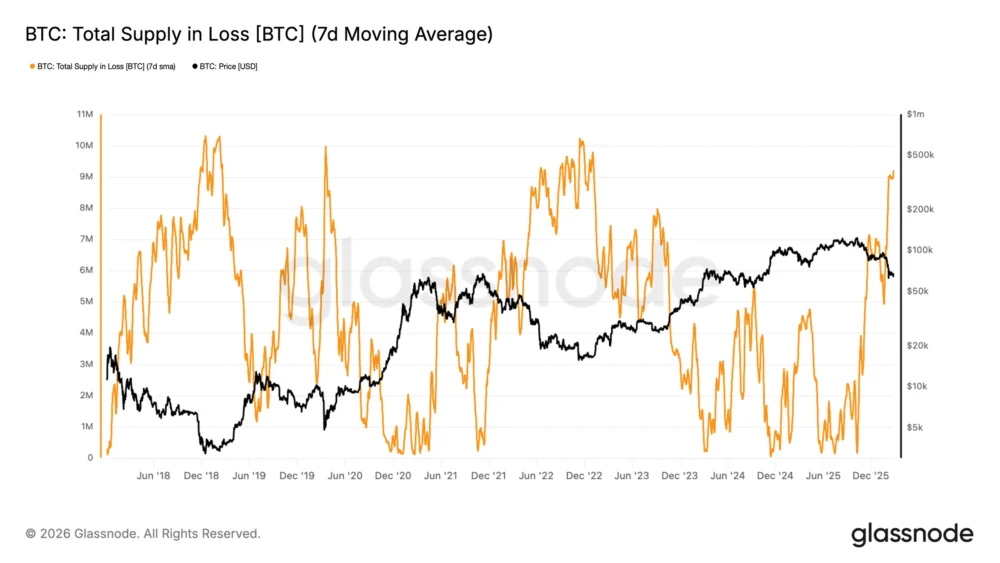
Rising tensions in the Middle East are pushing global investors toward traditional safe-haven assets, with a significant surge in gold demand as capital increasingly flees more volatile equities and nascent crypto markets. This re-evaluation of risk comes amidst a backdrop of heightened geopolitical uncertainty, prompting a fundamental shift in portfolio allocations across various investor segments.
Escalating Geopolitical Risks Fuel Investor Jitters
The primary catalyst for this investor exodus from risk assets is the discernible escalation of tensions in the Middle East, particularly concerning Iran. On Wednesday, reports from Middle East Eye revealed a dramatic increase in Iran’s crude oil exports. Shipments from Kharg Island, a crucial oil terminal, soared to approximately 20.1 million barrels between February 15 and February 20. This figure represents roughly three times the export level recorded in January, indicating a proactive move by Iran. Analysts suggest this surge is a preemptive supply release, aimed at hedging against potential disruptions to its oil infrastructure or shipping routes should geopolitical friction with the United States intensify.
Simultaneously, increasingly hawkish rhetoric from the United States regarding Iran’s nuclear program has fueled expectations of a direct confrontation. The ongoing impasse over the nuclear deal, coupled with regional proxy conflicts and maritime incidents, has created a volatile environment where miscalculation could lead to significant escalation. Bitunix analysts, monitoring these developments closely, articulated a stark projection: "In the event of a direct US–Iran military conflict, gold could rise by roughly 15% within two weeks on safe-haven demand, targeting a range of $5,500-$5,800 per ounce." This forecast underscores gold’s enduring appeal as a crisis hedge, a role it has historically played during periods of global instability and economic uncertainty. The potential for disruption to global oil supplies and the broader economic fallout from such a conflict further cement gold’s position as a preferred asset.
Gold’s Enduring Appeal as a Safe Haven

Gold’s status as a premier safe-haven asset is deeply rooted in its history as a store of value, its tangibility, and its often inverse correlation with traditional financial markets during periods of stress. Unlike paper currencies or digital assets, gold carries no counterparty risk and has universally recognized value, making it a reliable refuge when trust in financial systems or government stability wanes. The current geopolitical climate, characterized by the potential for military conflict, trade disruptions, and inflationary pressures, creates a fertile ground for gold’s performance. Investors seek assets that can preserve capital and even appreciate when other markets falter, and gold fits this criterion perfectly.
The analyst prediction of gold potentially reaching $5,500-$5,800 per ounce in a conflict scenario is not without precedent. Historically, gold prices have surged during major geopolitical crises, such as the 1973 oil crisis, the Gulf War in the early 1990s, and the aftermath of the 9/11 attacks. These events demonstrated gold’s capacity to act as an immediate flight-to-safety asset, attracting capital from equity markets and other risk-on investments. Beyond immediate conflict, gold also serves as an inflation hedge. Should escalating tensions lead to supply chain disruptions, higher energy prices, and increased government spending, inflationary pressures would likely mount, further bolstering gold’s appeal.
Crypto Markets Grapple with Macro Headwinds
While gold shines amidst the storm, crypto markets find themselves navigating complex macro forces, with Bitcoin (BTC) in particular showing sensitivity to the prevailing risk-off sentiment. Bitunix analysts noted that safe-haven flows into the US dollar, often seen during global crises, could exert downward pressure on Bitcoin prices, potentially pushing them toward the $64,000-$65,000 zone. This scenario highlights Bitcoin’s evolving but still uncertain role as a safe haven. While some proponents tout BTC as "digital gold," its relatively short history and higher volatility mean it often behaves more like a growth asset, susceptible to broader market liquidity conditions and risk appetite. When investors seek absolute safety, the traditional choice of the US dollar often takes precedence, drawing liquidity away from riskier assets, including cryptocurrencies.
However, the Bitunix analysts also posited an alternative scenario: if inflation concerns were to dominate over dollar strength, capital could rotate into alternative hedges, potentially pushing BTC toward $69,000 liquidity levels. This suggests that Bitcoin’s narrative as an inflation hedge could gain traction if the economic fallout from geopolitical tensions primarily manifests as persistent and elevated inflation, eroding the purchasing power of fiat currencies. In such a scenario, Bitcoin’s fixed supply and decentralized nature might appeal to investors seeking a hedge against currency debasement, mirroring some of gold’s fundamental value propositions. The debate over Bitcoin’s true nature—whether it’s a risk asset correlated with tech stocks or a nascent inflation hedge akin to gold—remains a central theme in crypto market analysis, especially during periods of macro uncertainty.
Uncertainty Drives Flight to Safety: The Indian Example

The tangible rotation into safe-haven assets is already markedly visible in investor behavior, particularly in significant global markets like India. Data shared by The Kobeissi Letter on Thursday offered compelling evidence of this shift, showing Indian investors rapidly reallocating capital into gold. Gold ETF inflows in India have climbed to approximately 250 billion rupees (around $2.7 billion), reaching an all-time high. Crucially, these gold ETF inflows have surpassed equity mutual fund inflows for the first time, signaling a profound change in investor preference.
This surge in gold product demand comes amidst a noticeable decline in equity allocations. Gold ETF demand has skyrocketed by more than 900% since July, while stock-fund inflows simultaneously dropped by roughly 170 billion rupees (around $1.9 billion), according to The Kobeissi Letter. India’s affinity for gold is deeply embedded in its cultural, religious, and economic fabric. As the world’s second-largest gold consumer and one of its biggest importers, India’s shift toward gold ETFs marks a fundamental change in how its investors are allocating their capital. This trend is significant not only for the Indian market but also provides a strong indicator of global investor sentiment. Indian households and institutions traditionally view gold as a fundamental store of wealth, a hedge against inflation, and a crucial asset during economic or political instability. The current data strongly suggests that this traditional wisdom is reasserting itself in response to the escalating Middle East tensions.
Globally, gold is currently trading at about $5,172 per ounce, experiencing a slight dip on the day. However, looking at the broader trend over the past week, prices have risen by roughly $219, representing a robust 4.4% increase. This short-term appreciation underscores the immediate impact of geopolitical anxieties on the precious metal’s valuation, as investors rush to secure positions in what they perceive as a reliable bastion of value.
Weak Demand Keeps Bitcoin Range-Bound Amidst ETF Volatility
While gold is effectively pulling in defensive flows, on-chain data indicates that conviction in the crypto market, particularly for Bitcoin, remains limited. A recent report by Glassnode highlighted that Bitcoin continues to trade within a relatively narrow range of $60,000 and $70,000. This sideways movement is attributed to weak whale accumulation, suggesting that large institutional and individual holders are not aggressively buying at current levels. Furthermore, persistent outflows from spot Bitcoin ETFs had characterized the market in preceding weeks, indicating a net selling pressure from these institutional vehicles.
The Glassnode report also revealed a concerning metric: nearly 9.2 million BTC are currently held at a loss. This figure suggests a significant portion of the market is underwater, potentially leading to selling pressure if prices rally slightly. Adding to this, the 90-day realized profit-to-loss ratio has fallen below 1, a critical indicator that signals more holders are selling their Bitcoin at a loss than are taking profits. This sentiment suggests a lack of strong directional conviction and a tendency for investors to cut losses, rather than hold for further gains, during this period of uncertainty.

Despite these underlying concerns, the US-listed spot Bitcoin ETFs did see a significant rebound on Wednesday, attracting about $506.5 million in daily inflows. This marked the largest single-day inflow since early February and put the funds on track for their first weekly inflow after five consecutive weeks of approximately $3.8 billion in outflows. This rebound, coinciding with Bitcoin climbing back above $68,000, indicates that institutional interest can quickly return, but it also highlights the volatility and rapid shifts in sentiment that characterize the nascent ETF market. The ebb and flow of these institutional funds have become a major driver of short-term Bitcoin price action, reflecting a continuous re-evaluation of risk and reward in the broader financial landscape.
The Road Ahead: Continued Uncertainty and Divergent Paths
The ongoing geopolitical tensions in the Middle East serve as a potent reminder of how non-economic factors can dramatically influence global financial markets. The divergent performance of gold and Bitcoin underscores the differing roles these assets play in investor portfolios during times of crisis. Gold, with its established history as a safe haven, continues to attract substantial capital flows, particularly from traditional investors seeking stability. Its recent price appreciation and the surge in ETF demand in markets like India are clear indicators of this enduring appeal.
Bitcoin, while aspiring to be "digital gold," is still navigating its identity amidst complex macro forces. Its performance is influenced by a delicate balance between its perceived role as an inflation hedge, its correlation with risk-on assets, and the volatile flows from institutional products like spot ETFs. The coming weeks and months will likely see continued market volatility as investors closely monitor developments in the Middle East, central bank policies, and inflation data. The flight to safety, prominently exemplified by the rush into gold, reflects a fundamental human response to uncertainty, a principle that continues to shape global capital allocation in an increasingly interconnected and unpredictable world.