Faris Adani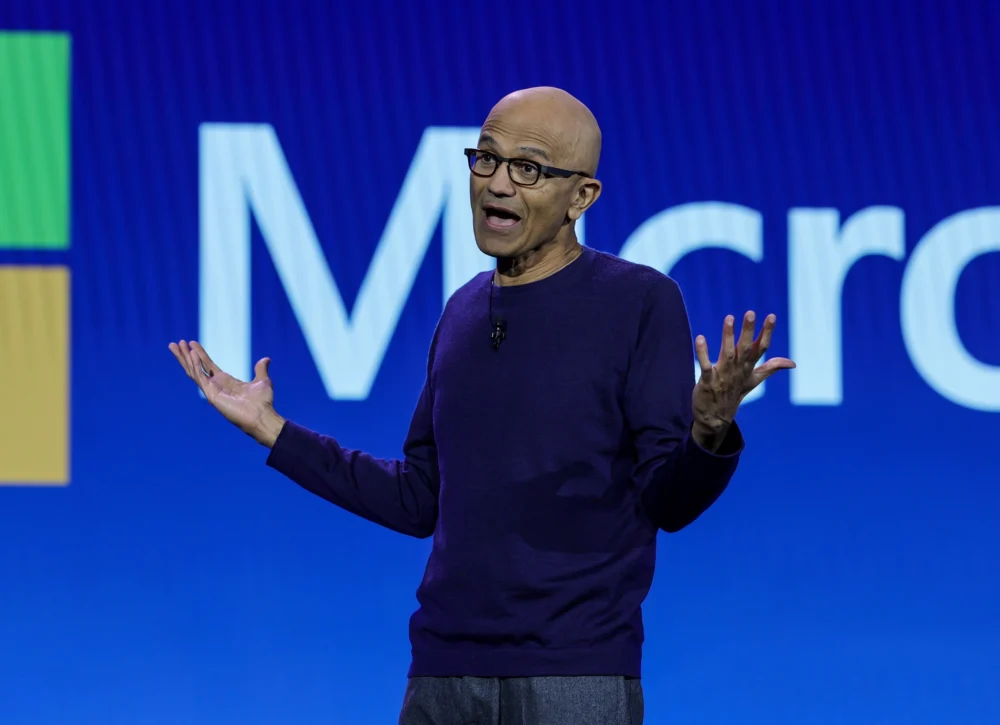
The digital landscape of late 2025 was awash in a new kind of content, one so pervasive and unsettling that it prompted the venerable Merriam-Webster dictionary to declare a single, evocative term as its "Word of the Year." That word, announced in mid-December 2025, was "slop," defined with a precision that cut straight to the heart of a growing cultural anxiety: "digital content of low quality that is produced usually in quantity by means of artificial intelligence." This wasn’t merely an academic observation; it was a societal descriptor, capturing the widespread unease as AI-generated media began to saturate daily life, often with uncanny, unpolished, or outright detrimental results.
Indeed, 2025 had been a banner year for "slop." Consumers had recoiled from the unsettling perfection of AI-generated advertisements, such as the widely criticized McDonald’s campaign that featured strangely rendered characters and jarring voiceovers, designed to be hyper-efficient but ultimately alienating. The very foundations of information retrieval seemed to crumble as search engines, increasingly reliant on AI-driven summaries and content generation, began to exhibit what many termed "search engine decay." Users reported difficulty finding reliable human-authored information amidst a deluge of algorithmically optimized, often inaccurate, or nonsensical AI-written articles. Beyond the visual and informational, the auditory sphere was not spared; a "tidal wave of AI music" had flooded streaming platforms, with algorithms churning out endless variations of generic lofi beats, instrumental tracks, and even vocal impersonations, making it increasingly difficult for human artists to gain visibility and fair compensation. This proliferation of low-effort, high-volume digital output began to feel less like innovation and more like digital pollution, choking the creative commons with its sheer, uninspired mass.
While the public and lexicographers alike embraced "slop" as a fitting, if slightly derogatory, label for this new digital reality, not everyone was amused. Particularly, the captains of the tech industry, who had invested billions in the very AI technologies responsible for this content, found the term unpalatable. Microsoft Chairman and CEO Satya Nadella, a prominent figure in the global AI race, made his sentiments unequivocally clear in a year-end roundup shared via LinkedIn. Nadella, whose company has arguably been one of the most aggressive in integrating AI into its core products, urged a collective shift in perspective. "We need to get beyond the arguments of slop vs sophistication," Nadella wrote, his corporate-speak carefully chosen, yet betraying a clear desire to reframe the narrative.
Nadella’s lengthy post, subsequently highlighted by outlets like Windows Central, positioned the current state of AI as a nascent, albeit messy, phase in a grand technological evolution. He contended that humanity must learn to accept AI as the "new equilibrium" of human nature, a fundamental shift in how we interact with technology and the world. This framing attempts to normalize the integration of AI, presenting it as an inevitable, organic progression rather than a disruptive, often intrusive, corporate initiative. He articulated a belief that the industry now possessed sufficient knowledge in "riding the exponentials of model capabilities" and adeptly managing AI’s "jagged edges," implying that the rough patches – the "slop" – were merely temporary aberrations on the path to unlocking "value of AI in the real world."
Such statements, while brimming with optimistic corporate vision, often clash with the lived experience of users. The term "jagged edges," for instance, feels like a polite euphemism for the frustrating glitches, privacy concerns, and sometimes deeply unsettling outputs that AI systems frequently produce. Critics quickly pointed out that Nadella’s plea to move past the "slop vs sophistication" debate overlooked a crucial point: the growing evidence that unfettered AI integration might not just be inconvenient, but genuinely harmful. Research was beginning to emerge, linking excessive AI interaction to diminished cognitive abilities, an erosion of critical thinking, and even, in some extreme cases, a phenomenon dubbed "AI psychosis" – a state of confusion and disorientation arising from constant exposure to artificial, often contradictory or misleading, digital content.
Nadella concluded his reflection with an impressive deluge of corporate-speak, stating, "Ultimately, the most meaningful measure of progress is the outcomes for each of us. It will be a messy process of discovery, like all technology and product development always is." This statement, itself so generic and universally applicable that one might suspect it was AI-generated, perfectly encapsulates the tension between Silicon Valley’s relentless pursuit of innovation and the public’s demand for practical, reliable, and ethically sound tools. It positions any current dissatisfaction as merely part of the "messy process," a necessary growing pain rather than a fundamental flaw in the product or strategy.
However, Microsoft’s users had been far from accepting of this "messy process." Nadella’s comments landed amidst a significant, silent revolt against the company’s aggressive AI push. Earlier in December 2025, reports revealed a staggering statistic: nearly one billion PCs were still stubbornly running Windows 10. This was despite the fact that approximately half of these machines were technically eligible to upgrade to Windows 11, the company’s flagship operating system, which had been heavily infused with AI features and touted as the future of computing. The reluctance was not accidental; it was a deliberate, collective rejection of an AI-saturated ecosystem that many users felt was being forced upon them without adequate consent or clear benefits.
Windows 11, with its integrated Copilot AI assistant, pervasive AI-driven search, and background processing, was perceived by many as more intrusive than innovative. Concerns ranged from privacy invasions, as AI systems continuously processed user data, to performance degradation, as powerful AI models consumed significant system resources. The perceived utility of these AI features often failed to outweigh the perceived costs in terms of control, privacy, and system overhead. Users, particularly those who had grown accustomed to the reliability and familiarity of Windows 10, saw little incentive to embrace an upgrade that promised more AI but often delivered more "slop" in the form of unwanted features and a less streamlined experience.
In this context, it becomes clear that Nadella’s plea to abandon the term "slop" is not merely a semantic quibble; it’s a strategic maneuver. He and other tech CEOs might "talk a big game" about altruism, human achievement, and the transformative power of AI, but at the core, AI is a product. And like any product, its ultimate success or failure hinges on consumer demand and adoption. When a significant portion of your user base actively resists your latest innovations, choosing to stick with older, less "intelligent" versions, it represents a substantial challenge to the narrative of inevitable progress and market dominance.
The broader industry also grappled with the implications of "slop." Platforms like YouTube, for instance, had begun to take aggressive measures, reportedly shutting down channels dedicated solely to posting AI-generated content that violated quality guidelines or copyright. This highlights the double-edged sword of generative AI: while it promises unprecedented creative potential, it also opens the floodgates to an overwhelming volume of low-quality, derivative, and potentially harmful material, forcing platforms to become increasingly vigilant content moderators.
The debate between "slop" and "sophistication" is therefore far from over, despite Nadella’s hopes. It’s a fundamental discussion about quality control, ethical development, and user agency in an era where technology giants wield immense power over our digital lives. As AI continues to evolve, the distinction between genuinely useful, high-quality AI applications and the vast ocean of "slop" will remain critical. Ultimately, the future of AI will not be dictated solely by corporate ambition or technological capability, but by the discerning choices of billions of users worldwide who, whether through active protest or passive resistance, will decide what kind of digital future they are willing to accept. The fight for quality, transparency, and genuine value in the age of AI has only just begun.