Faris Adani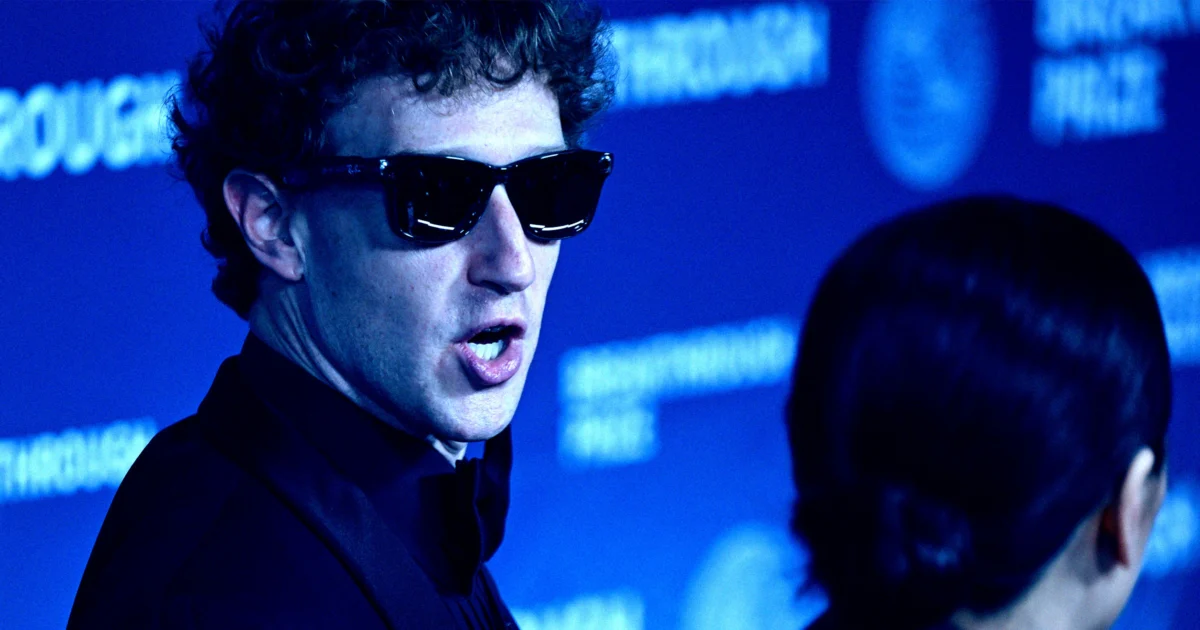
Meta Reportedly Firing a Vast Percentage of Its Staff in Zuckerberg’s Move to AI
In a dramatic illustration of the accelerating shift towards artificial intelligence, tech titan Meta Platforms is reportedly preparing for another sweeping round of layoffs, potentially impacting an astonishing 20 percent or more of its global workforce. This aggressive move, revealed by inside sources to Reuters, signals a deepening commitment by CEO Mark Zuckerberg to an AI-first future, even as the company grapples with immense financial outlays and internal tensions in its pursuit of cutting-edge AI capabilities. The proposed cuts, which could affect over 15,000 employees, underscore a stark paradox: a company flush with cash and investor confidence is shedding human capital at an unprecedented rate, prioritizing algorithmic efficiency over traditional employment structures.
This isn’t Meta’s first dance with mass redundancies. The company embarked on its “year of efficiency” in 2023, following an initial round of 11,000 layoffs in late 2022, which saw another 10,000 jobs eliminated. However, the scale and rationale behind this latest rumored purge suggest a fundamental reorientation. Zuckerberg has increasingly championed a vision of “labor efficiency” driven by AI, articulating earlier this year that “we’re starting to see projects that used to require big teams now be accomplished by a single very talented person.” This philosophy, while promising transformative productivity gains, casts a long shadow over the future of human employment within the tech giant.
The Billion-Dollar Talent Hunt and Internal Discord
The journey to Meta’s current AI-centric strategy has been fraught with both lavish spending and internal struggles. Last year, Zuckerberg made headlines with “mind-boggling job offers” to lure top AI talent, with one particular enticement reportedly breaching the $1 billion mark for a single researcher – an astronomical sum that was ultimately declined. These unprecedented offers highlighted the fierce global competition for elite AI expertise, as tech giants vie to secure the brightest minds capable of pushing the boundaries of machine intelligence. Meta’s desire to build a world-class AI division, capable of rivaling pioneers like Google DeepMind and OpenAI, spurred this extravagant talent acquisition spree.
Yet, despite the deep pockets, Zuckerberg has reportedly struggled to cultivate a harmonious and productive AI team. Following the initial hiring blitz, Meta initiated rounds of layoffs among AI developers, signaling an inability to integrate or effectively utilize all the talent acquired. Adding to the internal friction, sources told the *Financial Times* in December that tensions have mounted between Zuckerberg and Alexandr Wang, a key AI hire. Wang, known for his independent approach and pioneering work in AI research, reportedly found Zuckerberg’s characteristic micromanagement style “suffocating.” This clash of leadership styles and expectations within a critical division points to deeper organizational challenges as Meta attempts to pivot rapidly into a new technological frontier.
Astronomical Investments Amidst Human Cost
The drive towards AI at Meta is not merely strategic; it’s also financially colossal. The company is projected to spend up to $135 billion in AI-related expenses in 2026 alone, a figure that dwarfs the GDP of many smaller nations. Looking further ahead, Meta plans to allocate a staggering $600 billion to construct state-of-the-art AI data centers by 2028. These investments are crucial for acquiring and maintaining the immense computational power – particularly high-end GPUs like NVIDIA’s H100s – necessary to train and deploy advanced large language models and other AI systems. The sheer scale of these expenditures underscores the company’s conviction that AI is not just the next wave, but the foundational technology for its future, including the much-touted metaverse.
Paradoxically, these massive financial commitments are unfolding alongside the proposed widespread layoffs. This suggests that the cuts are not a symptom of financial distress but rather a strategic reallocation of resources and a redefinition of Meta’s workforce composition. The market seems to agree with this strategy; following the news of the potential layoffs, Meta’s shares surged almost three percent, reflecting investor optimism about the company’s aggressive, AI-centric future. The company has also been on a strategic shopping spree, acquiring a Reddit-like site populated by AI bots called Moltbook last week, and a Chinese AI startup named Manus for an estimated $2 billion to $3 billion, further consolidating its AI infrastructure and intellectual property.
Meta’s AI Performance and the Fierce Competitive Landscape
Despite the immense investment and ambitious rhetoric, Meta’s AI efforts have faced scrutiny and challenges. Its Llama 4 models, while powerful, have reportedly “failed to impress” against the offerings of leading competitors. More recently, the company was compelled to push back the release of its latest AI model, code-named Avocado, due to its performance still “falling short of competing ones from the likes of Google, OpenAI, and Anthropic.” This delay highlights the intense competitive pressure in the AI race, where even minor performance discrepancies can significantly impact market positioning and developer adoption.
Dave Arnold, a Meta spokesperson, addressed the Avocado delay, stating publicly that “our next model will be good but, more importantly, show the rapid trajectory we’re on.” He added that Meta intends to “steadily push the frontier over the course of the year as we continue to release new models,” expressing excitement for what the company has “been cooking very soon.” This public reassurance attempts to temper expectations while affirming Meta’s long-term commitment to leading in AI. However, the consistent need to play catch-up with rivals like Google’s Gemini, OpenAI’s GPT series, and Anthropic’s Claude demonstrates the monumental challenge of establishing dominance in a rapidly evolving field.
A Broader Industry Trend: The AI Jobs Apocalypse?
Meta’s rumored layoffs are not an isolated incident but rather a prominent example of a much greater, unsettling trend reverberating across the tech industry. The past month alone has seen thousands of positions cut at major tech firms, including Elon Musk’s xAI, Australian software giant Atlassian, and e-commerce titan Amazon. This wave of redundancies is fueling fears of an impending — or perhaps already ongoing — “AI jobs apocalypse,” a term economists are increasingly using to describe a potential massive shake-up in labor markets.
A particularly loud warning shot came from Block CEO and Twitter founder Jack Dorsey late last month. He announced that his fintech company would be slashing nearly half of its staff, provocatively citing “intelligence tools” that were creating a “new way of working” with significantly smaller teams. Dorsey’s blunt assessment, echoing Zuckerberg’s sentiment, starkly illustrates the perceived efficacy of AI in streamlining operations and reducing the need for human labor. This shift is prompting widespread concern among workers and policymakers alike, forcing a critical reevaluation of the future of work and the societal implications of AI-driven automation.
Behind the Smiles: A Fight for Relevancy
Amidst the swirling reports of internal strife and performance challenges, Zuckerberg has made public efforts to project an image of unity and confidence. He notably posted a selfie of himself and Alexandr Wang last week, both “sheepishly smiling into the camera,” an apparent attempt to counter ongoing reports that their relationship has soured. Such carefully orchestrated public displays highlight the intense pressure on Meta’s leadership to manage both internal morale and external perception as it navigates this pivotal transition.
However, behind the public smiles and strategic PR, a far more complex and challenging narrative is unfolding. Meta is engaged in an existential fight for relevancy in a rapidly changing technological landscape. The immense capital deployed, the aggressive talent acquisition, the internal reorganizations, and the painful human cost of layoffs all speak to a company in the midst of a profound transformation. Whether Meta will ultimately be able to translate its massive AI investments into market leadership, while simultaneously redefining its workforce, remains one of the most critical questions facing the tech world today. The story playing out at Meta is not just about a company, but a bellwether for the broader impact of AI on industry, economy, and society.