isnaini azizah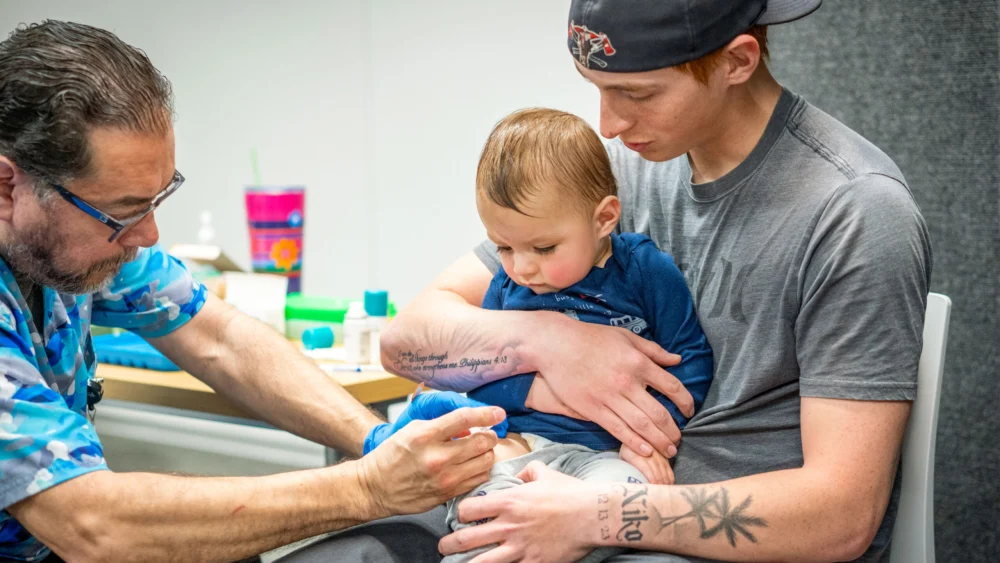
The resurgence of measles, a highly contagious and potentially deadly disease, serves as a stark warning about the broader implications of declining vaccination rates. With confirmed cases escalating in various regions, including significant outbreaks in London and South Carolina, public health officials are sounding the alarm that other vaccine-preventable infections, such as mumps, polio, and hepatitis B, could follow suit. This worrying trend is largely attributed to vaccine hesitancy, a phenomenon identified by the World Health Organization as one of the top ten global health threats.
The current measles outbreaks underscore the vulnerability created when communities fail to achieve adequate herd immunity. In Enfield, a northern borough of London, 34 cases have been confirmed this year, predominantly affecting children under 11, with one in five requiring hospitalization. Similarly, South Carolina has reported 962 measles cases since October of last year, with large outbreaks ongoing in four US states and smaller ones appearing in twelve others. Crucially, the vast majority of these affected individuals are unvaccinated children.
While some may downplay the severity of measles, arguing that infections were once common and most people recovered, this perspective overlooks the serious complications that can arise. Measles symptoms, beginning with fever and a runny nose, can progress to pneumonia, blindness, and encephalitis (inflammation of the brain). These complications can manifest years later, and in rare instances, the disease proves fatal. Before the introduction of the measles vaccine in 1963, measles epidemics occurred every two to three years, leading to approximately 2.6 million deaths annually. The measles vaccine is credited with preventing an estimated 59 million deaths since its inception.
However, vaccination rates have been in decline. Dr. Anne Zink, an emergency medicine physician and clinical fellow at the Yale School of Public Health, notes a gradual decrease in measles vaccination willingness over time. This erosion of vaccine uptake increases the pool of susceptible individuals, thereby raising the likelihood of widespread outbreaks. To effectively prevent measles outbreaks, vaccination coverage needs to reach 95%. Unfortunately, this threshold is not being met in many areas. In South Carolina, the proportion of kindergartners receiving both doses of the MMR vaccine (which protects against measles, mumps, and rubella) has fallen from 94% in 2020-2021 to 91% in 2024-2025. Alarmingly, some schools in the state report coverage rates as low as 20%.
London is experiencing a similar deficit. Fewer than 70% of children in London have received both MMR doses by their fifth birthday, with some boroughs showing rates as low as 58%. This shortfall in coverage is likely contributing to the current outbreaks. The United Kingdom, along with Spain, Austria, Armenia, Azerbaijan, and Uzbekistan, recently lost its measles elimination status, a status Canada also relinquished last year.
The rising tide of measles cases may signal a broader trend for other vaccine-preventable diseases. Dr. Zink points to a case of polio that paralyzed a man in New York in 2022, occurring when polio vaccination rates were low. She highlights that while polio is often asymptomatic, for those who develop symptoms, it can be life-threatening.
Mumps, also preventable by the MMR vaccine, presents another concern. While some individuals, particularly children, may experience mild or no symptoms, others can suffer severe consequences, including painful testicular swelling, brain swelling, and deafness. Dr. Zink herself has experienced the debilitating effects of a mumps infection, emphasizing that even seemingly "mild" cases can be profoundly unpleasant. Although mumps is less contagious than measles, a delay might be observed between an increase in measles cases and the subsequent spread of mumps.
However, Dr. Zink expresses greater concern regarding hepatitis B. This virus can persist on surfaces for extended periods, and unvaccinated children exposed to it face a high risk of developing liver cancer and death. Historically, Alaska experienced the world’s highest rate of childhood liver cancer caused by hepatitis B in the 1970s, a problem that was largely eradicated through screening and universal newborn vaccination programs.
Public health experts are worried that recent shifts in vaccine policy within the US may exacerbate the decline in vaccine uptake. The Centers for Disease Control and Prevention (CDC) has updated childhood vaccination recommendations, no longer advising the hepatitis B vaccine for all newborns. Furthermore, the chair of the CDC’s vaccine advisory panel has publicly questioned the broad recommendations for polio vaccination.
The trend extends even to fundamental preventative measures. Parents are increasingly refusing vitamin injections, such as the vitamin K shot at birth, which helps prevent severe bleeding in newborns. Recent research indicates that parents of 5% of newborns are refusing this vaccine, an increase from 2.9% in 2017. Dr. Zink recounts instances of pediatricians caring for children in intensive care units suffering from brain bleeds due to the absence of vitamin K at birth, a condition that can be fatal or lead to lifelong, debilitating stroke-like symptoms.
This situation paints a concerning picture for the future health of children. However, a reversal is possible. Vaccination remains a powerful tool for protecting individuals against infectious diseases. In response to the measles outbreaks, South Carolina’s Department of Public Health is offering free MMR vaccinations at mobile clinics.
Dr. Zink emphasizes the importance of proactive vaccination, stating, "It’s easy to think, ‘It’s not going to be me.’ Seeing kiddos who don’t have the agency to make decisions [about vaccination] being so sick from vaccine-preventable diseases, to me, is one of the most challenging things of practicing medicine." The growing number of measles cases and the potential resurgence of other vaccine-preventable diseases underscore the urgent need to address vaccine hesitancy and reaffirm the critical role of immunization in safeguarding public health.