Faris Adani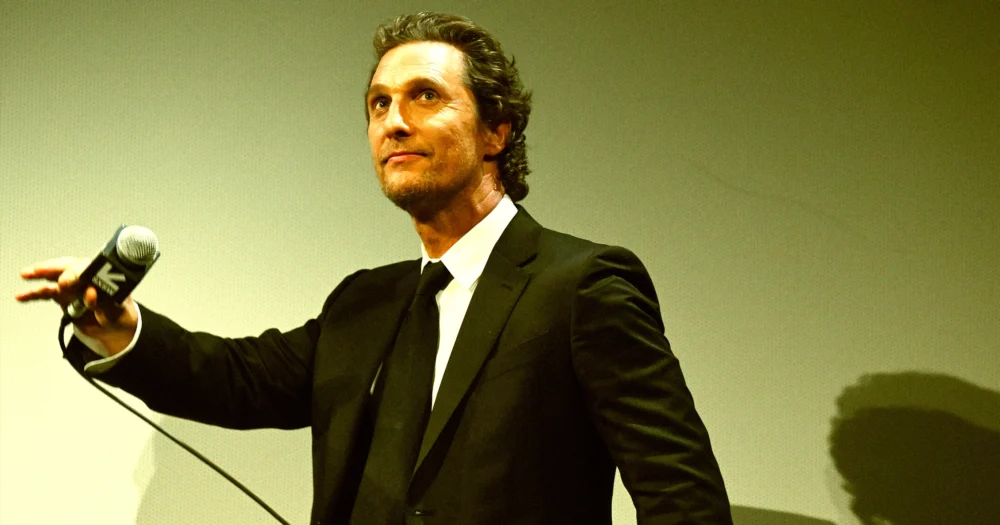
Hollywood star Matthew McConaughey has initiated a pioneering legal defense strategy, filing eight trademark applications featuring his distinct visual and auditory likeness, in a proactive bid to safeguard his identity against unauthorized exploitation by artificial intelligence. This move represents a significant escalation in the ongoing battle between creative professionals and the rapidly advancing AI industry, highlighting a growing determination among actors to assert control over their digital personas amidst fears of widespread job displacement and identity theft.
For several years, the specter of AI has loomed large over the entertainment industry, with actors consistently voicing alarm over the burgeoning potential for AI companies to replicate and commercialize their faces, voices, and performance styles without consent. These concerns were a central catalyst for the historic 2023 strikes by Hollywood writers and actors (WGA and SAG-AFTRA), which brought the industry to a standstill as unions demanded robust protections against AI misuse. The core fear remains that sophisticated AI models could generate “digital doubles” capable of performing roles, narrating audiobooks, or appearing in advertisements, thereby marginalizing human talent and fundamentally altering the economics of acting.
Concrete instances of AI overreach have already fueled this apprehension. Scarlett Johansson, a prominent voice actress, recently threatened legal action against OpenAI after the company’s ChatGPT update featured a voice that she and many others claimed bore an uncanny resemblance to her own, despite her previous refusal to license her voice to the firm. Separately, two voice actors have filed a lawsuit accusing AI startup Lovo of illegally utilizing their voices to train its AI models without proper authorization. These cases underscore the perilous legal and ethical quagmire surrounding data sourcing for AI training and the lack of clear frameworks for digital rights. The industry was further rattled by the introduction of an AI-generated actress named Tilly Norwood, which was met with near-universal backlash from both within Hollywood and the general public, intensifying fears that AI was indeed “coming for human actors’ jobs.”
In response to this increasingly urgent threat, Matthew McConaughey has devised a novel defense tactic. As reported by the *Wall Street Journal*, the acclaimed performer submitted eight distinct trademark applications to the U.S. Patent and Trademark Office. These applications weren’t just for his name or image; they specifically incorporated video and audio clips of him “staring, smiling, and talking.” This granular approach to trademarking aims to protect the nuanced aspects of his persona that make him recognizable. Crucially, all eight applications have since been approved, establishing a significant legal precedent. Among the submitted clips was his universally recognized catchphrase, “Alright, alright, alright,” from the iconic 1993 film “Dazed and Confused,” a testament to his intention to protect even his most signature vocalizations.
McConaughey articulated his motivation clearly in an email to the newspaper: “My team and I want to know that when my voice or likeness is ever used, it’s because I approved and signed off on it. We want to create a clear perimeter around ownership with consent and attribution the norm in an AI world.” This statement encapsulates the actor’s desire for explicit permission and proper credit, setting a standard he believes should govern the use of personal attributes in the age of AI. The strategic goal behind these filings is to establish an unassailable legal foundation for potential litigation. Should any company or individual attempt to profit from an AI-generated approximation of McConaughey’s likeness or voice without his express consent, these trademarks would provide a powerful tool for legal redress.
Jonathan Pollack, one of McConaughey’s attorneys, emphasized the potential impact of this strategy: “In a world where we’re watching everybody scramble to figure out what to do about AI misuse, we have a tool now to stop someone in their tracks or take them to federal court.” This highlights the proactive nature of the move, positioning the actor to aggressively defend his intellectual property rather than merely reacting to infringements. Kevin Yorn, another attorney representing McConaughey, acknowledged the experimental nature of the gambit, stating, “I don’t know what a court will say in the end, but we have to at least test this.” This candid admission underscores the uncharted legal territory the entertainment industry finds itself in, as existing copyright and trademark laws grapple with unprecedented technological challenges.
The broader legal and ethical landscape surrounding AI and creative works remains deeply convoluted. Experts frequently point out the “murky” nature of copyright law when applied to AI-generated content, particularly concerning sophisticated platforms like OpenAI’s Sora. This application, designed to generate photorealistic video clips from text prompts, has already demonstrated its capability to create content featuring famous characters and actors. Despite OpenAI’s stated guardrails, the potential for misuse and unauthorized replication is immense. Last year, Sora faced significant criticism from talent agencies, primarily due to OpenAI’s bungled communication. Initially, the Sam Altman-led firm informed some talent agencies that their represented actors would need to “opt out” of appearing on Sora, implying an opt-out default. Days later, OpenAI reversed its stance, leading to widespread confusion and outrage within the industry. This incident vividly illustrated the urgent need for clear, consistent, and ethically sound policies from AI developers regarding content creation and intellectual property.
While McConaughey’s trademarks offer a powerful avenue for defense, the efficacy of such measures against global AI entities and the complex nature of AI-generated content remains to be fully tested in court. Many copyright infringement challenges targeting AI companies are still in their nascent stages, with legal outcomes pending. The challenge lies not only in proving unauthorized use but also in establishing what constitutes an “infringement” when AI might generate something “inspired by” or “similar to” an individual’s likeness, rather than a direct copy. Furthermore, the global reach of AI development and usage means that U.S. trademarks, while strong domestically, may face limitations when confronting international entities.
Federal rules governing the use of an actor’s likeness or voice in AI contexts are still under active debate among lawmakers, reflecting the slow pace of legislative adaptation to rapid technological change. However, Hollywood unions remain steadfast in their demand that unauthorized AI clones of actors should be unequivocally illegal. They argue that an individual’s identity, voice, and performance style are integral to their livelihood and personal brand, warranting the highest level of protection.
McConaughey’s innovative approach could pave the way for other celebrities and content creators to adopt similar strategies, transforming how personal branding and intellectual property are protected in the digital age. By specifically trademarking distinctive elements of his visual and auditory performance, he is attempting to create a proprietary ‘digital footprint’ that makes any unauthorized AI replication a clear violation. This could significantly strengthen the legal standing of individuals in future disputes, shifting the burden onto AI companies to prove independent creation or licensed use.
Ultimately, Matthew McConaughey’s strategic trademark filings represent more than just an individual’s defense; they are a critical “test case” in the ongoing struggle to define the boundaries of ownership and consent in an AI-dominated world. As technology continues to blur the lines between human creation and machine generation, such proactive legal maneuvers will be essential in ensuring that the rights and livelihoods of creative professionals are preserved, setting a vital precedent for future generations navigating the complexities of artificial intelligence. The outcome of this gambit, and others like it, will undoubtedly shape the future of intellectual property, artistic control, and the very definition of human creativity in the digital era.