anjir abdul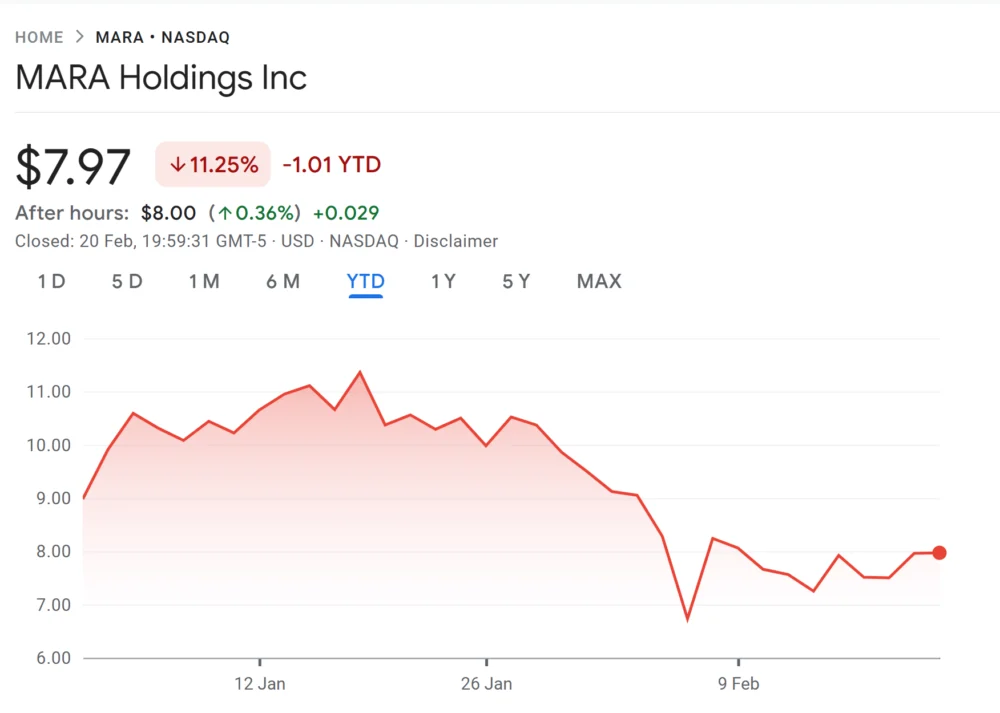
MARA Holdings, a leading publicly traded Bitcoin mining company, has officially completed its pivotal purchase of a majority stake in Exaion, a French computing infrastructure operator. This move profoundly deepens MARA’s strategic push into the rapidly expanding fields of artificial intelligence (AI) and high-performance cloud services, signaling a clear diversification beyond its traditional Bitcoin mining operations. The acquisition, initially agreed upon in August 2025 with EDF Pulse Ventures, now grants MARA France a controlling 64% stake in Exaion, following the successful navigation and securing of all necessary regulatory approvals. This landmark transaction was announced by the Bitcoin miner on a Friday, underscoring its commitment to becoming a multifaceted digital infrastructure provider. French energy giant EDF, through its venture arm, will retain a significant minority shareholder position in Exaion, further committing to the business by continuing as a key customer, ensuring operational continuity and a stable revenue base for the newly structured entity.
This investment transcends a simple acquisition, blossoming into a broader strategic alliance that introduces another influential player to the fold. NJJ Capital, the formidable investment vehicle of the renowned French telecom entrepreneur Xavier Niel, is set to acquire a 10% stake in MARA France as an integral component of a wider partnership with MARA. This tripartite collaboration promises to bring together MARA’s robust infrastructure and energy expertise, Exaion’s cutting-edge AI and cloud capabilities, and NJJ Capital’s profound market insight and strategic capital, particularly within the European digital landscape.
The governance structure of Exaion has been meticulously redesigned to reflect this new ownership paradigm and collaborative spirit. The company’s board will now comprise a diverse and experienced group of individuals: three representatives from MARA, reflecting its controlling interest; three from EDF Pulse Ventures, maintaining its influence and strategic alignment; and one from NJJ Capital, ensuring Xavier Niel’s strategic input. Additionally, Exaion’s chief executive and co-founder will retain their crucial positions on the board, providing essential continuity and deep operational knowledge. Notably, both Xavier Niel and MARA CEO Fred Thiel will hold prominent seats on the board, signifying the high strategic importance placed on Exaion’s future trajectory and its role within the broader MARA ecosystem. This balanced board composition is designed to foster synergistic decision-making and capitalize on the collective strengths of all stakeholders, driving Exaion’s growth and market penetration in the competitive AI and cloud infrastructure domain.
The strategic shift undertaken by MARA is indicative of a broader industry trend where Bitcoin mining companies are increasingly pivoting towards AI and data center computing. This transformation is largely driven by mounting economic pressures on traditional mining operations. Following the 2024 Bitcoin halving event, which drastically cut block rewards, and in the face of persistently rising network difficulty, profit margins for miners have been significantly squeezed. In response, numerous publicly traded miners have begun to adopt a hybrid business model. This approach involves maintaining Bitcoin mining as a foundational source of cash flow while simultaneously developing and expanding more stable and predictable revenue streams from AI cloud and high-performance computing (HPC) services. This diversification strategy aims to mitigate the inherent volatility of the crypto market and leverage existing infrastructure and energy expertise for high-demand computing needs.
HIVE Digital Technologies stands out as a prime example of a company successfully navigating this strategic pivot. The company has reported robust financial results, even amidst periods of weaker Bitcoin prices, largely attributed to the vigorous expansion of its AI operations. This demonstrates the viability and profitability of integrating AI services into a mining-centric business model. Similarly, CoreWeave, another notable player, has made a complete transition from its origins in crypto mining to emerge as a major AI infrastructure provider. This significant shift occurred after a decline in demand for GPU mining, showcasing the agility and foresight required to adapt to evolving market demands. CoreWeave’s success underscores the potential for former crypto miners to repurpose their specialized hardware and infrastructure for the burgeoning AI industry.
The trend extends across the sector, with other prominent firms, including TeraWulf, Hut 8, IREN, and MARA itself, actively engaged in repurposing their existing mining facilities and substantial energy capacities into state-of-the-art AI data centers. This strategic repurposing capitalizes on the significant investments already made in power infrastructure and cooling systems, which are directly transferable to the demands of high-density AI computing. In November of the preceding year, CleanSpark, another major player in the Bitcoin mining space, unveiled ambitious plans to raise approximately $1.13 billion in net proceeds, with the potential to reach up to $1.28 billion if additional notes are purchased. This substantial capital injection, secured through a $1.15 billion senior convertible note offering, is earmarked for the aggressive expansion of both its Bitcoin mining operations and its burgeoning AI data center infrastructure, further cementing the industry’s dual-track growth strategy. The capital-intensive nature of these expansions is also highlighted by events like crypto miner Bitdeer’s stock dropping 17% after a $300 million debt offering, indicating market sensitivity to financing strategies in this rapidly evolving landscape.
Concurrently with these strategic industry shifts, the Bitcoin mining landscape continues to present its own set of challenges. Bitcoin’s mining difficulty experienced a significant surge of approximately 15% to 144.4 trillion on a recent Friday. This rebound sharply reversed an 11% drop observed earlier in the month, which had been the steepest decline since China’s comprehensive mining ban in 2021. The earlier fall was primarily attributed to severe winter storms across the United States, which caused widespread power grid disruptions and temporarily forced numerous miners offline, leading to a sharp reduction in the overall network hash rate. While the subsequent increase in mining difficulty serves to reinforce Bitcoin’s inherent security and decentralization, it simultaneously elevates the computational effort required to mine new blocks. This heightened difficulty adds another layer of margin pressure on operators, who are already grappling with the rising operational costs associated with maintaining competitive mining operations. Indeed, many industry analysts have characterized the current period as one of the harshest margin environments ever faced by Bitcoin miners, underscoring the urgency for diversification and efficiency improvements.
The acquisition of Exaion by MARA is not merely a corporate transaction; it is a profound statement about the future direction of digital infrastructure. For MARA, it represents a crucial step in transforming from a singular Bitcoin miner into a diversified, global digital asset and AI infrastructure company. Exaion, with its strategic location in France, provides MARA with an invaluable foothold in the European market, which is aggressively investing in AI capabilities and sustainable data solutions. The expertise and existing client base of Exaion will allow MARA to immediately tap into the growing demand for high-performance computing, cloud services, and specialized AI infrastructure, leveraging its existing strengths in managing large-scale, energy-intensive operations.
The involvement of Xavier Niel’s NJJ Capital further amplifies the strategic value of this deal. Niel, a visionary figure in the European telecommunications and tech sectors, brings not only significant capital but also unparalleled strategic guidance, a vast network, and a proven track record of building successful technology ventures. His participation lends considerable credibility and market access, particularly within France and the broader European Union, areas where MARA seeks to expand its influence beyond its North American stronghold. This partnership is designed to foster innovation, facilitate rapid market penetration, and ensure that Exaion under MARA’s leadership can compete effectively with established European cloud and AI providers.
From Exaion’s perspective, becoming part of MARA’s ecosystem offers immense opportunities for accelerated growth. It gains access to MARA’s substantial financial resources, its expertise in energy procurement and management, and its ambition to scale high-density computing operations. This infusion of capital and operational know-how will enable Exaion to expand its data center capacity, invest in the latest GPU technologies essential for AI workloads, and enhance its service offerings to meet the escalating demands of enterprise clients and AI startups across Europe. The synergy between MARA’s energy-efficient infrastructure development and Exaion’s specialized AI services creates a compelling value proposition in a market where computational power and sustainability are increasingly paramount.
The broader implications for the AI industry are equally significant. As more crypto miners with existing power infrastructure and data center expertise pivot to AI, it introduces a new class of competitors and innovators into the AI infrastructure market. This influx of resources and talent can help address the current global shortage of high-performance computing capacity required to fuel the rapid advancements in AI models and applications. It also highlights a pragmatic approach to repurposing capital-intensive assets from a volatile industry (Bitcoin mining) into a high-growth, high-demand sector (AI). This convergence underscores the evolving definition of "digital infrastructure" itself, where the lines between crypto, cloud, and AI are becoming increasingly blurred.
MARA’s shares being down 17% year-to-date, as indicated in the original article, can be viewed in multiple contexts. While reflective of broader market sentiment towards crypto-related stocks or company-specific challenges, it also represents the significant capital expenditure and strategic repositioning required for such a large-scale diversification. Investors are often cautious during periods of intense transformation, seeking clear evidence of new revenue streams and improved profitability before fully re-rating a company. The success of the Exaion acquisition and the broader AI strategy will be crucial in demonstrating MARA’s long-term value proposition and its ability to thrive beyond the direct fortunes of Bitcoin.
In conclusion, MARA’s acquisition of a controlling stake in Exaion and the formation of a strategic alliance with NJJ Capital represent a bold and well-calculated move into the future of digital infrastructure. It strategically positions MARA at the intersection of energy, high-performance computing, and artificial intelligence, leveraging its foundational strengths to tap into new, high-growth markets. This move is emblematic of a wider industry transformation, where Bitcoin miners are evolving into diversified digital infrastructure providers, seeking stability and growth in the burgeoning AI economy. The integrated governance and the combined expertise of MARA, EDF, and NJJ Capital lay a strong foundation for Exaion to become a dominant player in the European AI data center landscape, promising a future of innovation and strategic expansion for all parties involved.