Imroatul Nasiyah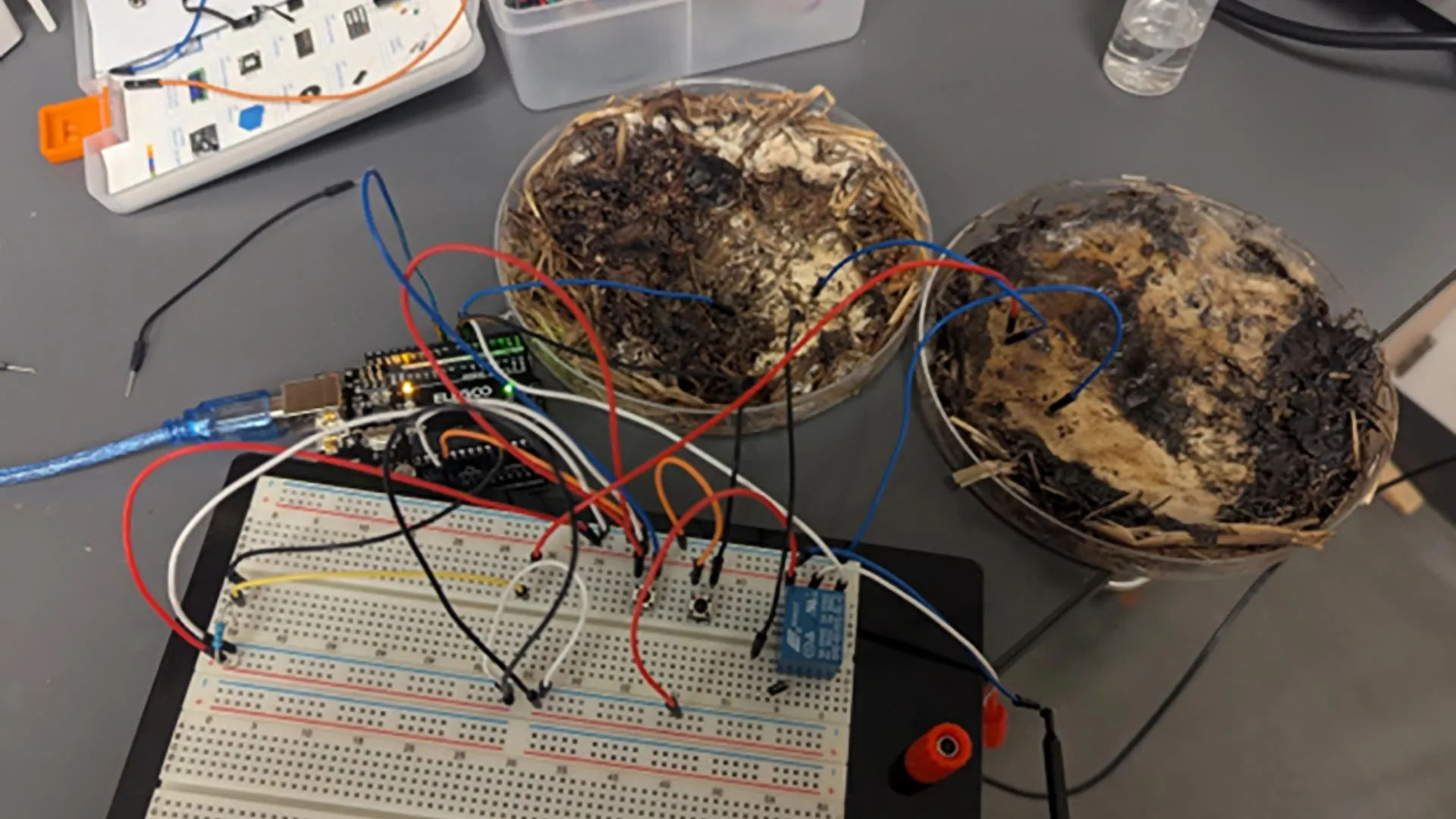
The allure of mushrooms for bioelectronics stems from their inherent toughness and fascinating biological characteristics. This emerging field is dedicated to designing innovative, environmentally friendly materials that can meet the demands of next-generation computing. The Ohio State team has taken a significant leap forward by demonstrating that shiitake mushrooms can be manipulated to act as organic memristors. Memristors are crucial components in modern electronics, functioning as memory cells that can retain information about their previous electrical states. This memory retention capability is vital for the efficient functioning of processors and storage devices.
Researchers successfully cultivated edible fungi and demonstrated their ability to replicate the memory behaviors observed in traditional semiconductor chips. This breakthrough not only suggests the creation of eco-friendly computing tools but also points towards the possibility of developing brain-like computing systems that are significantly less expensive to produce. John LaRocco, the lead author of the study and a research scientist in psychiatry at Ohio State’s College of Medicine, highlighted the profound implications of this development. "Being able to develop microchips that mimic actual neural activity means you don’t need a lot of power for standby or when the machine isn’t being used," LaRocco explained. "That’s something that can be a huge potential computational and economic advantage." The ability of these fungal-based systems to operate with minimal power consumption in standby mode is a critical step towards ultra-low-power computing, addressing a major bottleneck in current technology.
The concept of fungal electronics, while not entirely novel, is gaining traction due to its immense potential for sustainable computing. Fungal materials are naturally biodegradable and cost-effective to produce, offering a powerful solution to the growing problem of electronic waste. In stark contrast, conventional semiconductors often rely on rare earth minerals and demand substantial energy for their manufacturing and operation. LaRocco elaborated on the ongoing exploration of mycelium as a computing substrate, noting that while previous attempts existed in less conventional setups, their current work aims to push these memristive systems to their utmost capabilities. The findings of this pioneering research have been published in the esteemed scientific journal PLOS One.
The experimental methodology employed by the scientists involved cultivating samples of both shiitake and button mushrooms. Once these fungi reached maturity, they underwent a dehydration process to preserve their structure and electrical properties. These preserved mushroom specimens were then carefully integrated into custom-designed electronic circuits. The researchers subjected the mushroom-based devices to controlled electrical currents, meticulously varying the voltages and frequencies to observe their responses. LaRocco detailed the process: "We would connect electrical wires and probes at different points on the mushrooms because distinct parts of it have different electrical properties. Depending on the voltage and connectivity, we were seeing different performances." This meticulous approach allowed them to map the electrical behavior of different sections of the mushroom and understand how it could be harnessed for computation.
The results of these rigorous two-month-long experiments were nothing short of astonishing. The researchers discovered that their mushroom-based memristor was capable of switching between electrical states an impressive 5,850 times per second, achieving approximately 90% accuracy. While the performance did exhibit a decline at higher electrical frequencies, a particularly intriguing observation was made: connecting multiple mushrooms together significantly restored stability. This phenomenon bears a striking resemblance to the way neural connections function in the human brain, suggesting a natural architecture for complex computational tasks.
Qudsia Tahmina, a co-author of the study and an associate professor of electrical and computer engineering at Ohio State, emphasized the remarkable adaptability of mushrooms for computing purposes. "Society has become increasingly aware of the need to protect our environment and ensure that we preserve it for future generations," Tahmina stated. "So that could be one of the driving factors behind new bio-friendly ideas like these." The inherent flexibility and scalability offered by mushrooms open up exciting avenues for future development. Tahmina suggested that larger fungal systems could find applications in areas like edge computing, where data is processed closer to its source, and even in the demanding environment of aerospace exploration. Conversely, smaller-scale fungal computing modules could be instrumental in enhancing the performance of autonomous systems and the functionality of wearable devices.
Looking ahead, the future of fungal computing holds immense promise, though organic memristors are still in their nascent stages of development. The scientists are actively pursuing refined cultivation methods and are focused on miniaturizing the device sizes to make them more competitive with traditional microchips. Achieving smaller, more efficient fungal components will be the linchpin for their widespread adoption as viable alternatives to current microelectronic technologies. LaRocco painted an optimistic picture of the accessibility of this technology: "Everything you’d need to start exploring fungi and computing could be as small as a compost heap and some homemade electronics, or as big as a culturing factory with pre-made templates. All of them are viable with the resources we have in front of us now." This statement underscores the democratic potential of fungal computing, suggesting that the barrier to entry is relatively low, paving the way for widespread innovation. The research team also acknowledged the contributions of other Ohio State colleagues, including Ruben Petreaca, John Simonis, and Justin Hill, and noted that the research received support from the Honda Research Institute, further indicating the significant interest and investment in this transformative field.